News
Altcoin News
Altcoin News
Browse all Altcoin related articles and news. The latest news, analysis, and insights on Altcoin.
ZK Comments and Price Analysis July 11, 2025
ZK Technical Analysis and Breakout of the Falling WedgeThe ZK chart has been printing a clear falling wedge pattern. In line with technical expectations, the upward breakout of this falling wedge continues the positive atmosphere. The retest following the breakout demonstrated that the formation worked healthily and triggered a strong upward movement from this area. Falling Wedge Fracture Currently, ZK is trading around $0.060 – $0.062, but it can meet short-term profit realization and see some pullbacks. On the other hand, the pullbacks mentioned here are healthy corrections in the uptrend. $0.054 and $0.050 seem to be support levels, and price reactions from these levels will indicate that the positive outlook might continue.In short:Falling wedge formation broke out upward.Retest done following the breakout.$0.060 – $0.062 zone is strong resistance.$0.054 and $0.050 should be monitored as support in case of pullbacks.These analyses, not offering any kind of investment advice, focus on support and resistance levels considered to offer trading opportunities in the short and medium term according to the market conditions. However, the user is responsible for their own actions and risk management. Moreover, it is highly recommended to use stop loss (SL) during the transactions.

What is Optimism (OP)?
Optimism is a Layer-2 blockchain protocol developed to address Ethereum's scalability issues. Essentially, it reduces the load on the main network by rolling up transactions from Ethereum onto its own sidechain (using a rollup method). This allows transactions to be completed much faster and more cost-effectively. The Optimism network uses a technology called "Optimistic Rollup." This method assumes transactions are correct and is processed off-chain, with only errors occurring. This allows users to maintain the security and decentralization advantages offered by Ethereum while also benefiting from faster transaction times and lower gas fees.The Optimism project is run by the non-profit Optimism Foundation. The project emerged in 2019 as a product of scalability research conducted in the Ethereum community and launched its mainnet in 2021. The team, founded by Jinglan Wang, Ben Jones, and Kevin Ho, has succeeded in developing a second-layer platform that is fully compatible with Ethereum (EVM-compatible). The project's native cryptocurrency, the OP token, was distributed to the community in the first airdrop in May 2022. The OP token stands out as a governance token that provides a voice in the network's management and has attracted the attention of Ethereum users since its launch.In this article, we'll explore questions like what OP coin is, how Optimism works, and more. We'll also touch on topics like the Optimism Ethereum connection and the Optimism Layer 2 solution.Definition and Origin of OptimismOptimism is a scaling solution developed to address Ethereum's problems such as high transaction fees and slow speed. Technically, it uses an "optimistic rollup" model, which processes transactions outside of Ethereum and then sends a summary to the main chain. This approach reduces congestion on Ethereum, increases transaction capacity, and allows users to process transactions at a much lower cost. Furthermore, Optimism is designed to be fully compatible with smart contracts on Ethereum. This means that applications running on the Ethereum Virtual Machine (EVM) can be ported to the Optimism network with virtually no modifications. This EVM compatibility offers an advantage that significantly simplifies the migration process for developers and projects. The project's foundations are rooted in research originating within the Ethereum community. In 2019, the nonprofit Plasma Group team began working on a next-generation scaling solution for Ethereum. Inspired by Vitalik Buterin's rollup ideas, the team put this vision into practice and developed the Optimistic Rollup model. Later, Ethereum developers such as Jinglan Wang, Ben Jones, and Kevin Ho founded a public benefit company called Optimism PBC to bring these ideas to life. After conducting experiments on various testnets throughout 2020, Optimism officially launched the mainnet in 2021. As of December 2021, the Optimism mainnet went live, and the first Ethereum-based applications began migrating to the Optimism Layer-2 network. The primary motivation for this project was to reduce transaction fees, which rise with increasing density on Ethereum, and to provide a more accessible blockchain experience for everyone. Optimism's History: Major MilestonesOptimism's development process, as well as its technical foundations, is of great importance to the Ethereum ecosystem. Founded in 2019, the project launched its mainnet in 2021, taking on a leading role among Layer-2 solutions. Over time, it has evolved from a technology offering only scaling to a more comprehensive ecosystem with governance mechanisms, community structure, and technical infrastructure. Below, you can find the major milestones in Optimism's journey in chronological order.2021: After extensive testing, the Optimism network officially launched with its mainnet. Specifically, on December 16, 2021, the whitelisting was lifted, allowing everyone to access Optimism's L2 network. This development is considered the launch of one of the first major scaling solutions on Ethereum.2022: Optimism launched its native token. In April 2022, the Optimism Collective, aiming to hand over the project's governance to the community, was announced, and the Optimism Foundation was established. The OP token was subsequently introduced, and the first OP token airdrop was held in May 2022. In this first airdrop, 214 million OP, approximately 5% of the total OP supply, was distributed to approximately 250,000 wallets, including early adopters. With the OP token, users had the opportunity to participate in the network's governance and have a say in the protocol's future.2023: The Optimism team announced its "Superchain" vision, which aims to further enhance the network's scalability. With this vision, Optimism's infrastructure, the OP Stack, enabled different institutions and projects to build their own L2 networks. As part of this effort, a collaboration with Coinbase was established, and a Layer-2 network called Base, developed on the OP Stack, was launched. Base joined the ecosystem as the second major L2 network using the OP Stack after the Optimism mainnet, creating a shared structure by transferring a portion of transaction fees to the Optimism network. 2023 also saw increased competition for Optimism. While competitors like Arbitrum in the Layer-2 market dominated metrics such as TVL (Total Locked Value) and active user count, Optimism continued to demonstrate steady growth. While Arbitrum saw declines in daily transaction count and active address count throughout the year, Optimism saw steady increases in these metrics.2024: Technical updates such as "Fjord" and "Granite" were implemented, improving gas optimization and data availability, while permissionless fault proofs were reactivated. The "Ecotone" update introduced Ethereum's EIP-4844 blob support, reducing transaction fees by approximately 90%. Large bounties were distributed to Superchain developers with RetroPGF 4. Total value locked (TVL) reached approximately $682 million, with daily transaction volume remaining stable at 597,000. Developer and community events (SuperFest, Superhack, Sunnys) intensified. Airdrop 5 also took place, with 10.37 million OP distributed to over 54,000 addresses. More than 30 OP stacks became active on the Superchain, representing 60% of the total transaction volume in the Ethereum L2 market. Airdrop 5 announcement on Optimism. Source: Optimism 2025: Isthmus hardfork: Ethereum's Pectra update was integrated into the OP Stack, and the first implementation was made on Optimism L2s. Additionally, the new DAO budget for Seasons 8–9 was approved (4.44 million OPs). The Bedrock2.0 update increased rollup efficiency by 50%. Coinbase partnership announced: With Superchain integration, daily OP transaction volume through the retail wallet reached $1.3 billion. Work on the Superchain is still ongoing.Why Is Optimism Valuable?Overall, Optimism stands out as a strong infrastructure project poised to shape the future of the Ethereum ecosystem. It offers users a faster, cheaper, and more accessible blockchain experience, while providing developers with a flexible environment into which they can easily integrate their existing applications. This structure, which increases Ethereum's transaction capacity without compromising its security, makes Optimism highly attractive for both individual users and projects. Below, you can take a closer look at the key features that make Optimism valuable. Low-fee transactions on EthereumOptimism offers an effective alternative to the high gas fees on the Ethereum mainnet. Thanks to its rollup structure, which processes transactions outside of Ethereum and sends a summary to the mainnet, transactions can be completed in seconds and at a much lower cost. This feature is a significant advantage for users, especially in high-interaction applications like DeFi and NFTs. Optimism's rollup architecture EVM compatibility and developer-friendly infrastructureOptimism is designed to be 100% compatible with the Ethereum Virtual Machine (EVM). This allows smart contracts and dApps on Ethereum to run seamlessly on the Optimism network with virtually no modifications. This portability offers developers the opportunity to easily port their existing projects to Optimism. In this respect, Optimism is a second-layer solution that can be integrated into projects within the Ethereum ecosystem without requiring a learning curve. The differences between Ethereum and the Optimism network can be shared in the table below:CategoryEthereum (Layer-1)Optimism (Layer-2)PurposeProvides a secure, decentralized base layer for dAppsScales Ethereum by enabling faster and cheaper transactionsTransaction Speed~12–15 seconds block timeNear-instant confirmations via centralized sequencerTransaction Cost (Gas)High – can range from $10 to $50+ depending on network congestionLow – usually a few cents to under $1Security ModelSecured directly by Ethereum mainnetInherits Ethereum’s security through fraud-proof mechanismsGovernanceLed by Ethereum Foundation & global communityGoverned by OP token holders & the Optimism CollectiveCompatibilityNative Ethereum Virtual Machine (EVM)Full EVM compatibility – seamless dApp migrationData StorageAll transaction data is stored on-chainOff-chain computation, with transaction summaries posted to EthereumUpgrade & DevelopmentSlow and conservative – may require hard forksMore flexible – OP Stack allows modular upgradesFund Transfer (To L2)Direct wallet transfersL1 → L2 via bridges – fast and low-costFund Withdrawal (From L2)Immediate~7-day “challenge period” for fraud detectionDecentralizationHigh – maintained by thousands of nodesMedium – currently uses a centralized sequencer (decentralization is planned)Developer ExperienceRich infrastructure but expensive testing environmentUses same EVM tools – affordable for experimentationEcosystem MaturityMost mature and extensive blockchain ecosystemRapidly growing – key projects include Velodrome, Base, LyraScalabilityLimited – ~15 transactions per second (TPS)Significantly higher – theoretically thousands of TPSCore TechnologyProof of Stake, zk-SNARKs integrationOptimistic Rollup, OP Stack, Sequencer, Fraud ProofsA Balance of Speed and SecurityOptimism offers significantly faster transaction confirmations compared to the Ethereum mainnet. A central "sequencer" node connected to the network instantly queues transactions and includes them in blocks. This makes the user experience remarkably smooth. Security-wise, Optimism is based on Ethereum's main chain; final confirmation and records of all transactions are guaranteed on the Ethereum blockchain. This architecture allows users to enjoy high-performance without compromising security. (Note: Due to the Optimistic rollup structure, there is a one-week objection period for transactions made on the network; this is a mechanism that supports system security.)A Multi-Chain Ecosystem with a "Superchain" VisionOne of Optimism's long-term goals is to implement the "Superchain" concept, which combines multiple Layer-2 networks under a single umbrella. In line with this vision, different projects can launch their own Optimism-compatible L2 chains with the OP Stack infrastructure, and these chains can share a common security and communication layer. Once fully implemented, the Superchain will increase interoperability across networks, providing a unified experience for users and developers as if it were a single, larger chain. This approach transforms Optimism from a pure Layer-2 solution into a centralized platform that scales across the entire Ethereum ecosystem. How does Superchain work? Source: Optimism Who is the Founder of Optimism?The Optimism project was launched by the Optimism Foundation, a non-profit organization. The project's founding team includes well-known figures in the Ethereum community: Jinglan Wang, Ben Jones, and Kevin Ho, known as the co-founders who laid the foundations for Optimism. This team consists of experienced developers who previously worked on Ethereum's Plasma and Rollup solutions. Optimism has been developed as an open-source project since its inception and continues to thrive, open to contributions from the Ethereum community. The Foundation's vision is to grow the project as a non-profit, public benefit project, and to add long-term value to the Ethereum ecosystem. To this end, the Optimism Foundation adopts a community-driven governance approach that redistributes a portion of the protocol's revenues to public goods and developers within the ecosystem through programs like RetroPGF.Frequently Asked Questions (FAQ)In this section, we've compiled some frequently asked questions about Optimism. Below, you can find concise and clear answers to key questions that both beginners and users familiar with the Ethereum ecosystem may have.What is Optimism and what does it do?: Optimism is a Layer-2 solution designed to scale the Ethereum blockchain. This network processes transactions on its own second layer instead of Ethereum's main chain, offering significantly lower fees and higher speeds. In short, it increases Ethereum's capacity and reduces its costs, enabling decentralized applications to run more efficiently. Thus, it provides an effective solution to the problems of congestion-related slowdowns and high gas fees on the Ethereum network.When was the OP token released, and what does it do?: OP, Optimism's native token, was released with the first airdrop in May 2022 and distributed to early adopters and project contributors. The OP token is essentially the project's governance token; token holders can vote on proposals affecting Optimism's future and participate in decision-making processes. In addition, the OP token can be used to pay transaction fees on the network and offers the opportunity to contribute to network security and earn rewards through staking. In short, OP plays a critical role in both the governance and economic incentive mechanisms of the Optimism ecosystem.What is the difference between Optimism and Arbitrum?: Optimism and Arbitrum are both Layer-2 optimistic rollup solutions developed for Ethereum, and their primary purpose is to increase Ethereum's scalability. While they share similar technology, there are some differences. The most significant difference is the fraud proof mechanism used to protect against fraudulent transactions: Optimism uses a single-round challenge mechanism, while Arbitrum employs a multi-round challenge process. As a result of this technical difference, Optimism can finalize transactions faster but may incur slightly higher gas fees compared to Arbitrum during busy Ethereum network periods. Furthermore, in terms of ecosystem size, Arbitrum initially had a higher total value locked (TVL) and more protocols; however, recent data indicates that the Optimism network is growing rapidly. While daily transaction numbers and active user metrics on Optimism began to increase in 2023, some stagnation was observed on Arbitrum's side. This suggests that the balance of power in the Optimism-Arbitrum competition may shift over time.What is Superchain, and why is it important?: Superchain is a vision put forward by Optimism and is still in development. According to this concept, multiple Layer-2 networks will be brought together using Optimism's underlying OP Stack technology, creating a massive, interconnected Layer-2 ecosystem. Once the Superchain is implemented, all OP Stack-based L2s, such as the Optimism mainnet and Coinbase's Base network, will share a common security and communication layer. This will enable seamless and secure asset transfers and messaging between different chains, and developers will be able to easily adapt code written for one chain to another. The importance of Superchain lies in its ability to horizontally extend Ethereum's scalability and lay the foundation for a multi-chain future. If successfully implemented, it will create a unified network structure where different projects can work together in the blockchain world, which could improve the user experience and accelerate adoption. Is trading on the Optimism network safe? Yes, trading on the Optimism network is considered safe. This is primarily because Optimism bases its security on the Ethereum mainnet. Even if transactions are executed on the second layer, all transaction data and updates are periodically sent to the Ethereum main chain and verified there. This means that transactions on Optimism are protected by Ethereum's proven security. The Optimistic Rollup structure works by assuming transactions are correct, but a challenge mechanism is in place in case of an erroneous or fraudulent transaction. In this context, withdrawals from Optimism to Ethereum are subject to a challenge period of approximately 7 days, during which anyone can challenge the transactions and verify their validity. This procedure ensures the safety of user funds and the prevention of fraudulent transactions. Ultimately, Optimism is designed to be as secure as Ethereum and provides a reliable second-layer environment for users as long as it operates properly. How is the future of the OP token assessed?: The future of the OP token will depend on the development of the Optimism network and the overall role of Layer-2 solutions within the crypto ecosystem. Many analysts and experts emphasize that if Ethereum maintains its central position in the coming years and the need for scalability continues to increase, the importance of L2 solutions like Optimism will grow. Optimistic scenarios predict that the Optimism ecosystem could expand significantly by 2025, and the OP token value could increase accordingly. For example, some market forecasts even suggest that the OP price could reach double-digit levels under a general bull market. However, the competitive landscape is a determining factor in the future of the OP token. The success of other Layer-2 and scaling projects, such as Arbitrum, zkSync, and Polygon zkEVM, could impact OP's market share. Optimism's growth rate could be limited, particularly if zk-rollup-based projects mature and become widespread. As a result, many experts argue that the OP token holds long-term potential, but for this to happen, the Optimism network must successfully implement its innovations (such as Superchain) and continue to attract users. Therefore, the OP token's fate is closely tied to the success of Ethereum's scalability solutions in general.For more information on Optimism and Layer-2 projects contributing to the Ethereum ecosystem, follow the JR Kripto guide.

Grayscale Updated Its Consideration List: Added 11 More Altcoins
Grayscale, a pioneer in crypto asset management, has announced new coins that can be included in its investment products. According to the company's update dated July 10, 2025, many new cryptocurrencies, categorized by different use cases, have been added to its "Assets Under Consideration" list.Grayscale's updated list is based on the company's "Crypto Sectors" framework, which classifies digital assets under six sectoral headings: currencies, smart contract platforms, financial services, consumer and cultural projects, AI-based assets, and infrastructure and utility tokens.Which new tokens have been added?Grayscale has added 11 altcoins to its updated list. These are Celo, DeepBook, Euler, Kamino Finance, Morpho, Playtron, Virtuals Protocol, Layer Zero, Wormhole, and MegaETH. Among the new projects considered in the smart contract platform category, Aptos (APT), Arbitrum (ARB), Celo (CELO), Mantle (MNT), Monad, and Toncoin (TON) stand out. These projects aim to establish Ethereum-like infrastructures, paving the way for DeFi and Web3 applications. PENDLE and JUP draw attention in the financial sectorIn the financial products category, protocols such as Binance Coin (BNB), Jupiter (JUP), Pendle (PENDLE), Ethena (ENA), Kamino Finance (KMNO), Morpho (MORPHO), and Maple Finance (SYRUP) stand out among projects on Grayscale's radar. These projects offer innovative solutions in areas such as lending, yield generation, and derivatives trading.The update also highlights the growing interest in AI-based projects. In addition to projects already in its product portfolio, such as Bittensor (TAO), Render (RENDER), and Near (NEAR), new AI assets under evaluation include Aixbt (AIXBT), Grass (GRASS), Prime Intellect, and Virtual Protocol.In the infrastructure and services category, projects like Solana-based Jito (JTO), LayerZero (ZRO), Wormhole (W), and Walrus (WAL) stand out. These projects offer cross-chain interoperability, oracle services, and liquidity solutions.Tokens in existing products are stableGrayscale's current investment offerings include Bitcoin (BTC), Ethereum (ETH), Solana (SOL), Cardano (ADA), Chainlink (LINK), Uniswap (UNI), Dogecoin (DOGE), and more.Grayscale aims to prioritize transparency by updating these lists at the end of each quarter or every 15 days. However, it is emphasized that not all assets under evaluation may qualify as investment products. Some assets can enter the product portfolio directly without being listed.
Ethereum's ZK Revolution: New Plan Announced, Price Supported
The Ethereum Foundation announced its plan to integrate zero-knowledge proofs (ZK) into the network's foundational layer, sending the ETH price soaring. According to the statement, Ethereum's new goal is to launch a Layer-1 zkEVM (zero-knowledge Ethereum Virtual Machine) within a year.A New Era with Real-Time ZK ProofsThe plan, shared in the Ethereum Foundation's official blog post, envisions validators checking cryptographic proofs generated by three independent zkVMs instead of rerunning blocks. This is expected to provide significant efficiency and scalability improvements to the system. According to information provided by researcher Sophia Gold, this system, based on the concept of "real-time proof," will launch with latency below 10 seconds, proof sizes below 300 KiB, and a minimum security requirement of 128-bit. ZkVM teams that meet these standards will be able to gain a significant foothold in the Ethereum ecosystem.In the first phase of the plan, only a limited number of validators are expected to run new clients. However, as the system undergoes audits, bug bounties, and formal verifications, the aim is for these proofs to become standardized across the network.This plan, reflecting Vitalik Buterin's long-held vision of a "ZK-friendly Ethereum," aims to usher in new eras for the network in privacy, scalability, and censorship resistance. Furthermore, with the help of technologies like SP1, validators running on home hardware will also be possible. This is a critical step for preserving the network's decentralized structure. Following these developments, the ETH price increased by over 5%, surpassing $3,000. A New Era for Layer-2 Rollups and ZK StartupsEthereum's decision to integrate ZK technology into Layer-1 creates a complex landscape for rollup projects and ZK-focused startups currently offering Layer-2 solutions. Ethereum's rise to a standards-setting position may lead smaller ZK startups to question their role in the market. On the other hand, Ethereum portrays this process as a call for collaboration, not competition. The Foundation invites all zkVM teams to work together toward the goal of "real-time proof," arguing that these collaborations will create a stronger ZK infrastructure across the industry. For ZK startups, developing tools and systems compatible with Ethereum could offer an opportunity for collaborative growth rather than competition.Strong Interest in ETFsAdditionally, the recent surge in Bitcoin and ETH is driven by ETF inflows. Spot Ethereum ETFs also saw strong interest, recording the second-highest daily inflow in history with $383.1 million in net inflows. BlackRock's iShares Ethereum Trust ETF (ETHA) was the standout product, generating a record net inflow of $300.9 million in just one day.
ALT Comments and Price Analysis July 11, 2025
ALT/USDT Upward Breakout Technical AnalysisALT has broken above the triangle formation, and the upper boundary of the triangle formation ($0.034) got broken with great volume. This level should be followed as a retest support area in case of possible pullbacks. If the price goes down for a retest, it will be really positive if it can hold above $0.0347. If the price climbs, then the first resistance zone will be $0.043 – $0.047. If the price goes beyond this resistance level, then $0.083 and $0.092 could be short and medium-term targets. ALT Current View In short:Narrowing triangle formation got broken upwards.Breakout level $0.034 is the first support area.First resistance area: $0.043 – $0.047Middle short-term target is $0.09These analyses, not offering any kind of investment advice, focus on support and resistance levels considered to offer trading opportunities in the short and medium term according to the market conditions. However, the user is responsible for their own actions and risk management. Moreover, it is highly recommended to use stop loss (SL) during the transactions.

GMX Attacker Begins Returning $40 Million in Funds After Hack
Decentralized derivatives trading platform GMX made headlines this week after experiencing a large-scale attack. Following a security breach that resulted in the theft of approximately $40 million in cryptocurrency from the GMX V1 protocol on the Arbitrum network, the attacker reportedly accepted the platform's $5 million "white-hat" reward offer and began returning the stolen funds.GMX was hackedThe attack targeted the GLP liquidity pool on GMX's V1 version on Wednesday. The attacker stole over $40 million in assets across various cryptocurrencies, including USDC, FRAX, WBTC, and WETH. The GMX team quickly halted V1 transactions and GLP production on the Arbitrum and Avalanche networks. However, GMX V2 and the platform's native token were not affected. Following the attack, GMX posted an on-chain message, promising the attacker no legal action and offering a 10% reward, or $5 million, for the return of the funds. This offer was valid for 48 hours after the attack.According to blockchain security firm PeckShield, the attacker responded to the offer via an on-chain message with the message "ok, funds will be returned later." Subsequently, a total of $10.5 million was returned to the GMX protocol via an address belonging to the attacker, first with 5.5 million FRAX, then with another 5 million FRAX.News of the return boosts GMX tokenFollowing the attack, the GMX price fell 28 percent to $10.45. However, following positive news about the return of the funds, the token recovered, gaining 15 percent and trading at $13.3 at the time of writing. While the GMX team hasn't yet made an official statement, a post-mortem report released on Thursday detailed the attack. Accordingly, the attacker exploited a re-entrancy vulnerability in the OrderBook contract to manipulate the average short position price of BTC and profit by artificially inflating the GLP token price.The team stated that it halted operations immediately following the attack, initiated fund tracking in coordination with partners, and confirmed the security of V2. It was announced that GLP production and redemption at Arbitrum would be suspended indefinitely, and any remaining funds would be allocated for compensation. It was also announced that affected users would be allowed to close their positions and that security measures would be implemented for V1 forks.GMX also announced that additional compensation and mitigation measures would be discussed with the DAO community. Following these developments, transactions on GMX V2 continue securely. Launched on Arbitrum One in 2021, GMX offers users the ability to trade cryptocurrencies like BTC, ETH, and AVAX with up to 100x leverage. The platform has reached a total trading volume of $306 billion to date. According to GMX's website, there are currently over $265 million in open positions and over 715,000 users.
Bitcoin Price Surpasses $118,000: Major Liquidation Occurs
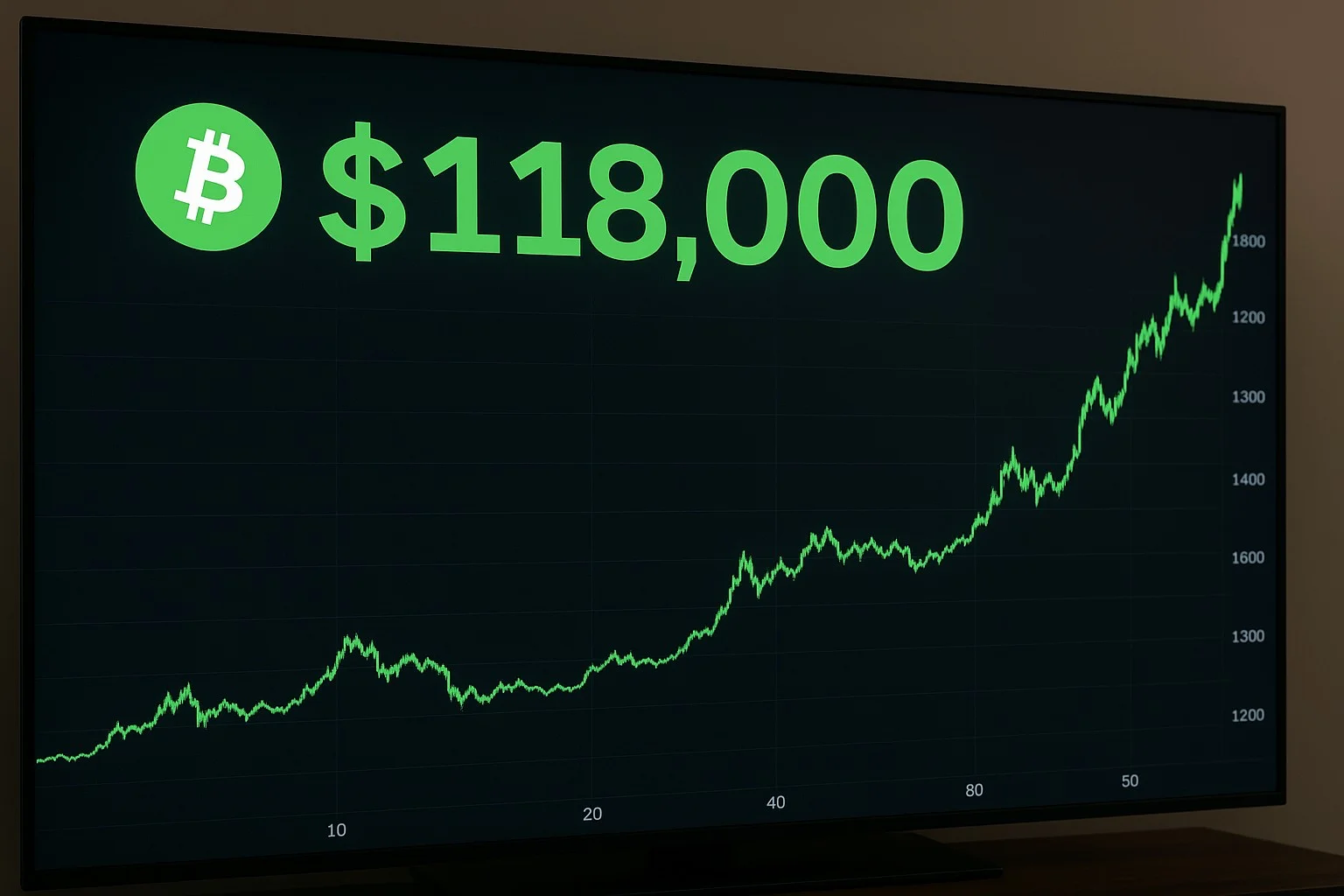
Bitcoin (BTC) surged 5% early Friday morning, surpassing $118,000 to reach an all-time high. Rising interest from institutional investors and strong inflows into spot Bitcoin ETFs are among the primary drivers of this Bitcoin record. In the last 24 hours, the price of Bitcoin has climbed to $118,254, while Ethereum (ETH) also rose 7% to $3,000. The $1.18 billion inflow into spot Bitcoin ETFs on Thursday, in particular, marked the second-highest daily inflow since the launch of these products.BTSE COO Jeff Mei stated that Bitcoin's new high could be the start of a major bull run. Vincent Liu, chief investment officer at Kronos Research, stated that a calmer macroeconomic environment and increasing institutional adoption are leading investors back into BTC. Liu also stated that the perception of Bitcoin as a "gold-like, long-term regulated asset" has reinforced institutional confidence.Presto Research analyst Min Jung also emphasized that expectations of a US interest rate cut and institutional investors' risk appetite are driving the increased demand for ETFs. Jung said, "We are observing more institutional investors, led by companies like Strategy, incorporating Bitcoin into their strategic asset allocations. The easier access provided by ETF approvals supports this expanding demand base."Many investors liquidated with the price increaseHowever, Bitcoin's rise wasn't limited to institutional inflows. A large wave of liquidations also occurred on the futures side. According to JrKripto's liquidation data, $1.26 billion worth of positions were liquidated in the last 24 hours, $1.11 billion of which came from short positions. This was the largest short liquidation so far in 2025. The largest liquidation occurred in a $88.5 million short position opened on the HTX exchange in the BTC-USDT pair. According to data, a total of 237,000 investors liquidated in this wave. Bybit led the way with $461 million in liquidations, followed by Binance and HTX. More than 92% of positions on Bybit were short. In leveraged trading, short positions are automatically closed when prices rise, which can create a domino effect that further accelerates the rise. Indeed, the recent price jump demonstrated the impact of this mechanism.Meanwhile, the US CPI data, due in mid-July, and expectations for an interest rate cut will be decisive for the market. According to analysts, the decline in macroeconomic uncertainty is increasing interest in crypto assets. Proposed legislation such as the GENIUS Act and the removal of restrictions on crypto broker taxes are seen as particularly positive for the market.
What is Kaspa (KAS)?
New projects are emerging every day in the cryptocurrency world. Kaspa (KAS) is one of them, a high-speed Layer-1 blockchain project we've been hearing about frequently lately. So, what is Kaspa, and what are its features that make it stand out from other decentralized blockchain projects? In short, Kaspa is an open-source Layer-1 blockchain that aims to solve scalability and transaction speed issues. In this guide, we will cover topics such as what KAS coin is, how Kaspa works, its technological differences, and its future.Kaspa's Definition and OriginsKaspa is a high-performance Layer-1 cryptocurrency project developed to provide an innovative solution to the scalability and transaction speed problems in blockchain technology. In its most basic definition, it is a platform that aims to eliminate the slowness and low transaction capacity problems experienced by traditional networks like Bitcoin. While achieving this, it utilizes a proprietary protocol and architecture to ensure decentralization and security. Designed with a completely open-source and decentralized structure, Kaspa is a community-driven project, independent of any company or authority. Its founding involved no pre-mining, private equity (VC) sales, or ICOs, ensuring fair distribution. In this respect, Kaspa stands out as a cryptocurrency that has operated on the principle of fair distribution from the outset. What makes Kaspa technically special is that it processes blocks in a graph structure, not a chain structure. Kaspa is built on a unique consensus protocol called GHOSTDAG. This protocol allows blocks to be generated in parallel, rather than being sequenced in a single chain, while still maintaining network consensus. In traditional blockchains (such as Bitcoin), when two blocks are generated simultaneously, only one wins, and the other is discarded as an orphan. However, Kaspa's GhostDAG protocol, instead of rejecting such orphan blocks, incorporates them all into the main structure and sorts them. As a result, the network can generate blocks much faster without compromising security. This architecture is called blockDAG. So, what is blockDAG? Simply put, it's a block structure where blocks are arranged in a Directed Acyclic Graph (DAG), a directed acyclic graph, rather than a single linear chain. Thanks to Kaspa's DAG structure, multiple blocks can be generated simultaneously, and these are processed in the correct order using the GhostDAG algorithm. This structure makes the network both scalable and significantly shortens block confirmation times. The image below provides a simple example of a DAG-based block structure: Source: A.S Albalooshi/LinkedIn Unlike traditional blockchains, Kaspa structures blocks on a DAG graph instead of a single chain. This way, multiple blocks formed simultaneously are not considered "orphans"; they are all incorporated into the main structure and sequenced using the GhostDAG protocol. So, what is GhostDAG? In this protocol, parallel blocks allow for a significant increase in the network's transaction capacity and speed. This innovative approach puts Kaspa at the forefront of the high-speed Layer-1 chain category.Kaspa's emergence dates back to 2021. The project was launched in 2021 by Dr. Yonatan Sompolinsky. Sompolinsky is an academic specializing in blockchain, particularly DAG (Directed Acyclic Graph)-based consensus algorithms. In fact, the GHOST protocol, developed in 2013 with his mentor Prof. Aviv Zohar, is known as a significant innovation even cited in the Ethereum whitepaper. In other words, Kaspa's founder is a pioneer in work that inspired Ethereum's scalability solutions. This history suggests that the Kaspa project emerged with a similar vision—high scalability and speed. The fact that the word "Kaspa" means "money" or "silver" in Ancient Aramaic adds an interesting cultural anecdote to this project.Ultimately, Kaspa emerged in 2021 as an academic-based initiative, combining the innovative GhostDAG protocol with the blockDAG architecture to become a high-speed and fair Layer-1 blockchain project. Now that we've covered the basics, let's briefly review Kaspa's development process and key milestones.Kaspa's History: Major MilestonesDespite its relatively new history, the Kaspa project has made significant strides in a short time. Here are some key milestones and developments from Kaspa's history:2021: The Kaspa mainnet was launched. Kaspa launched in November 2021 in a fair manner; the mainnet was fully open to the community, without pre-mining or private token sales. This marked the first live testing of the network using the underlying GhostDAG protocol.2022: The stable version of the GHOSTDAG protocol was released, increasing network stability. Throughout 2022, the Kaspa development team matured the GhostDAG algorithm, ensuring the secure and smooth operation of the network. This enabled the Kaspa network to consistently maintain a high block production rate. By the end of 2022, Kaspa had solidified its technical infrastructure and acquired a community of early adopters. 2023: Community growth accelerated, and Kaspa mining activity saw a significant increase. GPU miners, particularly those left idle after Ethereum's transition from proof-of-work to PoS, turned to Kaspa. Kaspa became a favorite among individual miners because it could be mined with a GPU (Kaspa mining) and was resistant to ASIC devices. During this period, the first open-source GPU mining software was developed, and the Kaspa network's hash rate rose rapidly. With the growth of the community, Kaspa's market capitalization also increased significantly; in 2023, the KAS price rose from a few cents to ten cents, attracting attention to the project.2024: Kaspa began listing on major cryptocurrency exchanges, and its market capitalization increased significantly. In late 2023 and early 2024, top-tier centralized exchanges such as KuCoin, Gate.io, Bybit, and Kraken listed the KAS token. This allowed Kaspa to reach a wider investor base, and daily transaction volumes began reaching millions of dollars. In August 2024, the KAS price rose to approximately $0.20, reaching an all-time high. In 2024, Kaspa announced future goals, such as smart contract support, in its technical roadmap.2025: A major technological leap forward occurred in the Kaspa network. In May 2025, with an update codenamed "Crescendo," Kaspa's core software was rewritten from Go to Rust, increasing its block generation speed by a factor of 10. Previously, Kaspa generated 1 block per second, but after this update, it could generate 10 blocks per second. This made Kaspa the world's fastest proof-of-work (PoW) blockchain. The GhostDAG protocol achieved its full potential for the first time at 10 blocks per second, offering a practically instantaneous transaction confirmation experience. Moreover, while this improvement was made, the network's decentralized and secure structure remained intact, making it possible to run a Kaspa node even with a standard computer. 2025 also saw increased expectations for Kaspa to be listed on major exchanges. While not yet listed on major platforms like Binance, the Kaspa community and developers continued to work to further advance the growing project. As a result, by 2025, Kaspa had become a technically mature blockchain project with proven scalability and a strong community.Why Is Kaspa Valuable?For a crypto project to be successful in the long term, it must possess a fair and sustainable ecosystem, in addition to its technical advantages. The key features that make Kaspa valuable can be summarized as follows:High scalability and transaction speedKaspa's blockDAG architecture provides it with unparalleled scalability. Unlike traditional blockchains, Kaspa can generate multiple blocks simultaneously, theoretically capable of processing thousands of transactions per second. Indeed, even rival projects claim that the Kaspa network can achieve a performance of approximately 10,000 TPS (transactions per second). The 2025 update, which reduced block time from 1 second to 0.1 seconds, made Kaspa one of the fastest Layer-1s in practice. Thanks to this high throughput, the network can operate without congestion even under heavy usage conditions. For example, if we compare Kaspa vs. Bitcoin: While Bitcoin is limited to a maximum of 7 transactions per second, Kaspa far exceeds this limit with its parallel block generation. While Bitcoin is forced to keep block generation rates low to maintain security, Kaspa eliminates this requirement with GhostDAG, offering a high-speed Layer-1 chain without compromising security or decentralization. Kaspa block structure. Source: Kaspa Instant confirmation and low latencyThe Kaspa network can provide near-instant finality in confirming transactions. Thanks to its very short block times and the ability to add blocks in parallel, the time between a transaction being sent to the network and its confirmation is a blink. In Kaspa, the initial confirmation is sub-second. This means a transaction can be included in blocks and confirmed in a fraction of a second. This speed is particularly advantageous for instant payments or e-commerce transactions in daily life. While it takes minutes (or even around 10 minutes for Bitcoin) for a transaction to be finalized on networks like Bitcoin or Ethereum, Kaspa allows for highly reliable confirmation within seconds because blocks arrive sequentially and quickly. Furthermore, thanks to the GhostDAG protocol, multiple confirmations arrive with parallel blocks, ensuring transaction finality is also achieved quickly. Another consequence of low latency and high speed is low transaction fees. Because a large number of transactions can be processed on the network per unit of time, fees remain very low, even as demand increases. Kaspa charges its users only pennies or less per transaction, making it attractive for micropayments or applications requiring frequent transactions.Fair and decentralized economic modelAnother aspect that increases Kaspa's value is its fair distribution and economic mobility. Unlike many projects, Kaspa launched entirely community-driven. This means it started from scratch without any pre-sale, private investment, or secret team allocations. This prevents the accumulation of coins in the hands of a specific group, ensuring a distributed distribution. From the beginning, the project has remained committed to being 100% open-source and 100% decentralized, with no single authority in governance or decision-making. Kaspa's total supply is also transparent: the maximum supply is set at approximately 28.7 billion KAS. Instead of halvings every four years like Bitcoin, Kaspa implements small monthly reductions to gradually reduce inflation, coinciding with annual halvings. This "smooth emission" model prevents sudden supply shocks and makes miners' rewards more predictable. Ultimately, Kaspa is designed to have a deflationary structure with decreasing inflation over time. The limited and fairly distributed supply also enhances Kaspa's potential for storing value.Accessibility and ASIC resistance in miningKaspa utilizes proof-of-work (PoW) consensus, but prioritizes fairness and accessibility in mining. Thanks to the specially developed kHeavyHash algorithm, Kaspa mining can be done efficiently with GPU graphics cards. This algorithm utilizes high computational power efficiently and is energy-optimized. Designed to be resistant to ASIC devices, it: In other words, instead of an environment where only massive ASIC mining farms, as in Bitcoin, were profitable, the goal was an ecosystem where ordinary users could participate with their graphics cards. Indeed, in Kaspa's early years, mining with CPUs and GPUs was at the forefront, and block rewards were distributed among small miners. The very short block time also reduces fluctuations in mining income. For example, because Bitcoin's block discovery interval is 10 minutes, solo mining has low income stability, forcing miners to join large pools. However, because Kaspa generates multiple blocks per second, even small-scale miners have the opportunity to find blocks more frequently, reducing the need for pooling and decentralizing mining. As a result, we can say that Kaspa mining operations are open to the masses, energy-efficient, and fair. GPU mining equipment The points above summarize that Kaspa is a relatively strong project in terms of technology and community. Kaspa offers an innovation that brings the blockchain trilemma (the triple bind between security, scalability, and decentralization) closer to a solution. As a highly secure PoW network, Kaspa offers resistance to 51% attacks comparable to Bitcoin (security), the ability of even ordinary users to run and mine full nodes (decentralization), and the high transaction throughput it achieves (scalability) make Kaspa unique. All these features also hold promise for the future of Kaspa Coin. The development team is currently working on new Rust-based infrastructure, smart contracts, and DeFi integration.Who is the Founder of Kaspa?Kaspa's founder is Dr. Yonatan Sompolinsky. Yonatan Sompolinsky is a computer scientist and cryptographer known for his pioneering academic work in the blockchain field. In 2013, while still a graduate student, his advisor, Prof. Together with Aviv Zohar, he designed an alternative block validation mechanism called the GHOST protocol. This protocol was one of the innovations mentioned in Ethereum's whitepaper as a scalability goal and made Sompolinsky a well-known name in the blockchain world. The Kaspa project, a product of this academic background, was launched by Yonatan Sompolinsky in 2021. Sompolinsky wanted to implement DAG-based consensus algorithms inspired by Ethereum's "uncle block" structure in the real world, and he brought this vision to life with Kaspa. Yonatan Sompolinsky Beyond the founder, Kaspa is backed by a strong team of developers and researchers. DAGLabs, a research company founded by Sompolinsky, played a significant role in the project's emergence. Within DAGLabs, the GhostDAG protocol was implemented, laying the foundations for Kaspa. The project was subsequently made fully open source and has continued to evolve with contributions from a growing community. Kaspa's core development team includes many experts in distributed systems and cryptography. Developers such as Michael Sutton, Shai Wyborski, Mike Zak, Elichai Turkel, and Anton Yemelyanov have played a significant role in the maturation of Kaspa's codebase.The Kaspa project is maintained by a decentralized community. This means Kaspa lacks a single, centralized institution, similar to the Ethereum Foundation. Instead, it utilizes distributed structures that support the Kaspa ecosystem. For example, the nonprofit, community-driven Kaspa Ecosystem Foundation incentivizes contributors by providing grant programs to developers. Thanks to initiatives like these, Kaspa's development has been made sustainable. While not a formal company, the Kaspa community operates globally. In fact, the project defines itself as a DAO (decentralized autonomous organization) and is governed by community initiative without a legal entity. Development proposals, network updates, and other decisions are discussed on online platforms and made by community consensus.In short, the project, born from the visionary work of Kaspa founder Yonatan Sompolinsky, has become an open-source Layer-1 blockchain project supported by a wide range of developers and users. While Sompolinsky's academic work continues to guide the project, organizations like the Kaspa Foundation help coordinate the community. This makes Kaspa a truly decentralized cryptocurrency project, growing through collective effort and not under a single leader.Frequently Asked Questions (FAQ)In the following section, we will address the most frequently asked questions and answers about Kaspa.What is Kaspa, and how is it different from other blockchains?: Kaspa is a high-performance Layer-1 blockchain project developed with a focus on scalability and speed. Its key difference is that it processes blocks on a graph structure called blockDAG instead of a chain; this allows multiple blocks to be confirmed simultaneously, making the network operate much faster. This allows Kaspa to support high transaction throughput without sacrificing decentralization, unlike traditional blockchains like Bitcoin, and confirms transactions almost instantly.What is the GHOSTDAG protocol?: GHOSTDAG is the name of the proprietary consensus protocol used by Kaspa. Standing for "Greedy Heaviest Observed Subtree Directed Acyclic Graph," this protocol allows multiple blocks to be created simultaneously and orders these blocks on a directed acyclic graph (DAG). In short, GhostDAG generalizes the classic "chain" model by establishing a ranking and voting mechanism between parallel blocks, allowing the network to both generate blocks very quickly and achieve secure consensus.How does Kaspa mining work?: To mine Kaspa, you first need computer hardware—preferably a powerful GPU (graphics card). Because Kaspa uses a PoW algorithm called kHeavyHash, it can be mined efficiently with standard GPUs and is currently resistant to ASIC devices. To mine, you first create a wallet, then use a mining software (miner) to connect your GPU's computing power to the Kaspa network. You can mine solo or join a mining pool to earn more regular rewards.Is Kaspa's supply limited?: Yes, Kaspa's maximum supply is limited. The total maximum supply is set at 28.7 billion KAS, and new Kaspa coins will continue to be mined until this amount is reached. Kaspa's reward mechanism has an issuance schedule that halves annually (with monthly gradual decreases), meaning that the amount of new KAS in circulation will decrease over time, and the total supply will remain constant in the long term.Who developed Kaspa?: Kaspa is a project started by Dr. Yonatan Sompolinsky. However, development is not limited to a single person or company; as Kaspa is a completely open-source project, developers from all over the world contribute. The project's governance is also decentralized – it has a decentralized development model driven by the Kaspa Foundation and the community; meaning Kaspa is an ecosystem driven by the collaborative efforts of its community members.How low are transaction fees on Kaspa?: The Kaspa network offers very low transaction fees thanks to its high efficiency. The fee for a standard Kaspa transfer is typically under a penny, meaning it's negligible (unless network congestion increases dramatically). This low fee policy makes Kaspa ideal for small payments or applications requiring frequent transactions.To learn more about Kaspa's high-speed and decentralized architecture, stay tuned for the JR Kripto guide series.

Famous Crypto Miner Changes Course: Will Establish a Solana Treasury!
Crypto mining company BIT Mining has made a radical shift in its operations, shifting its focus to the Solana (SOL) ecosystem. The New York Stock Exchange (NYSE)-listed company announced plans to gradually accumulate SOL by raising between $200 million and $300 million.BIT Mining to exchange all of its cryptocurrency to SolanaAccording to the company's press release, BIT Mining will convert all of its existing crypto assets to Solana and adopt a long-term holding strategy. It will also operate validator nodes on the Solana network, contributing to the network's decentralization and seeking to generate income from on-chain staking rewards.BIT Mining CEO Xianfeng Yang described this strategic move as "a bold entry into one of the most dynamic and promising ecosystems in the blockchain world." Yang stated in his statement: “We are embarking on this new path to adapt to the changing industry and generate lasting value. We believe that with our robust infrastructure and long-term vision, we will accelerate sustainable growth for our shareholders.”The company's current operations include custom hardware design and hosting services for Bitcoin, Litecoin, Dogecoin, and Ethereum Classic mining. BIT Mining, particularly notable for its 7nm Bitcoin mining chips, currently ranks 17th in market capitalization among publicly traded Bitcoin mining companies. Following the news, the company's share price (BTCM) gained over 250 percent in pre-market trading on Thursday. This move makes BIT Mining one of the latest companies to join the institutional crypto treasury race. This strategy, pioneered by MicroStrategy, involves companies including digital assets such as BTC, ETH, SOL, XRP, and BNB on their balance sheets. BIT Mining's choice of Solana distinguishes it from companies like Bit Digital and BitMine, which are making Ethereum-focused moves. Meanwhile, two other mining companies with the "Bit" prefix have shifted their focus to crypto treasury strategies in recent weeks. Nasdaq-listed Bit Digital has completely transitioned away from Bitcoin mining and begun accumulating ETH. The company recently raised $173 million in capital, bringing its Ethereum reserves to over 100,000. BitMine, meanwhile, set out to increase its ETH holdings 16-fold with a $250 million private placement. Fundstrat co-founder Tom Lee was among the investors, and Lee was also appointed chairman of BitMine's board of directors.BIT Mining's history is also noteworthy. In 2021, the company operated as 500.com, a China-based sports lottery service provider. At the time, the company was in the spotlight due to allegations of bribery against Japanese government officials. In April 2021, the company shifted its focus to crypto mining and changed its name. BIT Mining reached an agreement with the US Department of Justice and the SEC, agreeing to pay a total of $10 million in fines.
What is Kaia (KAIA)?
What is Kaia? It is a Web3 protocol that stands out with its on-chain information generation, AI integration, and community-focused governance model. Kaia can be defined as an AI-powered content platform and is attracting attention in the AI blockchain project field. Born on August 29, 2024, through the merger of Kakao's Klaytn and LINE's Finschia networks, Kaia has attracted attention since its inception with its potential to reach over 250 million Asia-based users. In this guide, we will explore the details of Kaia project, its history, its value, and the team behind it. We will also discuss the innovations offered by the Kaia Web3 ecosystem and the use cases of the KAIA token (Kaia coin).Kaia's Definition and OriginsKaia was developed as a decentralized content protocol built on AI-powered information generation, verification, and distribution. Its primary goal is to make AI-generated content transparent and immutable by recording it on the blockchain, rewarding those who contribute to it, and sharing knowledge in a censorship-resistant, distributed manner. In short, Kaia combines the productive power of AI technology with the reliability of blockchain technology to offer a participatory knowledge production protocol. In this way, it aims to introduce a new knowledge economy model in the digital world: Content creators and verifiers are rewarded proportionally to their contributions, while users gain access to reliable and verified information through on-chain knowledge production. Artificial intelligence knowledge production process The Kaia protocol was first announced in 2024 and opened to community participation. Kaia's origins lie in the merger of two major Asian blockchain startups: Klaytn, a Kakao-backed company in South Korea, and Finschia, the blockchain of Japan-based LINE. These mergers, with the approval of their respective communities, led to the merger in early 2024. This merger gave birth to a new ecosystem called the Kaia network and the KAIA token. The Kaia mainnet officially launched at the end of August 2024, and the new brand identity was introduced to the community. Designed as an open-source and permissionless network, the project focused on creating an environment where everyone could contribute and participate in development from day one. In short, Kaia emerged as a Web3 protocol centered on transparency and participation in knowledge creation, with an approach we might call the AI data verification chain.So, what is the Kaia token? KAIA is the protocol's native cryptocurrency and forms the economic foundation of the network. If you're wondering what the Kaia token (KAIA coin) is used for, it's used to pay transaction fees on the network, run smart contracts, and reward users for their contributions. The KAIA token is also used to participate in governance votes within the Kaia ecosystem and support network security through staking (we'll cover these topics shortly). In short, KAIA is the utility token at the heart of all activities within the protocol.Kaia's History: Major MilestonesThe Kaia project's development has gone through several significant stages since its announcement in 2024. Here are some milestones from Kaia's history:2024 – Project announcement and beginning of community participation: Project Kaia, the merger of the Klaytn and Finschia networks, was first announced in early 2024. In January 2024, the communities of both projects voted to approve the proposal for the mainnet merger. This enabled Kaia to gain broad community support even before its mainnet launch. In April 2024, a new identity featuring the "Kaia" brand and ampersand logo was announced, emphasizing community, sustainability, and simplicity among the values represented by this identity.Mid-2024 – Early testing and preparations: Before the Kaia mainnet was launched, some innovative systems were tested on the testnet. For example, a knowledge blockchain system was piloted, which records content generated by AI models on-chain and verifies it by tracking its contributors. Community members experimented with the protocol's working blockchain by contributing content to the testnet and verifying others' content. During this process, significant feedback was gathered regarding contribution verification mechanisms and how information flow would be tracked on the blockchain. Using data from these early tests, the Kaia team matured the protocol's infrastructure and integrated measures to prevent potential abuse.August 2024 – KAIA mainnet launch and token migration: The Klaytn and Finschia networks officially merged, and the Kaia mainnet went live on August 29, 2024. With this merger, the cryptocurrencies of both legacy networks (KLAY and LINK/FNSA) were converted into the new KAIA token. Starting with a total supply of approximately 5.7 billion, KAIA coins were initially distributed through a 1:1 swap for KLAY and a 148:1 swap for Finschia (LINK). With the launch of the mainnet, the first staking model was implemented: Those who wanted to become validators or contribute as delegators to the network's consensus mechanism began participating by staking (locking) a certain amount of KAIA tokens. The protocol was adjusted so that newly minted KAIA rewards were distributed to validators and stakers with each block. This ensured both network security and provided economic incentives to early contributors.Late 2024 – First partnerships and ecosystem growth: With the launch of the mainnet, Kaia began attracting real-world use cases and applications. The first collaborations with Web3 content creators and AI developers occurred during this period. For example, in November 2024, the first AI-powered decentralized application, called FlareAI, was launched on the Kaia blockchain. This application combined AI and blockchain by leveraging Kaia's high-speed, low-latency infrastructure to improve data quality and privacy. The launch of FlareAI on Kaia served as a concrete demonstration of the integration of AI and blockchain, attracting new developers to the ecosystem. The Kaia Foundation also initiated discussions with various teams developing content platforms, NFT projects, and data verification tools. Integrations with identity and data infrastructure providers like CARV were announced, paving the way for user contributions to be associated with on-chain identities and rewarded. Thanks to these early partnerships, the Kaia network gained growth momentum in both content creation and AI applications.2025 – Ecosystem growth, technical updates, and AI integration: 2025 marked the strengthening of the technical infrastructure and significant improvements to the user experience for Kaia. Version updates v2.0.1, v2.0.2, and v2.0.3, released in the first half of the year, increased network stability, addressed backward compatibility issues, and integrated advanced features such as platform-level multisig support. In particular, the tools provided by the Kaia Toolkit for developers for multisig processes have offered significant security advantages for DAOs and institutional actors. Furthermore, the Kaia Agent Kit was introduced, a new software component that facilitates on-chain interactions for developers. The Trustless Gas Abstraction feature, announced in June, now allows users to pay gas fees directly with stablecoins, significantly increasing the Kaia network's Web3 accessibility. At the same time, the integration of DeFi and AI within Kaia's Mini Dapp ecosystem accelerated, and new scenarios for how AI-powered dApps could be used in the DeFi space began to be tested. Finally, a comprehensive research report published in May 2025 analyzed the technical structure, user experience, and integration potential of the Mini Dapp infrastructure, providing a detailed roadmap for the community.Why Is Kaia Valuable?In other words, Kaia offers an infrastructure that integrates AI-powered content creation with on-chain recording, verification, and incentive mechanisms. So, why might Kaia be valuable? Is it truly a project worth considering? Let's take a closer look.On-chain, verifiable information productionKaia provides transparency by recording the content generated by AI models on-chain. This allows for the identification of when and by whom information was created, its original sources, and any changes made to it to be traceable on the blockchain. Because content is stored as immutable records, the accuracy of the information can be verified by the community and is protected against manipulation. In short, Kaia removes the dependence of information flow on the internet on central authorities or individual servers and supports the blockchain with a trust mechanism, creating a reliable Kaia information chain. Knowledge production cycle Staking and reward incentives for network contributorsKaia incentivizes participants through its staking and contribution reward system. Anyone who contributes information to the network, verifies content, or supports the network's technical infrastructure (e.g., by running nodes) is motivated by KAIA token rewards. For example, users can participate in the network's consensus process by staking their KAIA tokens and earn regular rewards in return. Content creators are also rewarded with tokens for quality contributions. This economic model keeps the network vibrant and healthy by encouraging participants to act with a long-term perspective. Ultimately, Kaia offers its users a new digital information economy based on a "contribute-to-earn" model. A sample reward scheme. Rewards distributed for Epoch #1. Source: Kaia Portal Community-driven governance with a DAO structureKaia is a project that adopts the decentralized autonomous organization (DAO) model. This means that network-related decisions, such as parameter changes or verification of content accuracy, are determined by community votes rather than a central authority. KAIA token holders can direct protocol development by voting within the Kaia DAO. For example, issues such as the network's inflation rate, fee structure, or content rules can be voted on by token holders. This democratic approach supports the vision of a participatory knowledge creation protocol, placing the accuracy control over information and content directly within the users themselves. Kaia's governance model is built on three pillars: a community comprising all KAIA token holders, a council that implements recommendations, and a foundation that provides technical guidance. This creates a flexible structure that minimizes errors and enables rapid decision-making through broad participatory discussion and voting processes. In short, the Kaia network fulfills its claim to be a decentralized content protocol through robust DAO governance. The latest recommendations from the DAO. Source: Govforum.Kaio A new digital information economy model with the combination of AI + Web3Perhaps Kaia's most innovative aspect is its blend of AI and Web3 concepts. Today, content creation is becoming more automated thanks to AI models, but the accuracy or origin of this content can often be uncertain. Kaia, on the other hand, instantly processes AI-generated content on the blockchain, making every piece of information traceable. Furthermore, it enables the creation of economic value on this content (such as token rewards, trading, or licensing). This, unlike traditional content platforms, creates a new digital information economy where everyone who produces, verifies, and consumes information can share in the value stream. With its modular and AI-compatible structure, the Kaia network paves the way for future AI-integrated Web3 applications. For example, innovative use cases such as decentralized AI marketplaces, verifiable AI generation (such as fraudulent content detection), and AI-powered gaming experiences are already blossoming on Kaia.Who is the Founder of Kaia?The Kaia project has no single, definitive founder. The project was developed collectively by a multidisciplinary team experienced in artificial intelligence, blockchain, and digital information systems. The core of this team is comprised of the technical staff and communities of the two merged projects (Klaytn and Finschia). The Kaia DLT Foundation, established after the 2024 merger, serves to maintain and coordinate the project. However, rather than retaining central control of the project, the foundation acts as a facilitator, implementing community decisions and providing technical support.From the outset, the project has been developed as open source and operates on decentralized governance principles. This means that Kaia's code is available to the entire community on platforms like GitHub, and anyone can contribute. The team frequently emphasizes their belief that the protocol's success depends on community contributions rather than individual contributions. Therefore, the project team prefers to focus on the protocol's function and purpose rather than its own identities. The ampersand symbol chosen as the Kaia brand logo symbolizes this approach. While Kaia has strong institutional backers (initiatives from tech giants like Kakao and LINE form the foundation of this project), its governance model is a community-led DAO. Key decisions are made through a council comprised of various stakeholders, called the Kaia Council, and through votes involving all token holders. Over time, as the community grows and the ecosystem develops, Kaia's governance structure evolves, becoming more democratic and decentralized.Frequently Asked Questions (FAQ)So far, we've touched on many topics, including what Kaia is, how it came into being, its technological infrastructure, and why it stands out as a valuable project. Kaia's AI-powered knowledge production model, on-chain ledger system, and community-based governance approach make it not only a technical innovation but also a venture poised to shape the future of digital information. Of course, many questions arise in the minds of both investors and users new to the Web3 world: How does Kaia actually work? What are the benefits of the KAIA token? How is AI-powered content creation integrated into the chain? How does the community participate in governance? In this section, we will address these frequently asked questions.What is Kaia (KAIA) and what does KAIA token do?: Kaia is an AI-powered blockchain-based information production protocol. It stores, verifies, and shares content generated by AI models on the chain with the community. This provides a reliable, transparent, and decentralized information platform; in short, it is both an AI blockchain project and a community-driven content ecosystem.How does AI-powered information creation work?: AI-powered content creation on Kaia occurs by recording the data generated by AI models on the blockchain. For example, when a user produces AI-powered content (an article, image, response, etc.), its hash value and metadata are committed to the Kaia chain. Community members then confirm the quality of this content by voting or verifying it, thus making AI-generated information an on-chain reference. How are contributors rewarded?: Everyone who contributes to the Kaia ecosystem is incentivized with token rewards. For example, users who contribute to block production or verify content as validators on the network receive rewards in KAIA tokens. Content creators can also earn tokens if their content is liked and approved; this reward system aims to maintain quality information production and network security.What is the KAIA token used for?: The KAIA token (Kaia coin) is the native cryptocurrency of the Kaia network and has a variety of uses. KAIA is primarily used to pay for transactions on the network. KAIA tokens are also used to stake and participate in network consensus and gain voting rights in governance votes. So, the purpose of the Kaia coin lies in its role in every aspect of the network, from transactions to governance.How does the Kaia DAO structure work?: Kaia's DAO structure is a decentralized and community-driven governance mechanism. KAIA token holders have a say in decisions about the future of the network by participating in periodic votes. Proposals are first discussed within the community, then put to a vote and, with majority approval, integrated into the protocol. The Kaia Council and foundation provide technical guidance during this process, but the final say rests with the community.Is the project open-source?: Yes, the Kaia project is fully open-source. The project's source code and documentation are open to anyone to review and contribute. This allows developers to easily integrate into the Kaia ecosystem, and the community can transparently monitor the project's progress. Being open-source also allows Kaia's security vulnerabilities to be quickly identified and addressed, enabling collective innovation.To explore the decentralized future of knowledge production in the age of artificial intelligence, check out JR Kripto's Kaia (KAIA) guide.
Trump Jr.'s Investment Company Will Add DOGE, LTC, SOL, XRP, ETH, and USDC to Its Reserves
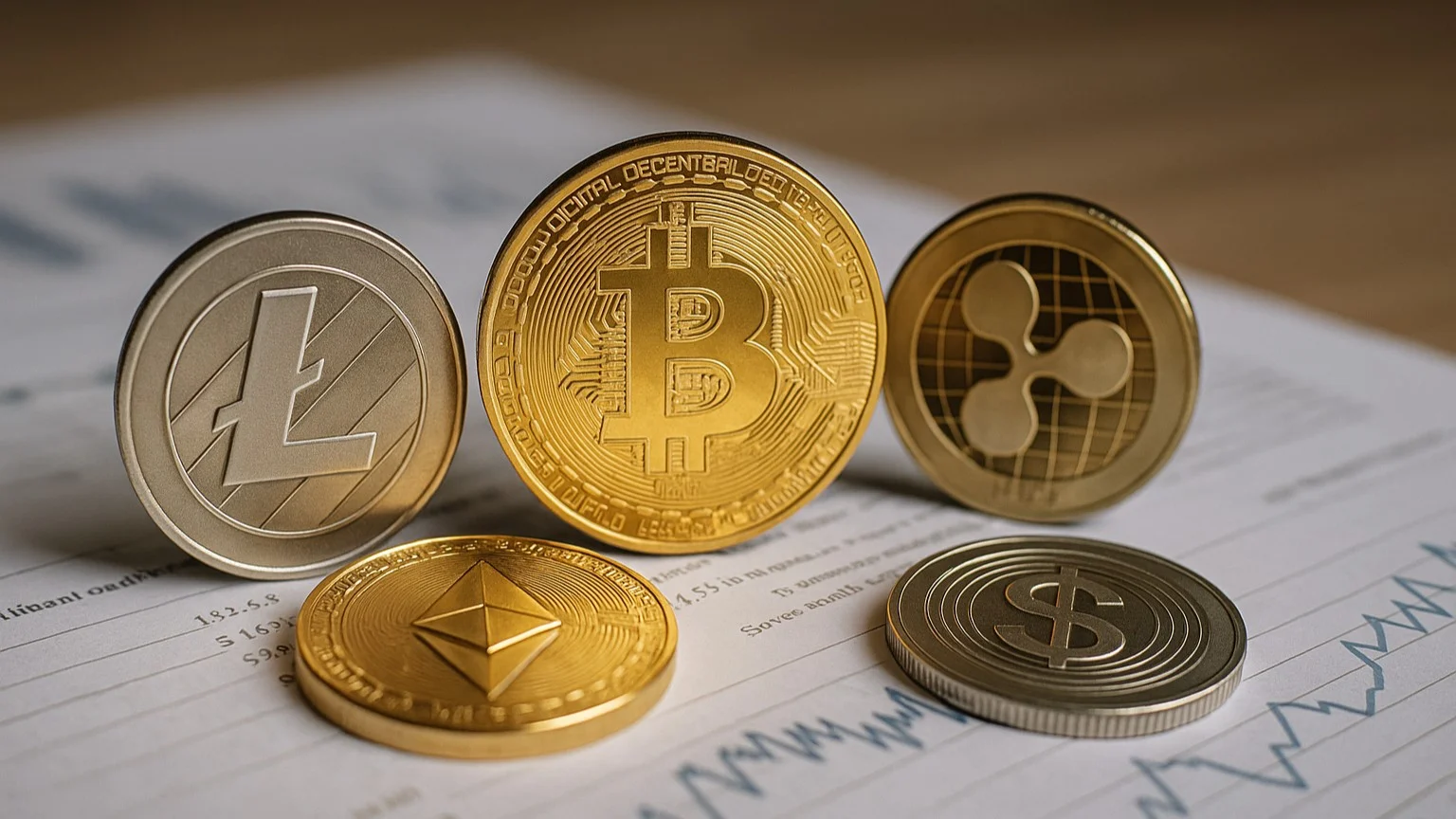
Los Angeles-based social media marketing firm Thumzup Media Corporation (TZUP) has decided to expand its cryptocurrency holdings. The company's board of directors has approved the inclusion of leading altcoins such as Dogecoin (DOGE), Litecoin (LTC), Solana (SOL), Ripple (XRP), Ethereum (ETH), and USD Coin (USDC) in its reserves, expanding beyond Bitcoin.Trump Jr. purchased 350,000 sharesThis move comes just days after it was announced that Donald Trump Jr. invested approximately $4 million in Thumzup. According to Bloomberg, Trump Jr. purchased 350,000 Thumzup shares at the recommendation of an investment advisor. While Trump Jr. doesn't have a direct role in the company's management, the timing of the investment is noteworthy. This move by Thumzup has truly garnered attention in the crypto space, especially considering the Trump family's recent growing interest in cryptocurrencies. The company had invested in BitcoinThumzup had been pursuing its Bitcoin accumulation strategy since January. The company's current BTC holdings stand at 19.11 units, worth approximately $2.1 million. This strategy allows for up to 90% of the company's liquid assets to be held in cryptocurrencies. With the new decision, a significant portion of this reserve will now be spread across different cryptocurrencies.CEO Robert Steele said, "We believe a diversified approach to digital assets can increase our financial flexibility as we scale our AdTech platform." The company's core service is centered around an app that allows users to earn cash by sharing specific ads on social media platforms like Instagram. Advertisers can customize their campaigns from their own dashboards, and users receive payments through digital platforms like PayPal.However, Thumzup's financials remain quite weak regardless of its crypto investments. The company generated only $151 in revenue in the first quarter of 2025 and reported a net loss of $2.2 million in the same period. Meanwhile, investors were wary of this aggressive crypto move. The company's shares fell more than 14% on Wednesday following these statements. Table showing Thumzup's losses. Source: Thumzup Thumzup's strategy also reflects the Trump family's general support for crypto initiatives. In March, Eric Trump joined the advisory board of Japan-based Metaplanet, which has converted a significant portion of its reserves into Bitcoin. Trump Media & Technology Group also announced plans to invest in Bitcoin, raising $2.3 billion through Truth Social.
Justin Sun Pledges $100 Million for Trump's Meme Coin
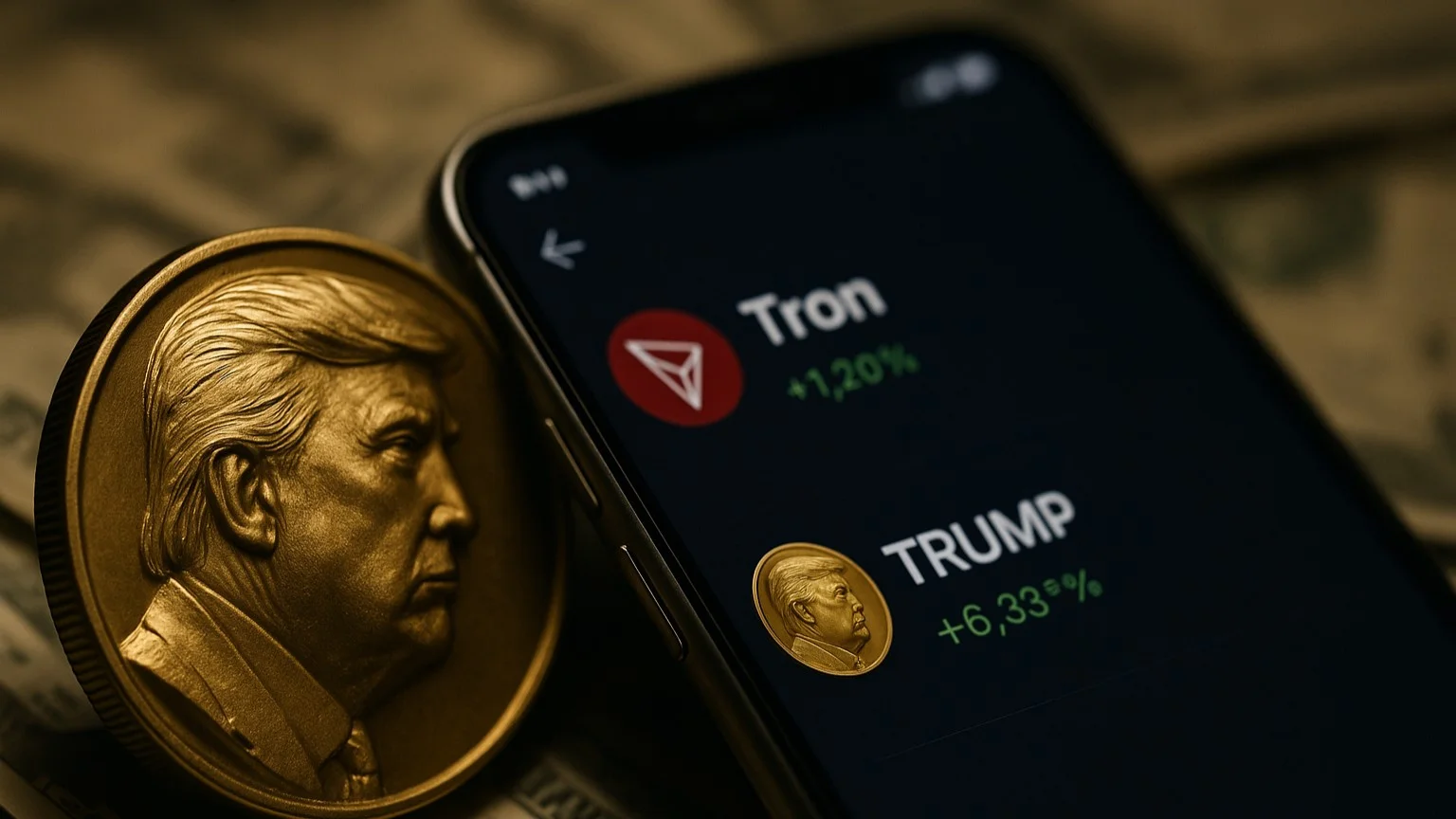
Tron founder Justin Sun, one of the most recognizable figures in the crypto world, has committed to a major investment in the TRUMP meme coin, owned by former US President Donald Trump. In a post on the social media platform X, Sun stated, "We are committing to investing $100 million in TRUMP," stating that this step aims to foster the growth of crypto ecosystems through collaboration.Sun not only made this statement, but also emphasized his belief that this move will expand the crypto space through the collaboration of the TRON and TRUMP communities. Referring to the official @GetTrumpMemes account, he stated that this investment will play a significant role in the future of the Trump-backed meme coin.TRUMP token now migrates to the TRON networkJust two days before this announcement, the Tron DAO announced that the TRUMP meme coin would be launched on the Tron network. This development generated excitement among both Tron and Trump supporters, with the value of the TRUMP token rising 2.7 percent to $8.89 on the same day.As you may recall, Justin Sun is one of the leading investors in the TRUMP token. According to CNBC reports, Sun previously held one of the largest wallets in the field, with approximately $19 million worth of TRUMP tokens. Sun also attended a private gala dinner hosted by Trump earlier in the year. Trump and Sun's relationship deepensThe ties between Justin Sun and Donald Trump are not new; they have only recently strengthened. Immediately after Trump won the November 2024 election, Sun invested $30 million in the Trump-inspired World Liberty Financial project, which also includes his sons as ambassadors. This amount was quickly increased to $75 million, and Sun also began serving as an advisor on the project. In January, World Liberty purchased millions of dollars worth of TRX tokens from the TRON network, which Sun founded.Is the legal process easing?The legal problems Justin Sun is facing in the US are also drawing attention. Last year, the US Securities and Exchange Commission (SEC) filed a lawsuit against Sun and three of his companies for the unregistered distribution of TRX and BTT tokens. However, following the Trump administration's positive approach to crypto, there are signs that the SEC's stance is softening.In a document filed in the Federal Court for the Southern District of New York recently, lawyers for the SEC, Sun, and his companies jointly requested a stay of proceedings. This development is being interpreted as suggesting that Trump's more crypto-friendly approach could give Justin Sun an advantage in resolving his legal issues in the US.
SOL Comment and Price Analysis July 9, 2025
SOL Technical OutlookThere is a clear descending channel pattern on the SOL chart. This pattern, which can be seen on the daily timeframe, is very clear on the 4H timeframe. The support range of $139.90–$146.78 where the upward breakout occurred currently seems to be a critical horizontal zone. Falling Channel Fracture There have been three price tests to the upper boundary of the channel. The fourth test has occurred and the upward breakout, also the target of the falling channel, has occurred and the price is trading above this breakout for the time being. Major levels are $139 and the support level $132, which also coincides with the trend support level. $167.79, $197.80, and $223.09 are major upward targets.These analyses, not offering any kind of investment advice, focus on support and resistance levels considered to offer trading opportunities in the short and medium term according to the market conditions. However, the user is responsible for their own actions and risk management. Moreover, it is highly recommended to use stop loss (SL) during the transactions.
What is Jupiter (JUP)?
In the crypto world, decentralized finance (DeFi) continues to revolutionize the world by allowing users to conduct financial transactions without the need for traditional intermediaries. However, this freedom also brings with it some challenges: fragmented liquidity, volatile prices, and user-unfriendly interfaces. This is where Jupiter (JUP), which runs on the Solana blockchain, comes into play. Jupiter is an advanced aggregator protocol that scans multiple decentralized exchanges (DEX) and offers the best prices to the user. It allows users to easily buy and sell at the most advantageous rates without being exposed to complex DeFi transactions. It brings together many features under one roof, from swap transactions to limit orders, from DCA (dollar cost averaging) strategies to bridging and perpetuals transactions, making DeFi more accessible. However, it would be insufficient to describe Jupiter as just a “DEX aggregator.” The project is building a financial ecosystem that redefines the user experience by leveraging Solana’s low-cost and high-speed infrastructure. Designed for both beginners and experienced traders, it stands out with its user-friendly interface, advanced trading tools, and decentralized governance. Jupiter, which has been growing steadily since its launch in 2021, currently manages more than 50% of the total DEX trading volume on Solana and is a leader in the DeFi space. In this guide, we will cover in detail what Jupiter does, how it works, the role of the JUP token, and the big steps it has taken so far. Let's answer questions such as what is Solana Jupiter, how does Jupiter work?Jupiter Definition and OriginJupiter is a decentralized finance (DeFi) protocol running on the Solana blockchain. By aggregating prices from different decentralized exchanges (DEX) and liquidity pools in one place, it allows users to easily find the best exchange rates. This makes it possible to reach the most advantageous prices without having to check each platform separately.Jupiter's goal is not limited to just offering the best trading rates; it also aims to establish a strong trading infrastructure in Solana's rapidly growing DeFi world. By using liquidity more efficiently and simplifying transaction routes, it makes DeFi transactions easier and more accessible for everyone. Users can now easily reach the best rates without having to check different exchanges one by one. Jupiter homepage. The platform offers a range of services. Source: Jup.ag Jupiter was launched in October 2021. This period coincided with the rapid expansion of the Solana ecosystem and the high interest of users in low-cost, fast solutions. Jupiter was developed in response to this need, as a DEX router using Solana’s fast and low-fee infrastructure. Thanks to Solana’s high-volume transaction-per-second architecture, Jupiter can seamlessly handle large-volume and frequent exchanges. The project’s initial goal was to become Solana’s default trading platform and provide the ecosystem’s most robust trading infrastructure.Jupiter’s launch in 2021 and its goal of leveraging Solana’s fast, low-cost infrastructure took it beyond being just a protocol that runs on Solana. By consolidating the dispersed liquidity on Solana into one place, Jupiter increased user confidence in the platform and increased trading volume. This led to increased adoption of Solana and increased its competitiveness in the DeFi space.Jupiter’s History: Major MilestonesJupiter’s short but eventful history showcases its rise in the Solana ecosystem and its innovative approach to DeFi. Let’s take a look at what happened one by one:2021: Launch and first protocol integrations. Jupiter officially went live on the Solana blockchain in October 2021. The project’s initial goal was to become Solana’s default exchange platform and build the most robust exchange infrastructure. With the launch, integrations were achieved with leading DEXs on Solana, such as Raydium, Orca, and Serum. Thanks to these integrations, Jupiter was able to collect the best prices from different liquidity pools, and the platform’s core functionality was built on this structure.2022: JUP token plans announced. Jupiter announced that it plans to launch the JUP token in 2022. This announcement was the first sign that the project would move towards community participation and decentralized governance. The JUP token was designed as a tool to give the community a say in the future of the platform.2023: Become the largest Solana-based DEX aggregator by volume. Over the course of 2023, Jupiter rose to become the largest and most active DEX aggregator in the Solana ecosystem. During this period, Jupiter became the market leader, single-handedly managing over 50% of the total DEX trading volume on Solana.2024: The Jupiter token airdrop and listing on centralized exchanges began. The highly anticipated first airdrop of the JUP token took place in January 2024. In this large-scale distribution, 1 billion JUP tokens were sent to over 1 million eligible wallets, rewarding early adopters. Following the distribution, JUP was listed on major centralized exchanges such as Bitmart, BingX, CoinDCX, HTX, and Bitrue, thus reaching a wider audience of investors. January 2025: $630 million JUP airdrop. In January 2025, the Solana market was very active, especially after US President Donald Trump announced the Solana-based TRUMP token. Jupiter volume also broke records for this reason. According to DeFiLlama data, Jupiter recorded a volume of $37 billion in the first month of the year. Meanwhile, the Jupiter team announced that they would carry out a $630 million JUP airdrop. Jupiter’s trading volume peaked in January 2025. Source: DeFiLlama January 2025 “Catstanbul”: Jupiter also held its first major conference event, “Catstanbul 2025” in Istanbul on January 25-26. The event announced important product updates, future plans, and new partnerships for the platform. One of the most notable moments was the live burning of 30% of the JUP token supply.June 2025: In June 2025, the Jupiter DEX router decided to temporarily pause its decentralized voting capabilities until the end of 2025.July 2025: As of July 2025, Jupiter continues to grow its influence in the DeFi space. As of June 2025, Jupiter reached a monumental milestone of surpassing $1 trillion in cumulative transaction volume on the Solana blockchain.JUP token future: Jupiter DAO announced plans for two more JUP airdrops in 2025 and 2026.Why Is Jupiter Valuable?Jupiter’s value in the Solana ecosystem goes beyond being just a trading platform. In fact, Jupiter is one of the cornerstones that supports Solana’s growth in the DeFi space. In addition to offering users the best rates, it also brings liquidity under one roof, simplifies the trading experience, and makes next-generation trading tools accessible to everyone. Now, let’s take a look at all the key features that make Jupiter valuable:The most active and powerful DEX aggregator on SolanaJupiter is the most active and dominant DEX router on Solana. The platform single-handedly manages more than 50% of the total DEX trading volume on the network, reaching a total volume of over $1 trillion as of June 2025, cementing its leadership. What does this mean for users? Better prices, lower slippage, and efficient transactions at all times. Jupiter’s intelligent routing algorithms minimize price change even on large transactions. Additionally, this trading volume and user interest creates a strong network effect: as more people use the platform, liquidity increases, leading to better rates and more users. DEXs on Solana. Source: Solana Nation Easy integration with popular Solana walletsJupiter seamlessly integrates with the most popular wallets in the Solana ecosystem, such as Phantom, Backpack, and Solflare. This allows users to easily connect their wallets and make transactions quickly. In addition, thanks to the APIs provided by Jupiter, different dApps, wallets, and projects can also benefit from the platform's infrastructure.Automatic comparison to find the best priceOne of Jupiter's strengths is its advanced routing engine. This system instantly scans many DEXs on Solana, such as Raydium, Orca, and Serum, and finds the best price on whichever platform. Moreover, it can provide more efficient results by splitting swaps into multiple routes to reduce the slippage effect in large transactions. Thus, users always enjoy trading at the best price without having to check different exchanges one by one.Intuitive interface and low transaction feesJupiter has a very user-friendly interface for both beginners and experienced investors. By simplifying the complex structure of DeFi, it makes it easier for more people to step into the field.By leveraging Solana’s low transaction fees, Jupiter offers a cost advantage of up to 40% compared to Ethereum-based DEXs, a big plus for frequent traders. Jupiter leads to other DEXs. Source: Shoal Research In addition, the platform is not limited to simple swaps. Advanced tools such as limit orders, DCA (dollar cost averaging) strategies, and perpetual futures are also offered in a single interface. In other words, users can access everything they need through Jupiter without switching between different platforms.Jupiter's basic features and working mechanismJupiter has become one of the most comprehensive DeFi platforms on Solana. It no longer just swaps tokens; it offers a fully-equipped infrastructure where users can implement different trading strategies, make cross-chain transactions, and even access advanced financial instruments such as interest-free loans. Of course, the swap feature is at the heart of the platform. Thanks to this system that collects liquidity from different DEXs on Solana, users can reach the best price rates and minimum slippage. Liquidity from platforms such as Raydium, Orca, and Serum allows users to make more advantageous transactions. In addition, during swap transactions, transactions can be personalized with settings such as routing preferences, which gives users more control.Jupiter also brings the experience of traditional exchanges to the DeFi space by offering limit orders in a decentralized environment. Users who want to buy or sell at a certain price level can place their orders without having to constantly monitor the market. The system automatically performs the transaction when the target price is reached by monitoring on-chain prices. If there is not enough liquidity, it even divides the transaction into parts and completes it more smoothly. Jupiter leads to other DEXs. Source: Shoal Research Jupiter is also quite useful for users who adopt the dollar cost averaging (DCA) strategy. It is possible to make automatic buy/sell transactions by spreading a certain amount over time. This feature is especially valuable for those who want to reduce their risk against fluctuations in crypto markets. For example, a user can spread their investment over time by buying a certain amount of SOL every day, thus meeting the ups and downs of the market more balanced.Another important feature offered by the platform is bridge support. Users can quickly and securely transfer tokens between different blockchains. By integrating various bridge solutions such as Mayan Finance, Debridge and Wormhole, Jupiter automatically determines the most efficient and cost-effective transfer route. This simplifies inter-chain interactions.Perpetuals, offered for more advanced investors, are also another notable feature of Jupiter. This system, which runs on Solana, provides advanced trading options to professional traders by offering up to 100x leverage. At the same time, the platform also hosts its own liquidity pool (JLP Pool). Users provide liquidity by locking their tokens in this pool, and in return, they earn income from transaction fees. This both supports the platform's trading volume and offers the user a passive income opportunity.Who is the Founder of Jupiter?The team behind Jupiter and the decentralized governance approach it adopts are one of the most important elements that shape the character of the project. The platform was launched by an anonymous person known by the nickname "Meow" and an anonymous team. In the crypto world, anonymous teams are seen in many projects, and this approach is generally considered compatible with the philosophy of decentralization. In the case of Jupiter, although the team is not directly introduced, the technical achievements they have demonstrated and the fact that they have turned the project into the largest DEX router in Solana show that they have serious expertise. In addition, despite not revealing who they are, they have managed to establish a trust-based relationship with the community thanks to transparent airdrop policies, organized events (e.g. Catstanbul 2025) and a clear roadmap.Jupiter's development process is completely community-oriented. Jupiter DAO, the decentralized autonomous organization, plays a very important role in this process. The platform's loyal community calls themselves "Space Catdets".This entire structure is built on a strong decentralized governance principle. The JUP token is also positioned as a tool that provides a say in governance. Token holders can vote on many issues, from protocol upgrades to new project launches, from grant distributions to token emission programs, through the Jupiter DAO. However, as we mentioned before, Jupiter DEX decided in June 2025 to temporarily pause the DAO’s voting capabilities until the end of 2025.Frequently Asked Questions (FAQ)In this section, we will answer the most frequently asked questions users have about Jupiter and the JUP token.What is Jupiter and what does it do?: Jupiter is a decentralized exchange (DEX) aggregator running on the Solana blockchain. Its main purpose is to provide users with the most suitable token swap rates from different DEXs in the Solana ecosystem.What is JUP coin, when was it distributed?: JUP is the native governance token of the Jupiter protocol. Token holders can vote on decisions regarding the future of the platform.1 The first JUP airdrop took place in January 2024 and 1 billion tokens were distributed. On January 9, 2025, the second airdrop (Jupuary) distributed another 700 million JUP, and there are plans for 2026Which exchanges does Jupiter scan?: Jupiter aggregates liquidity from many Solana-based decentralized exchanges (DEX) and automated market makers (AMM). These include leading Solana projects such as Raydium, Orca, and Serum. It has become a major decentralized exchange comparison tool because it supports many platforms.Why is Jupiter preferred in Solana?: Jupiter takes full advantage of Solana's high speed and low transaction fees. It is preferred due to its ability to automatically find the best price across multiple DEXs, minimize slippage, and offer advanced tools such as limit orders and DCA in a single interface. It reinforces its leading position by managing more than 50% of all DEX trading volume on Solana.What is Jupiter’s level of decentralization?: Jupiter has adopted a community-driven and decentralized governance model through the JUP governance token. Token holders can vote on important decisions through the DAO. However, in June 2025, it was decided to temporarily pause the DAO vote until the end of 2025.Is it safe to swap with Jupiter? The answer to the question of whether it is safe to swap with Jupiter is generally yes. The platform is non-custodial, meaning it never holds your funds; transactions occur directly from your wallet. Its code is open source and undergoes regular security audits. However, it is important to always make sure to use official links and be careful of phishing scams. Every investor should invest according to their own research.To follow developments on Jupiter and the JUP token closely, check out our JR Crypto content series.

Ripple Picks BNY Mellon for RLUSD as Garlinghouse Heads to Senate
As the influence of institutional players in the cryptocurrency market increases, a new step from Ripple could change the balance in the sector. Bank of New York Mellon (BNY Mellon), the oldest bank in the US, has been chosen as the primary custodian of the reserve assets of Ripple's US dollar-backed stablecoin RLUSD.Ripple chooses BNY MellonRipple officially joined the US-based stablecoin race by launching RLUSD in December 2024. In this context, Ripple applied for a national bank license in the US and a master account from the Federal Reserve. BNY Mellon's role in the custody of RLUSD reserves not only provides Ripple with institutional credibility, but also offers significant advantages in meeting regulatory requirements. Emily Portney, the bank's global asset services manager, said, “As BNY, we are committed to providing end-to-end differentiated solutions in the crypto asset ecosystem. Our collaboration with Ripple reflects our belief in the future of finance.” The Ripple-BNY Mellon partnership is part of a period dubbed the “summer of stablecoins” by CNBC. During this period, major companies such as Amazon, Walmart, Apple, and Uber are reportedly working on their own stablecoin projects. The Trump administration’s crypto-friendly policies and new regulatory frameworks passed by Congress, especially the GENIUS Act for stablecoins backed by the US dollar, are further fueling this interest.Stablecoins, as cryptocurrencies pegged to fiat currencies, combine the speed and efficiency of blockchain with price stability. In these aspects, they offer attractive payment solutions for both consumers and institutions. The low-cost and fast transfer opportunities they offer, especially in cross-border payments, are driving institutional players towards stablecoin solutions.Ripple’s US strategy is strengtheningFounded 13 years ago, Ripple has been mostly known for its XRP token and corporate payment network to date. However, with the launch of RLUSD, the company has made clear its strategy to gain a deeper foothold in the US market. The national bank license and Fed account applications reveal Ripple’s goal of integrating directly into the central bank infrastructure.BNY Mellon, on the other hand, began its activities in the crypto sector in 2021. The bank, which provides institutional services for Bitcoin and other digital assets, has once again attracted attention in the digital asset ecosystem with this new partnership with Ripple.Brad Garlinghouse to attend an important hearing in the USIn parallel with these developments, Ripple CEO Brad Garlinghouse is also heading to Capitol Hill to testify to the US Senate Banking Committee on July 9, 2025. The session titled “From Wall Street to Web3: Building Digital Asset Markets Tomorrow” will discuss technopolitical regulations and the future of the crypto sector.Garlinghouse emphasizes that innovation can be accelerated with clear regulatory frameworks. Emphasizing the importance of bills such as the GENIUS Act (stablecoin regulations) and the CLARITY Act (SEC–CFTC authority line), the CEO states that these laws will bring “a smart market order that will protect investors and support innovation.”