News
Altcoin News
Altcoin News
Browse all Altcoin related articles and news. The latest news, analysis, and insights on Altcoin.
What is Zilliqa (ZIL)?
The blockchain world has become a rapidly evolving field where new projects emerge every day. However, in this rapidly growing sector, many networks face fundamental challenges such as scalability and transaction capacity. This is where Zilliqa comes into play. Zilliqa promises to effectively solve one of the biggest problems of blockchains, transaction speed and scalability, with sharding technology. It aims to revolutionize the fields of decentralized finance (DeFi), gaming, NFT and Web3 by offering both high transaction capacity and low-cost transactions. So how does Zilliqa work and what are the features that distinguish it from other blockchain projects? Let's examine Zilliqa in this detailed guide!Definition and Emergence of ZilliqaTo understand Zilliqa, it is necessary to first look at its definition and emergence process. What is Zilliqa? Zilliqa is an innovative blockchain platform designed to increase scalability and transaction efficiency using sharding technology. Thanks to this approach, the Zilliqa network is divided into small pieces called shards, so it can perform transactions in parallel (as a parallel transaction blockchain project). In this way, Zilliqa offers a solution to the scalability limitations of previous generation networks, especially Ethereum. The platform's native cryptocurrency is called ZIL coin (ZIL token). The features of ZIL coin are also shown as being used in intra-network transactions, smart contract transactions and applications. In summary, we can answer the question of what ZIL coin is as follows: It is the Zilliqa blockchain's own cryptocurrency and is at the center of all economic transactions on the network. The emergence of the Zilliqa project is based on an academic foundation. As a result of research conducted within the National University of Singapore (NUS), the concept of Zilliqa began to be developed in 2017. This research team aimed to solve the scalability problem faced by large blockchains such as Bitcoin and Ethereum. The project was officially announced in 2017 after the development process. Following the announcement, its technical report, namely the whitepaper, was published. The system reached maturity with various testnet versions. Finally, the Zilliqa mainnet was officially launched on January 31, 2019. The mainnet launch was a turning point in the transfer of the sharding technique from theory to practice. Moreover, ZILs, which started to be used as ERC-20 tokens on Ethereum, were converted to native tokens on their own blockchain - a token swap was performed. In this way, the network became completely independent. So how does the Zilliqa network work? The answer to this question lies in the architecture of the platform. Zilliqa divides its network into multiple shards, allowing each to execute transactions independently of the others in parallel. So, what exactly is sharding? To put it briefly, it means dividing a blockchain network into smaller pieces to share the workload. In this way, Zilliqa can scale its transaction capacity linearly as the number of nodes joining the network increases. For security and accuracy, Zilliqa uses a hybrid consensus mechanism. The mining-based Proof of Work (PoW) algorithm, which is also used in Bitcoin, is used in a limited way, only to assign nodes' identities and shards.Then, the Byzantine Fault Tolerance (pBFT) protocol is used to confirm transactions within each shard. Zilliqa’s sharding mechanism. Source: Zilliqa This hybrid design increases energy efficiency. Because the mining process in Bitcoin and other PoW coins receives negative criticism for its energy consumption. However, Zilliqa does not only use the PoW mechanism by saving energy. In addition, this hybrid design secures the network against attacks. In addition to all this, it enables “finality”, that is, the feature of transactions being finalized in a single block.Zilliqa also has smart contract support and uses a special programming language called Scilla, which it developed in order to ensure contract security. Scilla is an important part of the technical infrastructure of the platform as a safe-by-design language that minimizes smart contract vulnerabilities.Zilliqa's History: Important MilestonesZilliqa is a relatively old token, so it has experienced many important milestones in its development process. This process is full of critical changes both technically and in terms of the ecosystem. Therefore, understanding the history of Zilliqa is very important in order to see the development of the project and how it achieved its goals. Let’s take a closer look at the key moments and milestones in Zilliqa’s entire history and explore how this journey took shape…2017-2019: Project development stagesThe Zilliqa project was announced in June 2017 and the development team officially started work. Throughout 2018, various testnet versions were released to test the platform’s performance and security. Then, on January 31, 2019, the Zilliqa mainnet was successfully launched. With this launch, Zilliqa became the first public blockchain to use sharding and gained its own mainnet. ZIL tokens, which were temporarily distributed in the ERC-20 format on the Ethereum blockchain, began to be used in users’ own wallets and on the network as the native coin of the Zilliqa network after this date.2020: Many new features came to the networkThe Zilliqa network took important steps in 2020 and the ecosystem grew rapidly. In October 2020, Zilliqa launched on-chain and non-custodial staking on the mainnet. As of October 14, 2020, users were able to stake their ZIL tokens for the first time, and over 1 billion ZIL were staked in just a few hours. Also in October, the first decentralized exchange (DEX) on Zilliqa, the ZilSwap platform, went live on October 5, 2020. This DEX was remembered as a significant step that marked Zilliqa’s entry into the decentralized finance (DeFi) space. ZilSwap With the introduction of the staking mechanism, gZIL (governance ZIL), a governance token that will be given as a reward to long-term supporters, was introduced. By setting the rule that 1 gZIL will be generated for every 1000 ZIL staking reward, participants were encouraged to participate in network management. By the end of October 2020, more than 25% of the ZILs in circulation had been successfully staked. In other words, we can say that the 2020 period marks the time when Zilliqa matured in terms of network security and community engagement, and also took its first steps into the DeFi ecosystem.2021: NFT step takenThe Zilliqa ecosystem moved beyond decentralized finance in 2021. It also developed in the areas of non-fungible tokens (NFTs) and digital content that became popular in those years. In September 2021, Zilliqa rolled up its sleeves to open an NFT marketplace on the ZilSwap platform. With the announcement of this NFT platform, launched in partnership with Switcheo Labs, a special NFT collection of 10,000 units called “The Bear Market” was offered to the Zilliqa community. Thebear.market This collection achieved over $1 million in sales in the first 24 hours of its launch, demonstrating that the NFT ecosystem on Zilliqa actually has great potential. The launch of the NFT marketplace has begun to make the Zilliqa network a major player not only in DeFi but also in terms of art and digital collectibles.2022: Entering the MetaverseZilliqa made an ambitious entry into the metaverse in early 2022. Announced in January 2022, Metapolis emerged as a comprehensive XR (Extended Reality) metaverse platform developed by Zilliqa and defined as “metaverse-as-a-service.” Metapolis aimed to offer customizable virtual “cities” and digital experiences for brands, content creators, and users by building on Zilliqa’s scalable and secure blockchain infrastructure.This step also positioned Zilliqa as a gaming and entertainment-focused platform in the Web3 world. In fact, in September 2022, Zilliqa announced its own Web3 game console project for the blockchain-based gaming industry. This special game console is an innovative device that aims to allow players to mine ZIL tokens and earn money while playing games with its integrated crypto wallet and mining software.2023: Zilliqa 2.0 plan announcedThe Zilliqa network came to the fore in 2023 with important updates and corporate collaborations. In September 2023, the Zilliqa team announced a major protocol upgrade plan called Zilliqa 2.0. This update aimed to speed up the consensus algorithm, improve sharding capacity and bring Ethereum Virtual Machine (EVM) compatibility to increase the performance and functionality of the network. It is stated that Zilliqa 2.0 is designed to maintain backward compatibility so that the existing ecosystem can seamlessly transition to the new version. It also allows EVM-based smart contracts to run on Zilliqa.In the same year, Zilliqa signed important strategic partnerships. The collaboration with Google Cloud in particular drew attention. With the partnership announced in September 2023, Zilliqa reached an agreement to increase the scalability and durability of the network using Google's cloud infrastructure. In this way, Zilliqa joined the projects that offer enterprise-level blockchain solutions and proved that it can integrate into different sectors.In addition, in 2023, Zilliqa renewed its corporate structure under the name Zilliqa Group. With this structure, which evolved from Zilliqa Research, it announced its goal of becoming an ecosystem company focused on developing Web3 and blockchain applications through different subsidiaries.Why is Zilliqa Valuable?Zilliqa's value is revealed not only by its technical infrastructure, but also by its application areas and the opportunities it provides. In general, it has areas of use in many sectors with its secure smart contracts, DeFi, NFT ecosystem and Web3 infrastructure. Let's examine in more detail why Zilliqa is so valuable...Scalability and high performanceOne of the biggest advantages of Zilliqa is that it can offer high scalability and transaction capacity (TPS). Thanks to the sharding architecture, the network’s processing power theoretically increases with each additional node joining the network. In fact, in the test environment, approximately 2828 transactions per second (TPS) were performed with 6 shards (approximately 3600 nodes), demonstrating the network’s scalability. Test done with 6 shards. Source: Zilliqa If we compare this value with Bitcoin’s 7 TPS and Ethereum’s 15 TPS, Zilliqa’s power becomes apparent. Therefore, Zilliqa is designed to meet increasing transaction demands without experiencing network congestion. As the network grows, Zilliqa’s TPS capacity can continue to increase linearly. Therefore, large-scale decentralized applications can run efficiently on Zilliqa.In addition, thanks to Zilliqa’s finality feature, transactions are finalized in a single block. In other words, there is no need to wait for multiple block confirmations, as in Bitcoin or Ethereum. As a side effect of high efficiency, transaction fees are also extremely low: Even micropayments can be made economically since fees remain low on the network. This combination provides the key performance features that make Zilliqa attractive to both users and developers.Security and smart contractsZilliqa created a special smart contract language to increase scalability while not compromising on security. The Scilla language was developed by Zilliqa and is designed to encourage secure coding. This language is structured to minimize problems such as reentrancy, which is common in contract languages on other platforms. Scilla uses the functional programming paradigm and offers a formal verifiability opportunity. In this way, the behavior of smart contracts becomes more predictable and auditable. DApps, DeFi protocols or NFT smart contracts developed on Zilliqa operate in a more secure environment thanks to Scilla. Scilla language. Source: Bibek Poudel/Medium This security-focused design is critically important for smart contracts that manage billions of dollars in assets. Zilliqa's safe-by-design contract approach is valuable in this regard. This contract is considered to be an important value that strengthens the platform's reputation and protects user funds.Extent of ecosystem and usage areasZilliqa, as a comprehensive Web3 infrastructure network, hosts projects in many areas such as finance, gaming, and digital art. Especially on the DeFi side, the protocols developed on Zilliqa attract attention. For example, thanks to ZilSwap DEX, users can make buy-sell transactions between their tokens on the Zilliqa network with the automatic market maker (AMM) model and contribute to liquidity pools. Zilliqa also plays an active role in the NFT ecosystem: Zilliqa NFT marketplace platforms enable artists and collectors to mint, buy and sell NFTs. High transaction speed and low cost allow such NFT and gaming applications to run smoothly on Zilliqa.The area of use of the ZIL token is also quite diverse in this context: ZIL is actively used in transactions such as payment of transaction fees on the network, transfer of value in decentralized applications, NFT marketplace transactions, providing liquidity, and similar transactions. For example, it is possible to buy NFTs with ZIL, provide liquidity on DEX, or pay service fees in decentralized applications.Zilliqa is also establishing integrations with the real world. In 2020, ZIL was added to the payment options of travel booking platform Travala, and users can book over 3 million hotels and flights with ZIL.Staking and community participationZilliqa staking is a mechanism that allows ZIL token holders to both contribute to network security and earn passive income. Users can participate in the network's consensus process by locking their ZIL coins to Zilliqa's validator nodes (Staked Seed Nodes). In this way, they help secure the network and earn ZIL rewards at regular intervals in return. Staking returns are designed to provide an annual gain of approximately 6 percent, although they vary depending on the participation rate. Staking process on Zilliqa. Source: Zilliqa As we mentioned before, Zilliqa introduced a governance token called gZIL to encourage participation in network governance while launching its staking system in October 2020. gZIL is a token that is distributed with staking rewards only for the first year and is offered to long-term token holders. gZIL holders have the right to make suggestions and participate in voting on the Zilliqa protocol, giving them a say in the future of the network.Who is the Founder of Zilliqa?Who is the Founder of Zilliqa? Zilliqa is a project founded by a team, not a single person. This founding team, which came together in 2017, shared a vision of making blockchain technology scalable. The co-founders of the Zilliqa project include cryptography researcher Amrit Kumar, computer scientist Dr. Prateek Saxena, software engineer Dr. Xinshu Dong, financial sector expert Juzar Motiwalla, and entrepreneur Max Kantelia.These names laid the foundations of Zilliqa by combining their experiences in academia and industry. For example, Dr. Prateek Saxena is known for his academic work on blockchain at NUS, while Amrit Kumar brought his expertise in security and cryptography to the project. Xinshu Dong served as the first CEO and led the technical development of the platform.Amrit Kumar is the most well-known founding member among them. So who is Amrit Kumar? Amrit Kumar was one of the leading co-founders of the Zilliqa project and served as the platform's long-time president and chief scientific officer. Kumar, who has a PhD in cryptography, worked as a researcher at the National University of Singapore (NUS) before founding Zilliqa and specialized in academic solutions to the question of what sharding is in blockchain.Together with his advisor Dr. Prateek Saxena at NUS, he played a critical role in the process of transforming the theoretical sharding concept into a commercial blockchain network. Amrit Kumar guided the project in many stages from the establishment of Zilliqa to the growth of the ecosystem. After leaving his active duties at Zilliqa at the end of 2021, he continues to work with different initiatives in the blockchain world.Frequently Asked Questions (FAQ)Below are some frequently asked questions and answers about Zilliqa:What is Zilliqa and how does it work?: Zilliqa is a blockchain platform that uses sharding technology and can offer high scalability. Sharding divides the network into smaller pieces, allowing each shard to process independently, thus increasing the network's transaction capacity and speed. Zilliqa can support thousands of transactions per second with its parallel processing architecture.What does ZIL coin do?: ZIL is the native token of the Zilliqa network and is used for different functions such as paying for transactions on the network, staking, and governance. In addition, the question of what does ZIL token do can be answered as follows: It is also used to process decentralized platforms such as DeFi applications and NFT marketplaces.How is sharding technology implemented in Zilliqa?: Zilliqa increases its transaction capacity with each additional node joining the network using sharding technology. Sharding divides the network into smaller pieces (shards) and each shard processes transactions in parallel. This method allows Zilliqa to offer much higher transaction speed and scalability.How is Zilliqa staking done?: Zilliqa staking allows ZIL token holders to contribute to network security by locking their tokens to network validators and earn rewards in return. Users can earn around 6% annual staking returns by depositing their ZIL tokens into Zilliqa validator nodes (Staked Seed Nodes). Staking helps participate in the network's consensus mechanism and increase Zilliqa's security.What is the Scilla language, why is it different?: Scilla is a programming language developed by Zilliqa used to write secure smart contracts. Unlike other smart contract languages, Scilla uses the functional programming paradigm and offers formal verification. This feature makes the behavior of contracts more reliable and error-free, thus minimizing potential vulnerabilities (e.g. re-entry attacks).Follow our JR Kripto Guide series to learn about Zilliqa, a prominent Layer-1 project with high processing power, and the use of the ZIL token
What is Chiliz (CHZ)?
Have you ever thought about combining sports and crypto? Imagine a world where fans rocking the stands while watching a football match not only cheer but also make decisions about the future of the club… Chiliz makes exactly that possible. Chiliz (CHZ) is a cryptocurrency platform that aims to increase fan engagement in the world of sports and entertainment with blockchain. Founded in 2018 by Alexandre Dreyfus, Chiliz offers an ecosystem that allows fans to connect with sports clubs in a more interactive way. The project works integrated with the Socios.com platform, offering fans the chance to participate in the decision-making processes of their favorite teams. It also allows fans to win prizes through cryptocurrencies. In other words, Chiliz offers a very innovative approach: We can say that it digitizes the traditional fan experience. Because it added the concept of “fan token” to the cryptocurrency dictionary and continues to be one of the giants in this field. In addition, it has created a new revenue model for sports clubs. In this guide, we will examine in detail what Chiliz is, how it works, and how it revolutionized the sports industry. Definition and Origin of ChilizChiliz (CHZ) is a blockchain platform focused on sports and e-sports and the name behind the cryptocurrency called CHZ. So, what does Chiliz do? The platform generally allows fans to interact with their favorite teams through special fan tokens. Essentially, it is a platform where fans can buy tokens, influence team decisions and win prizes, while teams can earn money from their fan base in new ways. In short, the answer to the question of what Chiliz is is “a blockchain network that allows fans to participate more actively in their clubs.” This network forms the infrastructure of the fan platform called Socios.com. The foundations of Chiliz were laid by Alexandre Dreyfus in 2018. The CHZ token entered the markets in February of the same year. Developed under the Malta-based company Mediarex, Ciliz has taken interaction to a whole new level by offering cryptocurrencies to the fans of sports clubs.The aim of Chiliz is to make the interaction between fans and sports clubs two-way. When looking at classic methods, fans are generally passive consumers. However, thanks to Chiliz, clubs are issuing fan tokens, giving fans a say in certain matters. So, what is a fan token? Fan tokens are digital, utility tokens issued by a sports club or organization under its own brand. These tokens allow fans to participate in the club's decision-making processes, and also offer various privileges. For example, a fan token holder can vote on issues such as their team's jersey design, stadium music, or award ceremonies via the Socios application. Fan tokens are produced on the Chiliz blockchain. These are also the answers to the question of "what is Socios com": Socios is a platform that offers fans surveys and votes using the Chiliz infrastructure, and enables token trading and rewards. Socios.com app. Source: Socios On the other hand, the utility token of the Chiliz platform is called CHZ. If we look at the question of "what is CHZ coin", we see that it is actually the native cryptocurrency of the Chiliz network. CHZ was produced in a way that is compatible with the Ethereum network and therefore initially came out in the ERC-20 standard. The currency used to purchase fan tokens in the Socios.com application is CHZ. In other words, when a fan wants to acquire the token of the club they support, they first purchase CHZ from exchanges or the Socios application. Then, using these CHZs, they can buy, for example, an FC Barcelona or Juventus fan token. In short, if you ask what Chiliz does: Chiliz; It creates an innovative ecosystem that bridges the gap between clubs and fans, offering fans blockchain-based say and rewards.Chiliz History: Major MilestonesAlthough Chiliz is not as old as Bitcoin or Ethereum, it is a highly reputable platform with what it has contributed to the blockchain field. Despite its relatively short history, it has experienced rapid growth in both the sports and cryptocurrency worlds. The major milestones in Chiliz’s history are as follows:2018 – Establishment and CHZ token launchThe Chiliz project was launched in 2018, and the CHZ token was first released the same year. Alexandre Dreyfus and his team announced the project by launching CHZ in February 2018. Chiliz attracted the attention of major investors during its establishment; for example, a private sale in mid-2018, which included the participation of industry giants such as Binance, raised approximately $65 million. This funding was channeled into the development of Socios.com, the world’s first large-scale fan engagement platform. The Socios app was designed as an environment where fans could buy tokens and vote. The development of its first version accelerated between late 2018 and early 2019.2019 – Launch of the Socios app and the launch of the first fan tokens2019 was a turning point for the Chiliz and Socios ecosystem. In 2019, the Socios app was launched with its features. The app allowed users to buy and sell fan tokens with CHZ via mobile devices, participate in club surveys, and manage their token wallets. Moreover, Socios’ first major partnerships were announced during this period. The world’s first official fan tokens were introduced at the end of 2019: Italian club Juventus and French club Paris Saint-Germain (PSG) became the first teams to issue their own fan tokens.The launches of the Juventus fan token (JUV) and PSG fan token (PSG) were recorded as important moments as they allowed the traditional sports world to get to know blockchain. Thanks to these tokens, fans of the clubs in question started voting on certain issues such as the club anthem selection. One of the main features of the Socios app, the poll and voting function, found real use for the first time in Juventus and PSG polls.In addition, token trading and club-based competitions started on Socios in 2019. The application also introduced rewarded interaction tools such as quizzes and token earning. These developments provided a concrete introduction to the application to the audience asking the frequently heard question “What is Socios.com?”. In addition, a first was signed in the category of fan participation applications.2020 – Agreements with major clubsIn 2020, Chiliz signed many agreements that made a splash in the football world. Especially the major clubs of Europe joined the Socios platform one by one. FC Barcelona announced the fan token called $BAR by reaching an agreement with Chiliz in February 2020. With the launch of the Barcelona fan token, 600 thousand tokens were offered for pre-sale for fans and this sale sold out in just a few hours, earning the club approximately 1.2 million euros. This success was one of the most striking examples of fan tokens and set an example for other clubs.In 2020, clubs such as Atletico Madrid, AS Roma, and our country's Galatasaray also announced their Socios partnerships and launched their own fan tokens. Galatasaray, in particular, became the first Turkish club to sign an agreement with Socios, issuing the $GAL token and introducing this concept to a wide audience in Turkey. During the same period, e-sports teams and different sports organizations such as UFC also started to join the Chiliz ecosystem.2021 - Expansion and mainstream recognition2021 has seen the concept of fan tokens gain more visibility in the mainstream. In 2021, Chiliz forged new partnerships with sports organizations in Italy, England, Spain and even the United States. English and European clubs such as Manchester City, Inter Milan, Arsenal and Everton have joined Socios and launched their own tokens. Chiliz has become more accepted as an alternative revenue model in the sports industry. Due to the COVID-19 pandemic that began in 2020, clubs’ stadium revenues had decreased. As a result, they have made significant revenues from fan token sales through Chiliz. For example, long-standing Italian club AC Milan managed to raise over $6 million from the ACM fan token offering that took place at the beginning of 2021.Socios also made appearances at traditional sporting events in 2021: that year, the Chiliz/Socios brand sponsored the Ballon d’Or (World Player of the Year) ceremony for the first time. In other words, it has increased its global recognition considerably. Again in the same year, it was announced that world-famous football player Lionel Messi was given PSG fan tokens as part of his “welcome package” when he transferred to PSG.2022 – The ecosystem has maturedBy 2022, the Chiliz ecosystem had grown considerably. In addition to football, the Socios platform also had many partners from fields such as basketball, American football, and esports. The total number of fan tokens had exceeded 50, and sports clubs had made significant progress in adapting to blockchain technology. According to a Reuters report, as of the beginning of 2022, the total value of the entire fan token market had reached approximately $300 million. During this period, it was seen that Socios also turned to agreements with Formula 1 teams and some NBA teams. The popularity of fan tokens has increased and decreased with major sporting events. For example, during the 2022 FIFA World Cup, there were volume and price fluctuations in the teams' tokens. However, in general, digital interaction between clubs and fans has begun to normalize. The success of the PSG, Barcelona, and Juventus fan token projects paved the way for other teams to take similar steps. By the end of 2022, Chiliz had completed preparations for a major update that would take its technological infrastructure a step further.2023/2024 – Chiliz Chain 2.0 and NFT supportChiliz welcomed 2023 with the decision to develop its own blockchain network. This new network, called Chiliz Chain 2.0, was announced in the last months of 2022. It was built on Chiliz's existing system as an independent layer-1 blockchain. While CHZ and fan tokens previously worked on the Ethereum network, Chiliz now has its own blockchain with Chiliz Chain 2.0. This transition, referred to as the Chiliz Chain 2.0 transition, brought with it many innovations. The new chain was designed to be compatible with the Ethereum Virtual Machine (EVM), allowing developers to use the smart contracts they are used to on the Chiliz network.NFT-supported features were also added to the Chiliz ecosystem during this period: Sports clubs and app developers can now produce tickets, digital collections and souvenir products in NFT format on Chiliz Chain 2.0. Chiliz even started testing NFT tickets at some sporting events (NFT tickets became active as of May 2025 and were used in the KLPGA Championship in South Korea). It also announced that it will distribute digital collections (POAP - Proof of Participation Protocol) that document fans' participation in the stands (an example of this can be seen at the TOKEN2049 event in Singapore or the Korea Blockchain Week 2024 event).One of the most important features of Chiliz Chain 2.0 was the rewarding of users who contribute to the security and transactions of the network. Because in 2023, the mechanism called CHZ staking was put into effect: CHZ token holders can now contribute to network security by locking their tokens to the validator nodes of the Chiliz chain and in return, they can earn new CHZ rewards at certain rates annually. Thus, CHZ token holders are no longer just a coin bought by fans. It has also become a coin preferred by investors who want to play a role in the management and security layer of the blockchain.In the summer of 2023, Chiliz gradually transferred all fan tokens created on Ethereum to its own main network; as of September 2023, all tokens on Socios started working on the Chiliz Chain. In this way, transaction fees were reduced and the platform became more independent.In 2024, the Chiliz ecosystem took steps towards becoming a sports innovation center in the Web3 world by launching global hackathons and incentive programs for the development of decentralized applications (dApps) on the new chain. Now Chiliz is not just a “token issuing company” but also a blockchain ecosystem where other developers can develop sports and entertainment-focused projects.Why is Chiliz Valuable?Chiliz has quickly become one of the leading platforms at the intersection of sports and blockchain. So, what exactly makes Chiliz valuable? Here are the main points that highlight the value of Chiliz and the usage areas of the CHZ token...Chiliz is one of the first platforms that transformed the fan experienceChiliz is currently a pioneer in terms of digitizing fan interaction. Because it is one of the first blockchain projects that allowed major sports clubs around the world to issue official fan tokens. This gave Chiliz the “first mover” advantage. For example, its agreement with clubs such as Juventus and PSG to implement the fan token concept positioned Chiliz as an innovative brand in the sports world. As we mentioned before, this concept improved the traditional fan experience. Fans were no longer just watching the match. They also became active actors who influenced their teams' decisions through crypto assets. Thanks to this innovative approach, Chiliz became one of the first names that came to mind when it comes to sports clubs and blockchain integration.CHZ token usage is quite wideAnother thing that adds value to Chiliz is of course its own token. CHZ token usage area is quite diverse and wide. First of all, CHZ is the basic currency used to buy fan tokens on Socios.com. Fans need CHZ when they want to obtain or buy and sell the token of their favorite team. In addition, CHZ has also taken on the role of gas fee (transaction fee) and governance token with the launch of Chiliz Chain 2.0. In other words, the fees for transactions to be made on the Chiliz network are paid with CHZ and CHZ can be used in new applications on the network. Chiliz ecosystem. Source: CoinBureau In the Socios ecosystem, different use cases have emerged with CHZ, such as not only token purchases, but also participation in special events, purchase of NFTs and souvenir products. For example, some clubs offer special content or VIP rewards to those who hold a certain number of fan tokens. Taking advantage of these advantages can also indirectly increase the demand for CHZ. In short, when asked what Chiliz is for, it can be stated that the CHZ token is a trading vehicle for club tokens on the one hand, and the lifeblood of the Chiliz chain on the other.It offers an alternative income area for clubsChiliz has created a new source for sports clubs beyond traditional income items. Fan token sales have made significant contributions to the clubs' coffers, especially as an alternative to the decreasing ticket and broadcast revenues during the pandemic. For example, the $ 1.3 million income it obtained from the BAR token pre-sale or the more than $ 6 million AC Milan earned from the fan token offering show that we should not ignore the power of the financial potential of this model. Fan tokens can also create a continuous income stream. Because as token owners increase, the brand value of the club increases and collaborations increase. According to a study conducted by Marca, it is predicted that fan tokens will become the second largest source of income in the sports industry after broadcasting rights in the coming years. Moreover, while some of the fan token revenues go directly to the clubs' coffers, some are allocated to rewards and events for the fans, creating a sustainable economy.Blockchain integration for sports clubsChiliz has enabled sports clubs that may be distant from technology to easily step into the blockchain world. Thanks to Chiliz, clubs were able to create their own token economies without getting into complicated technical details. According to the project's website, the Chiliz network has already been adopted by more than 70 elite sports teams. This ecosystem has created a global "sports blockchain network" by bringing together world giants and local league teams under the same roof. In this way, sports clubs integrated with blockchain technology, while Chiliz provided both the technical infrastructure and set standards in the industry. In addition, thanks to the API and tools provided by Chiliz, clubs can develop their own applications, NFT collections or games. In other words, the platform has become open to third-party innovations. Some fan tokens issued via Chiliz and their initial sale prices. Source: Socios Chiliz staking and community contributionThe Chiliz staking mechanism, which will be launched in 2023, has added a new dimension to the value proposition of the CHZ token. Now, community members can stake their CHZ to help secure the network while earning passive income. The initially high annual staking rewards have incentivized the community to contribute to the network. For example, the inflation rate for the first year of Chiliz Chain 2.0 was set at around 8.8 percent. A large portion of these newly issued CHZs are distributed as rewards to validators and stakers. In this way, network security and decentralization are targeted, while long-term demand for the CHZ token is created. The staking feature has also made Chiliz a long-term project.Who is the Founder of Chiliz?The founder and CEO of Chiliz is Alexandre Dreyfus. For those wondering who is the founder of Chiliz, Dreyfus is known as an entrepreneur who brings together the worlds of blockchain and sports. So, who is Alexandre Dreyfus? To put it briefly, Dreyfus is a tech entrepreneur originally from France (with British citizenship) and has been active in the digital media and iGaming (online gaming/betting) sectors for over 20 years. Dreyfus began his internet entrepreneurship in the late 1990s and was involved in the founding of successful online poker and gaming platforms such as Winamax at a young age. Alexandre Dreyfus Dreyfus, who gained significant experience in the field of online gaming with the company Chiligaming he founded in 2006, launched the sports and entertainment-focused Mediarex Sports & Entertainment company in Malta in 2012. Dreyfus, who acquired and managed projects such as the Global Poker Index (GPI) within this company, played a role in the digitalization of sports and data analysis. Alexandre Dreyfus' Web3 entrepreneurship adventure reached its peak with Chiliz. In 2018, he launched the Chiliz project, predicting that blockchain technology could revolutionize the sports industry. As the founding CEO of the Socios.com platform, Dreyfus turned the fan token ecosystem, which dozens of teams around the world participated in, into a reality in a few years.Under Dreyfus' leadership, we can say that Chiliz turned into a global success story starting from Malta and extending to Europe, then to Latin America and Asia. Alexandre Dreyfus frequently emphasizes in conferences and interviews that Chiliz's goal is to "turn fans from passive consumers into active participants and stakeholders." Frequently Asked Questions (FAQ)In this section, we answer some frequently asked questions about Chiliz and CHZ in short answers. Below is some information that may be useful for both newcomers to the Chiliz fan token ecosystem and existing users:What is Chiliz and how does it work?: Chiliz is a blockchain platform developed specifically for the sports and entertainment industry. It allows fans to purchase fan tokens of their favorite clubs using the cryptocurrency CHZ and participate in club decisions through these tokens.What can be done with the CHZ coin?: The CHZ coin is at the core of the Chiliz ecosystem and has multiple functions. The first thing you can do with CHZ is to buy fan tokens through Socios.com. Secondly, CHZ can be used in trading transactions. There are CHZ trading pairs on many cryptocurrency exchanges, so you can convert your CHZ to different currencies or crypto assets. Thirdly, with the launch of Chiliz Chain 2.0, the CHZ staking opportunity has emerged. This means that you can earn passive income at certain intervals by depositing (staking) your CHZ to validators on the Chiliz network. Fourth, CHZ is also used to pay transaction fees (gas fees) on the Chiliz network. For example, if you want to create a new smart contract on the Chiliz blockchain or mint an NFT, the required fee is charged in CHZ.What is a fan token?: A fan token is a blockchain-based crypto asset issued by a sports club or organization. These tokens offer fans the opportunity to interact with the club and have a say in some matters. Each fan token is specific to the club it belongs to and is usually referred to by the name or abbreviation of the club. For example, the $GAL token represents Galatasaray, and the $BAR token represents Barcelona.Which clubs does Chiliz work with?: The Chiliz/Socios ecosystem collaborates with many clubs and organizations around the world. We have already mentioned the PSG, Barcelona and Juventus fan token projects. Apart from this, for those wondering which clubs Chiliz works with, we can list some prominent examples: Manchester City and Arsenal from England, FC Union Berlin from Germany, Galatasaray and Trabzonspor from Turkey are among the clubs Chiliz has partnered with. Teams such as River Plate and Corinthians in South America and Urawa Red Diamonds in Asia have also issued fan tokens on the Socios platform. MMA/UFC, esports (e.g. e-sports teams such as OG, NAVI) and Formula 1 (F1 teams such as Aston Martin, Alfa Romeo) are other sports branches Chiliz works with.Who can use the Socios app?: The Socios app is basically a platform open to sports enthusiasts from all over the world. Anyone who has a smartphone and wants to interact more with the teams they support can use the app.Follow our JR Kripto Guide series to understand Chiliz, which emerged from the combination of the sports and blockchain worlds, and the power of the CHZ token.
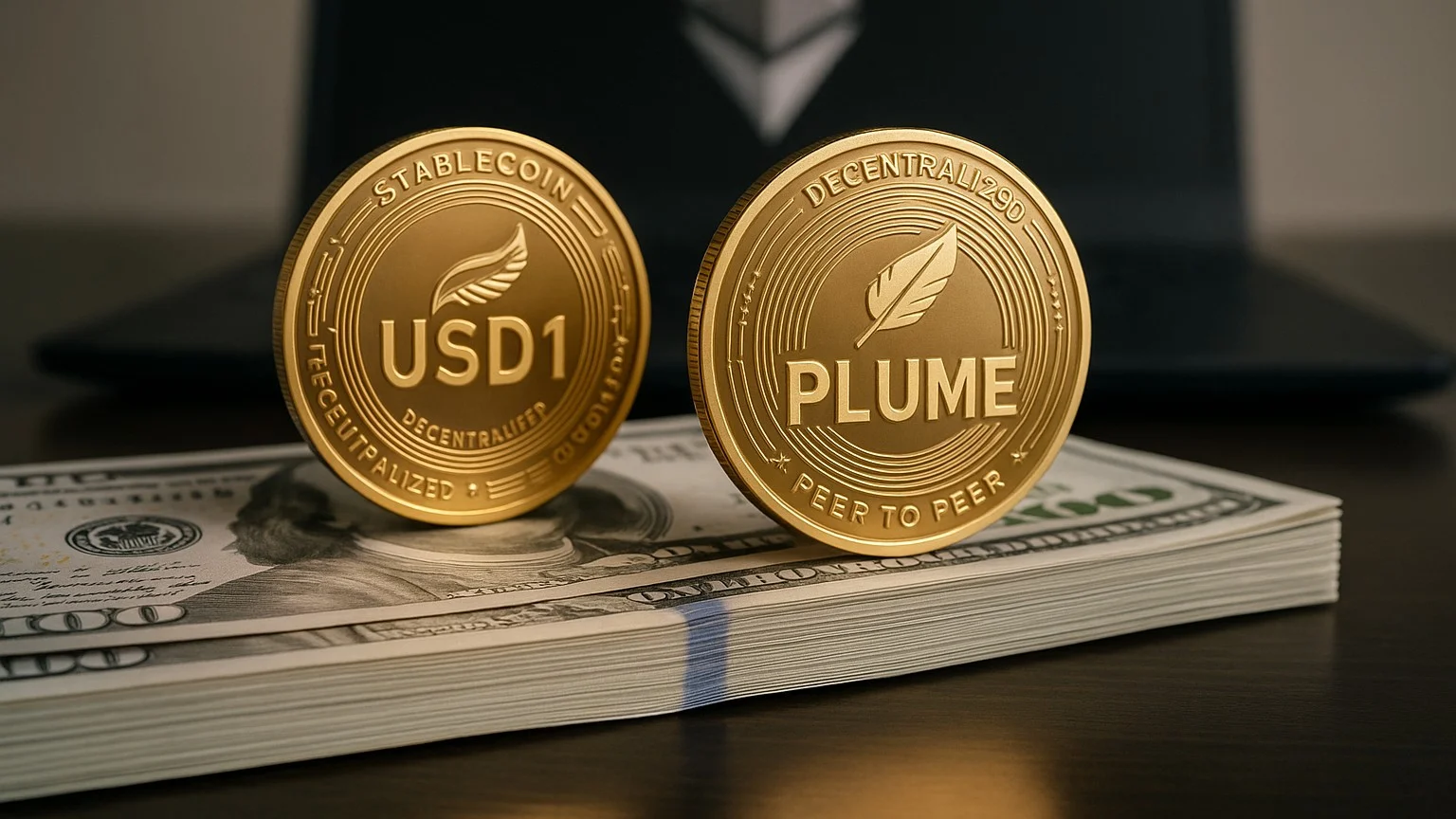
Trump-Backed USD1 Forms Partnership with an Altcoin
Another noteworthy development has taken place in the cryptocurrency sector. Plume Network and World Liberty Financial (WLFI) have announced a new strategic partnership. Under this partnership, the stablecoin USD1 will no longer be limited to Binance Smart Chain; it will be expanded to multiple blockchain infrastructures. It was announced that USD1 will be used as the official reserve asset for pUSD, Plume Network's own blockchain-based stablecoin.Altcoin PLUME has partnered with USD1Plume Network stands out as a platform that enables the tokenization of real-world assets (RWA) and their integration into decentralized finance systems with its Ethereum Virtual Machine (EVM)-compatible infrastructure. The network's recently launched Genesis mainnet made a highly notable debut with over $250 million in tokenized assets and over 100,000 wallets. Plume, which works closely with the U.S. Securities and Exchange Commission (SEC), is also known for its sensitivity to regulatory compliance.USD1 is a stablecoin pegged at a 1:1 ratio to the US dollar, backed by solid reserves such as government bonds and cash equivalents. This structure represents a more conservative approach prioritizing the security of institutional investors. As the stablecoin market has grown by 54% over the past year to reach a volume of $253 billion, USD1's expanded access to this market could drive increased institutional interest.Plume Network CEO and co-founder Chris Yin stated the following in his remarks about the partnership:“World Liberty Financial’s selection of Plume as a strategic multi-chain partner validates the vision of our custom-built RWAfi infrastructure. The integration of USD1’s institutional foundation into our vibrant ecosystem creates immediate opportunities in tokenized real-world assets. This, in turn, brings new use cases that transform access to yield-generating RWA assets for institutional investors and users.”PLUME price saw an increaseWLFI's Chief Operating Officer Zak Folkman noted that this partnership marks the first major step in USD1's multi-chain expansion. WLFI's connection to the Trump family further highlights the deal from a political and media perspective.Following the partnership announcement, the PLUME token gained 5% in value, attracting investor interest. According to market data, Plume's token is currently trading at $0.09, with a market value of over $182 million. The 24-hour trading volume is approximately $49 million. The value losses experienced over the past 30 days appear to have been partially offset by this partnership news. According to experts, past cross-chain stablecoin integrations have increased liquidity and driven significant growth in total value locked (TVL). In this context, USD1's integration into Plume's infrastructure could enable the creation of more complex financial products and enhance asset efficiency.
What is Polkadot (DOT)?
While the Web3 vision aims to provide a decentralized, user-oriented and interoperable structure for the internet, the ability to seamlessly integrate multiple blockchains stands out as one of the fundamental building blocks of this transformation. This is exactly where Polkadot comes into play. Polkadot, one of the projects that has been talked about since the early days of Web3, is a platform that aims to enable different blockchain networks to exist together under a single roof and to work together, and has a “multi-chain architecture” in this direction. In other words, Polkadot aims to become the “internet of blockchains” by bringing together disconnected and incompatible blockchains and enabling data and value transfer between them. For example, even between networks that cannot normally communicate, such as Bitcoin and Ethereum, information and asset transfer can be carried out over the Polkadot network without requiring an intermediary. Although Polkadot and its native token DOT have been on the market for a relatively long time, some investors have questions such as what is Polkadot and what is DOT coin. Let’s take a look at the answers to these questions and much more in this guide…Definition and Origin of PolkadotPolkadot's definition is shaped around the concepts of a heterogeneous multi-chain network and interoperability. For example, even between networks that normally cannot communicate, such as Bitcoin and Ethereum, information and assets can be transferred over the Polkadot network without requiring an intermediary. The Polkadot network consists of a central main chain called the Relay Chain and independent sub-chains connected to it. These sub-chains have been called parachains and have become one of the fundamental building blocks of the Polkadot ecosystem.So, what exactly is a parachain? Each parachain works as its own private blockchain. In other words, these are "sovereign" blockchains with their own tokens, consensus rules, and governance mechanisms. Thanks to Polkadot's multi-chain architecture, these different chains are also connected to Polkadot's main Relay Chain, benefiting from common security. In addition, the chains can communicate seamlessly with each other. In other words, the Polkadot network maintains the independence of blockchains that serve different purposes, while securely connecting them all. Thus, according to some, Polkadot acts as a “higher-level protocol.” The protocol’s approach is to solve scalability and interoperability issues in the blockchain ecosystem.The emergence of Polkadot dates back to 2016. In 2016, Dr. Gavin Wood, who is also a co-founder of Ethereum (ETH), came up with the idea of creating a scalable, flexible, and “fragmentable” blockchain infrastructure based on his experiences on the Ethereum network. In line with this vision, Polkadot’s technical document, or whitepaper, was published in October 2026.The whitepaper explained in detail the concept of a “heterogeneous multi-chain” that would allow independent blockchains to operate in a common security pool. This “heterogeneous multi-chain” means a multiple chain where different types of blockchains work together. When the team led by Gavin Wood started developing the Polkadot protocol, they pointed to the fact that blockchain networks were disconnected from each other and the need for them to come together as the main reason. At that time, every project in the cryptocurrency world was creating its own chain. However, communication between these chains was becoming almost impossible. Polkadot's aim was to solve exactly this problem. In other words, it was to create the structure of the new generation internet called web3 by connecting different blockchains into a single ecosystem. With this passion for web3, the project was brought to life with the support of the Web3 Foundation. Gavin Wood and his colleague at Parity Technologies, Peter Czaban, founded the Switzerland-based non-profit Web3 Foundation in 2017 and declared Polkadot as the foundation's first and most important project. The Web3 Foundation was established to finance Polkadot's research and development activities and to provide strategic support to the project. Polkadot developments were carried out by Parity Technologies, a company founded by Wood in 2015. To briefly summarize the emergence and definition of Polkadot... In particular, the answer to the question of what is Polkadot blockchain? provides a very good definition. Polkadot was founded in 2016 by Dr. It is a blockchain platform designed under the leadership of Gavin Wood, took the first steps to raise the necessary funding in 2017 and emerged with the mission of unifying different blockchains. So, what is DOT token? Polkadot coin features helps the ecosystem via the token. Because it serves as the native cryptocurrency of the Polkadot blockchain. However, its launch extends to 2020.Polkadot's History: Important MilestonesPolkadot, one of the leading projects in the Web3 field, is also considered old in the cryptocurrency field. Because it has a history of 9 years. Therefore, it is necessary to summarize the important milestones. Below, you can see the most notable developments in Polkadot's history in chronological order:2017: Polkadot launched the DOT token with the first public token sale (ICO) held through the Web3 Foundation. Thus, funds were raised for the development of the project. Approximately $144 million worth of Ethereum (ETH) was raised during this ICO, which took place in October 2017. Then, Polkadot's native token DOT was offered to investors for the first time. At this point, it is useful to open a parenthesis: There was a technical problem in Parity wallets after the ICO. For this reason, some of the funds were locked. Nevertheless, the Polkadot team managed to complete the financing process with additional private sales in 2019. 2020: The Polkadot network officially launched its mainnet on May 26, 2020, after a long period of testing and development. Initially, the network was controlled by the Web3 Foundation with a gradual transition strategy. However, by June 2020, the Polkadot network switched to a fully decentralized verification model by switching to the “Nominated Proof of Staking (NPoS)” consensus mechanism. In the same year, in August 2020, the Polkadot network became fully active by affecting DOT token transfers. 2021: Parachain slot auctions, a key part of Polkadot’s scalability vision, were launched this year. The first parachain slot auction began on November 11, 2021, and the Acala project joined the Polkadot network as the first winning parachain. As of December 2021, the first parachains were added live to the Polkadot Relay Chain, and the network’s multi-chain architecture began to be used in practice. This development delivered an important stage in Polkadot's technical roadmap. Because now multiple blockchains can operate in parallel under Polkadot. The latest concluded Parachain auction. Source: Parachains.info 2023: The XCM protocol, designed to further improve inter-chain communication in the Polkadot ecosystem, received significant updates. XCM, or the Cross-Consensus Messaging protocol, is a communication format that allows for the standard transfer of all types of data and assets between different parachains. Although the Polkadot network released the first XCM version in May 2022, many new features such as bridging external networks, inter-chain locking, and NFT support were added with the XCM v3 update in 2023. In July of the same year, Polkadot announced that it had reached the "Polkadot 1.0" stage, announcing that all the basic features initially specified in the whitepaper had been completed. Thus, the multi-chain Web3 infrastructure that Polkadot targeted at launch has largely become a reality.Why is Polkadot Valuable?What does Polkadot do? Let’s take a closer look at why Polkadot is so valuable and what problems it solves in the crypto world. Polkadot is an innovative platform that allows blockchains to connect to each other. Until now, most blockchains could only operate within their own network, but Polkadot removes this limitation and allows different networks to interact with each other. This feature makes Polkadot one of the fundamental infrastructures of the Web3 world. So, what exactly makes the DOT coin and ecosystem valuable? Here are the key points…Interoperability between chainsThe most valuable aspect of Polkadot is that it allows different blockchains to communicate with each other. The network allows messaging and transactions between different blockchains, thus facilitating the transfer of data and assets between independent chains. Thanks to this interoperability, decentralized applications built on Polkadot can benefit from the features of multiple networks instead of being limited to a single blockchain. For example, a Polkadot parachain can instantly send or receive data to another parachain through the XCM protocol.This XCM protocol is a standardized messaging structure that allows all parachains in the Polkadot ecosystem to speak a common language, and provides high-speed cross-chain interaction across the network. In short, Polkadot is trying to create a complete ecosystem where many different platforms work together. Thus, it eliminates the “piecemeal” structure of the blockchain world.Scalability and customization with parachain structureThe Polkadot network consists of parallel “side chains” called parachains. Therefore, it is highly scalable. Each parachain can be designed to be specific to a specific application or use case. For example, one can be specialized for DeFi applications, another for digital identity. This allows for the highest level of customization and flexibility. In particular, it is critical for developers to use a modular development framework called Substrate in terms of customization. In this way, developers can create new blockchains that suit their needs with Substrate and integrate them into the Polkadot network. Thanks to the parachain architecture, transactions are executed on different chains in parallel. Therefore, they are not limited to the capacity of a single chain: Much more transaction volume is supported across the network. Polkadot’s unique multi-chain architecture reduces congestion and provides high scalability by sharing transactions across different chains. Moreover, parachains also benefit from the common security model provided by Polkadot. The reason for this is very simple: shared security on the Polkadot Relay Chain. In this way, each parachain achieves high-level security without having to establish its own validator network. In short, Polkadot’s parachain-based structure offers faster and more efficient network performance, while also allowing each chain to be customized to meet different needs. Relay Chain and parachain architecture. Source: Polkadot The basic infrastructure of the Web3 vision: PolkadotThe Polkadot project plays a critical role in the implementation of the decentralized internet (Web3) vision. This is because it is one of the first groundbreaking projects in the Web3 field. The Web3 concept, put forward by Gavin Wood, describes a future internet consisting of interconnected decentralized networks where control belongs to users, not monopolies. Polkadot was designed as a Web3 infrastructure protocol that provides the infrastructure for exactly this vision.An ecosystem is created on the Polkadot network where different platforms and applications can communicate without any central authority. This allows developers to benefit from the power of multiple blockchains simultaneously while developing decentralized applications, or dApps. For example, in the Polkadot ecosystem, a finance application can run on one chain, an identity verification application on another chain, and interact securely via Polkadot. Thanks to such combinations, new innovations are distributed within the scope of the Web3 vision. Polkadot’s self-renewing (fork-free upgradeable) structure and internal governance system also allow the network to evolve over time, in line with Web3’s goals.Security, governance, DOT coin and staking mechanismPolkadot network uses an advanced governance and staking model to encourage security and network participation. Thanks to the consensus mechanism called Nominated Proof of Stake, DOT token holders can nominate validators on the network by staking their tokens. Token holders can even become validators themselves. This Polkadot staking process ensures the security of the network, and in return, DOT rewards are distributed to staking investors.When the features of DOT coin are examined, the most important functions stand out as the ability of this token to be locked to ensure the security of the network (staking) and to grant voting rights in on-chain governance. Polkadot’s on-chain governance system gives DOT holders a direct say in decision-making processes regarding the future of the network. Issues such as network upgrades, the addition of new parachains, or protocol changes are decided by the votes of DOT coin holders. This gives the Polkadot ecosystem a strong democratic governance dimension, and many investors are part of this democratic process. In the meantime, let's give some price information for those who want to buy DOT and have a say in the governance. DOT coin is trading at $4.6 as of May 2025. However, the cryptocurrency saw an all-time high of $55 a little over 4 years ago. DOT price since launch As a result, DOT coin usage areas cover a wide range from staking for network security to governance voting and payment of transaction fees. The mechanisms in the Polkadot network ensure that the network remains secure against external attacks and enable community management. Thus, in general, it increases the value of Polkadot.Wide ecosystem and strong developer communityPolkadot has created a rapidly growing ecosystem and an active community since its launch. Because there are dozens of parachain projects operating in different sectors on the network. Blockchain projects specialized in decentralized finance (DeFi), gaming, smart contract platforms, digital identity, Internet of Things and many more are available in the Polkadot ecosystem. This rich Polkadot ecosystem creates synergy between projects and offers a comprehensive infrastructure for users and developers.Moreover, Polkadot hosts an active development community worldwide. According to the analysis, Polkadot is one of the top five cryptocurrency projects with the most developers. A report from Electric Capital found that there are over 800 full-time developers working on the Polkadot network, making Polkadot one of the largest ecosystems in the industry in terms of developer numbers. With such strong developer interest, the Polkadot network remains very vibrant. On the other hand, the Polkadot community actively contributes to the project through forums, governance votes, and grant programs. Organizations such as the Web3 Foundation and Parity also support the ecosystem by offering regular developer training, competitions (e.g. Polkadot Hackathons), and funding support. Putting all these elements together, the foundation of a solid community is formed that contributes to Polkadot’s long-term success.Who is the Founder of Polkadot?Finally, it is necessary to answer the question of who is the founder of Polkadot. Dr. Gavin Wood, the founder of Polkadot, is a well-known name in the blockchain world and an innovative computer scientist. Who is Gavin Wood? To briefly introduce, he was one of the co-founders of Ethereum and served as Ethereum's first chief technology officer (CTO). Gavin Wood provided one of the most important technical contributions to the Ethereum project, developing Solidity, Ethereum's smart contract programming language. He is also the author of the Yellow Paper (Ethereum Virtual Machine definition) document that defines the technical infrastructure of the Ethereum network. Wood, who left his position at Ethereum in 2016, charted his own path to realize the decentralized internet vision that was shaped in his mind. Immediately after leaving Ethereum, he founded EthCore (later renamed Parity Technologies), a company that develops blockchain infrastructure software. Parity Technologies continued its work with Ethereum clients, later focusing on Substrate and Polkadot technologies. Gavin Wood. Source: CoinDesk Gavin Wood's Polkadot adventure officially began with the Polkadot whitepaper he published at the end of 2016. Wood, with his experience in Ethereum, embodied the idea of a decentralized network where blockchains are connected to each other with the Polkadot project. In 2017, Wood accelerated the development of Polkadot by establishing the Web3 Foundation with his collaborator Peter Czaban. The Web3 Foundation is a non-profit organization that funds Polkadot's research, development, and community management activities. In particular, it became the institutional support point for Gavin Wood's Polkadot vision. Wood also played a role in the implementation of Kusama, Polkadot's test network. In addition, he first tested the innovations to be implemented in Polkadot on Kusama and ensured that they were safely transferred to the main network. In 2022, Gavin Wood stepped down from his position as CEO of Parity Technologies and moved towards taking on a larger role in the Polkadot ecosystem. Wood led the Polkadot project, where he continued to be the technical lead, and implemented significant upgrades to the protocol (e.g. the new open governance model OpenGov).Frequently Asked Questions (FAQ)Below are some frequently asked questions and answers about Polkadot (DOT):When and why did Polkadot come into being?: Polkadot was created in 2016 by Dr. Gavin Wood to solve the problem of blockchains not being able to communicate with each other. Backed by the Web3 Foundation, Polkadot raised funds through an ICO in 2017 and went into its mainnet in 2020.Who is the founder of Polkadot?: Dr. Gavin Wood is the founder of Polkadot. Gavin Wood is also the co-founder of Ethereum and the creator of the Solidity programming language.How does Polkadot work, how does it connect with other chains?: Polkadot consists of independent sub-chains called parachains connected to the main chain called Relay Chain. Thanks to this structure, data and assets can be shared between different blockchains. Inter-chain communication is provided with the XCM protocol.What is the DOT token used for?: The DOT token has functions such as securing the Polkadot network, earning rewards by staking in the network, and taking an active role in network governance (voting) processes. It is also used as collateral for parachains to join the network.Why is Polkadot important?: Polkadot enables different blockchains to work together with each other thanks to its multi-chain architecture. This feature creates a critical infrastructure for Web3 and makes Polkadot an important platform in the crypto world. In addition, Polkadot's customized parachain structure allows a wide range of applications to work more efficiently.Follow our JR Kripto Guide series for more information about Polkadot's vision and its place in the Web3 world.

SEC Approves Grayscale's ETF Application Including Many Altcoins!
The US Securities and Exchange Commission (SEC) has approved Grayscale's conversion of its GDLC digital fund, which includes leading crypto assets such as Bitcoin (BTC), Ethereum (ETH), Solana (SOL), XRP, and Cardano (ADA), into a spot exchange-traded fund (ETF).From crypto index fund to major ETFThe Grayscale Digital Large Cap Fund (GDLC) invests in the five largest cryptocurrencies by market capitalization, with a focus on Bitcoin, based on the CoinDesk 5 Index. The fund's asset allocation includes 80% Bitcoin, 11.4% Ethereum, 4.8% XRP, 2.8% Solana, and 0.8% Cardano. With SEC approval, this fund will now trade as a spot ETF on the New York Stock Exchange's Arca platform. This provides investors with access to cryptocurrencies through traditional stock exchange infrastructure, while the fund's daily trading mechanism will also increase liquidity. Managing approximately $755 million in assets, GDLC has earned the title of “the world's largest multi-cryptocurrency ETF” with this transformation. This move paves the way for cryptocurrency investments to gain more legitimacy in the traditional financial world.A critical development for XRPThe inclusion of XRP in GDLC's transition to a spot ETF is noteworthy in itself. Following the court's ruling that XRP is not a security in individual investor sales, marking a significant turning point for XRP in the years-long legal battle between the SEC and Ripple, this asset now offers direct access to investors as part of a regulated investment vehicle in the US. This development also sets a precedent that could pave the way for XRP-specific ETFs in the future.Bitwise and other funds are nextFollowing Grayscale's ETF conversion, attention has now shifted to Bitwise. The Bitwise 10 Crypto Index Fund (BITW) is awaiting the outcome of its ETF conversion application submitted to the SEC. The fund includes assets such as Sui (SUI), Chainlink (LINK), Avalanche (AVAX), Litecoin (LTC), and Polkadot (DOT), in addition to Bitcoin, Ethereum, Solana, XRP, and Cardano. If approved, the Bitwise fund will also provide investors with access to a broader digital asset portfolio.Following the ETF approval, the price of XRP rose by more than 6% to $2.30 in the initial phase. However, slight pullbacks were observed in other major cryptocurrencies. Bitcoin is trading at $106,280, while Ethereum is trading at $2,435. Despite this positive development, general uncertainty in the market persists. In particular, President Trump's new tariff plans, expected to be announced on July 9, and possible trade wars are important issues affecting investor sentiment.Change in the SEC's stanceThe SEC opened the door to crypto investment products by approving spot Bitcoin and Ethereum ETFs in 2024. Following these decisions, billions of dollars of new capital flowed into the sector. The recent approval of Grayscale's multi-asset ETF indicates that the agency has adopted a more constructive approach toward crypto assets. The increase in crypto-friendly policies during Mark Uyeda's tenure as interim SEC chairman may have accelerated this process.
AVAX Comments and Price Analysis 1 July 2025
AVAX Technical AnalysisLooking at the AVAX chart, we can see a pattern forming since the beginning of 2024, just as we see on the Solana chart. This channel formation has been narrowing, and the price is trading at the middle border of it. Falling Channel Structure The most important area on the daily AVAX chart is the $17.22 - $18.75 support range, and the coin is trading at a very critical level in terms of horizontal support. However, this area has been tested many times before, and the price has rebounded from this support. Each test indicates that this support zone has weakened.Therefore, if the support area of $17.22 - $18.75 gets broken, the price could go down to the trend support, which is around $13 - $15. If we see upward movements, then the first resistance area the price will test is $23.8, which, if broken, can take the price to both the horizontal and trend resistance level at $33.These analyses, not offering any kind of investment advice, focus on support and resistance levels considered to offer trading opportunities in the short and medium term according to the market conditions. However, the user is responsible for their own actions and risk management. Moreover, it is highly recommended to use stop loss (SL) during the transactions.

What is Elrond (EGLD)?
In the blockchain world, scalability has become one of the top priorities. Developer teams are looking for ways to speed up networks, eliminate network congestion, and increase the number of transactions that can be processed per second. However, this remains one of the fundamental problems that large networks like Bitcoin and Ethereum are still struggling with. One of the projects that aims to provide a solution to this problem is Elrond. This project, which changed its name in 2023 and is now known as MultiversX, has left its mark on the cryptocurrency space. Apart from the MultiversX transformation, Elrond has been reshaped with a metaverse and Web3-focused vision, as well as being a highly efficient blockchain. With its Romanian origins, Web3 has become one of the Romanian projects. This system, which enables the creation of crypto assets with the support of smart contracts and allows transactions to be made in seconds, now aims to build a much broader digital economy. If you have any questions about Elrond (currently known as MultiversX/EGLD); If you are wondering what Elrond is, what is EGLD coin, let's take a look at the details of this project together...Elrond's Definition and OriginElrond is a Layer 1 blockchain platform known today as MultiversX, offering high scalability, low latency and strong security features. This platform is specially designed for distributed applications (dApps), enterprise solutions and the next generation internet economy. It addresses areas such as DeFi, metaverse and Web3 applications, while providing developers with a scalable infrastructure and NFT support. Elrond was founded by a Romania-based team in late 2017. The founders include Beniamin Mincu, Lucian Mincu and Lucian Todea. Before Elrond, the Mincu brothers founded a crypto asset investment fund called MetaChain Capital and an ICO information platform called ICO Market Data. It is also known that Beniamin Mincu previously worked in the marketing and community development areas of the NEM project. The main motivation behind Elrond’s development is to solve one of the biggest challenges faced by blockchain technology, the blockchain “impossible trilemma”. This trilemma refers to the difficulty of simultaneously providing security, decentralization, and scalability. Elrond is trying to stand out with innovative solutions that aim to offer these three elements together. So, how does Elrond work at this point? Elrond has focused on two main technologies to solve blockchain problems. The solutions in question are as follows:Adaptive State Sharding: This technology dynamically divides the network into shards, allowing each shard to process transactions in parallel. In this way, the network can perform high transaction volumes with low latency and low cost.Secure Proof of Stake (SPoS): Elrond’s consensus mechanism, SPoS, combines the amount of staked tokens and randomness in the selection of validator nodes. This structure provides energy efficiency while increasing the security and fairness of the network.Thanks to these technologies, Elrond has reached the capacity to process up to 15,000 transactions per second and has made its name among the fastest networks. Meanwhile, Elrond is also known for its EGLD token. If we talk about the EGLD token features; this token is the native token of the network and has many uses. It is used to pay for transactions on the network, to generate passive income through staking, and to act as a validator to ensure the security of the network. It also offers voting rights in governance processes.Elrond History: Major MilestonesSo where exactly did Elrond's story begin? What were the major milestones? Elrond started as a technical project and became one of the big names in the web3 space. The project, which was founded in 2017, has seen many important developments, from early investment successes to the mainnet launch, from token conversion to taking on a brand new identity under the name MultiversX. In this section, we take a look at the prominent stops on Elrond's journey.2019: A Successful IEO Process on Binance LaunchpadElrond raised $3.25 million with its Initial Exchange Offering (IEO) on Binance Launchpad in June 2019. During this process, 25% of the total token supply was distributed. The project, which had previously raised approximately $1.9 million in private investment rounds, thus set off with a total capital of $5.15 million. So why was Binance Launchpad so important to Elrond? Binance Launchpad is a platform where new crypto projects sell their tokens for the first time on Binance. Thanks to this system, projects receive early investment, while users have the chance to buy tokens at a low price. These sales, which take place in a secure environment, provide visibility and liquidity to the project. They also offer potential high-yield opportunities to investors. Therefore, Elrond or MultiversX started its life with a vote of confidence from Binance. According to EGLD's token economy, the initial distribution of tokens was as follows: Source: TokenInsights 2020: Mainnet Launch and Transition from ERD to EGLDElrond's mainnet was officially launched in July 2020. With this launch, the project's native token, ERD, was renamed to EGLD (eGold) in September 2020 as part of a new token economy. A special conversion process was launched for users to exchange old tokens for new ones.2021-2023: Maiar Wallet, DeFi, NFT, and Launchpad ExpansionIn January 2021, Elrond's official wallet, the Maiar application, was launched. So what is a Maiar wallet and what does it do? Designed to store, send, receive, and perform various transactions with EGLD tokens, this application appealed to a wide audience thanks to its user-friendly interface. Maiar has a non-custodial structure, meaning your assets are completely under your control. The security system is quite flexible: it starts out easy, and as your wallet grows, advanced measures come into play. In other words, it guides you according to your usage habits. Thanks to usernames called “Herotags”, you don’t need to know someone’s number to pay them, you just need to type their username. The app also allows staking, multiple coin support, browsing crypto news, and sending crypto. Maiar Wallet image. Source: MultiversX Similarly, Elrond launched Maiar Launchpad, which offers early investment opportunities for new projects, and Maiar DEX as a decentralized exchange (DEX).However, these projects received a name change to MultiversX in late 2022. Currently, Maiar wallet has become MultiversX Wallet, Maiar Launchpad has become xLaunchpad, and Maiar DEX has become xExchange.During the same period, the Elrond ecosystem grew rapidly; It hosted more than 100 projects and became integrated with stablecoins, wallets, validators, and payment systems. DeFi projects (Orion, Reef) and NFT support also contributed to this growth.Transformation to MultiversXAs mentioned above, Elrond entered a significant brand transformation process in 2022 and took the name MultiversX. According to the project's own statements, Elrond entered this process by taking the name MultiversX in parallel with the increasing interest in the metaverse and developments in this field. According to their own statements, this name change was made to reflect the project's expanding vision to the metaverse and its commitment to the future of the internet. As part of the rebranding, not only the name but also the logo and platform design were updated.Why is Elrond Valuable?To understand why Elrond attracts so much attention, it is necessary to look not only at its technology but also at the user experience it offers. Because Elrond (or MultiversX as we now know it); In addition to being a fast blockchain, it is also a user-friendly, scalable and developer-focused ecosystem. In other words, while it performs tens of thousands of transactions per second at a low cost, it also manages to offer this technology with a simple and accessible interface. Now, let's take a look at the main technical features that make Elrond stand out and why it offers a valuable infrastructure.Adaptive State Sharding: Maximum Efficiency with On-chain ShardingMultiversX uses an advanced mechanism called Adaptive State Sharding to optimize scalability. So, what is Adaptive State Sharding? This system divides the network into many shards, allowing each shard to perform operations simultaneously. In this way, the processing load is balanced, network congestion is prevented, and thousands of transactions can be performed at low cost. The shard structure increases efficiency by dynamically merging and separating according to the needs of the network. Sharding mechanism. Source: MultiversX According to the project’s own description, sharding in the MultiversX network was designed from the ground up to address the complexity of combining network sharding, transaction sharding, and state sharding. The result is a cohesive protocol design that not only achieves full sharding, but also achieves the following goals. The protocol’s goal is to:Scalability without impacting availability: Increasing or decreasing the number of shards in the network should not disrupt the operation of the system. When making these changes, it is expected that only a very small group of nodes will be affected, and the overall state of the system will be updated smoothly.Fast dispatch and instant traceability: It should be possible to easily and unambiguously (deterministically) calculate which shard a transaction will be directed to. This calculation should require very little processing power and should not require additional communication between different nodes.Efficiency and adaptability: The goal is for all shards in the network to operate as balanced as possible at all times. That is, the transaction load should be distributed evenly, and one part should not be overloaded while the others are idle.Secure Proof of Stake (SPoS): Energy-Efficient Consensus MechanismElrond’s consensus model is called Secure Proof of Stake (SPoS) and is known as a faster and more secure version of the classic PoS system. This model is designed to make both how validator nodes are selected and how these nodes work in the block creation process more efficient. Validator nodes are determined by a combination of the amount of EGLD they stake and the random selection. According to the project’s description, this randomness is so secure that it cannot be predicted or manipulated from the outside. SPOS process. Source: MultiversX. This selection process is very fast. Because it usually takes less than 100 milliseconds. Because there is no need for extra messaging in the system; once the randomness is generated, the selection is completely automatic. Thanks to this, the total block production time is reduced to just a few seconds. Such fast rounds also have a security advantage: Even if a malicious person wants to influence a block in the system, it is almost impossible to manipulate it in such a short time.SPoS, like other Proof of Stake systems, looks at how much EGLD they have staked when determining who will be a validator. But this is not the only criterion. Each validator also has a score (rating). This score is determined by how well they have worked in the past. In other words, the system rewards not only those who stake a lot, but also those who work properly. During block production, a special multisignature system is used. This ensures that the block prepared by the block producer is signed by the validator group in two rounds of communication.Up to 15,000 Transaction Capacity Per SecondThanks to the Adaptive State Sharding and Secure Proof of Stake algorithms mentioned above, the Elrond network has the theoretical capacity to process 15,000 transactions per second. The highest speed measured was 263,000 transactions per second. This feature makes it one of the fastest blockchain infrastructures. The average transaction cost is only around $0.001. This makes Elrond a very attractive option for both users and developers. The MultiversX homepage lists the maximum number of transactions the network processes per second. Source: MultiversX. User-Friendly Wallet Experience with MaiarMultiversX’s official mobile wallet, Maiar (MultiversX Wallet), allows users to easily manage their EGLD tokens. One of Maiar’s most striking features is that an account can be created without a password, private key or recovery phrase.Who is the Founder of Elrond?So, who is behind this fast blockchain? Who is the founder of Elrond? First of all, Beniamin Mincu comes to mind. If you ask who Beniamin Mincu is, we can answer as follows: Beniamin Mincu is the co-founder and CEO of MultiversX (formerly Elrond). He is described as a technology visionary. He was one of the early blockchain pioneers in Europe. Because he was on the NEM.io core team from 2014 until he founded Elrond. Beniamin Mincu is also the co-founder of cryptocurrency investment fund MetaChain Capital and initial coin offering (ICO) data aggregator ICO Market Data, along with his brother Lucian Mincu. Beniamin Mincu co-founded Elrond in 2017 with Lucian Todea and his brother Lucian Mincu. Lucian Todea is the Founder/CEO of software review and download site Soft32 and a partner of mobile payment app mobilPay. Mincu promoting MultiversX. Source: Cryptobriefing The team of Mincu brothers and Lucian Todea developed the Elrond network to address issues related to blockchain scalability. Their goal was to create a platform that is interoperable and highly scalable, better than existing blockchain platforms. The MultiversX team is comprised of engineers, designers, and researchers from various technology companies, including Intel, Microsoft, ITNT, and Soft32. The founding team designed MultiversX to provide a highly scalable blockchain that addresses Metaverse, DeFi, and Web3-focused applications. They specifically built it as a blockchain platform that offers speed and security. Their vision was to provide a solution to the blockchain challenges we mentioned earlier and create an “internet-scale” blockchain. To achieve this vision, they utilized innovative technologies such as Adaptive State Sharding and Secure Proof of Stake (SPoS). The platform’s growth strategy focused on building the ecosystem with tools such as the user-friendly Maiar app and support for DeFi, NFTs, and various projects and partnerships. The EGLD token has become a key component for access, usage, security, and growth within the network. Staking incentives also played a key role in securing the network. In addition, the team says it designed eGold for simplicity and global adoption. In general, the goal is to position MultiversX as a distributed blockchain for next-generation applications.Frequently Asked Questions (FAQ)Below are some frequently asked questions and answers about MultiversX (aka Elrond):What is the Elrond network, how does it work?: Elrond is a Layer 1 blockchain network developed for high-speed and low-cost transactions. It can process up to 15,000 transactions per second thanks to Adaptive State Sharding and Secure Proof of Stake (SPoS) technologies.What is the EGLD coin used for?: EGLD (eGold) is the native token of the Elrond network. It is used to pay transaction fees, perform staking, contribute to network security, and vote in governance.What makes Elrond different from other Layer 1 networks?: Elrond offers high scalability by dynamically dividing its network into shards with Adaptive State Sharding. It works both fast and energy efficient thanks to SPoS. This combination makes the project stand out from a technical perspective.How is Elrond staking done?: EGLD tokens can be locked by staking them to validator nodes via a wallet (e.g. MultiversX Wallet/formerly Maiar). In return, users earn staking rewards as passive income.Who is the founding team?: Elrond was founded by a team based in Romania. The founders are Beniamin Mincu, Lucian Mincu and Lucian Todea. The team consists of experienced engineers and entrepreneurs who have worked in large technology companies in the past.For more content on Elrond and Web3 infrastructures, stay tuned to our JR Kripto Guide series.
German Giant Sparkassen to Offer Bitcoin and ETH Services
Germany's largest financial institution, Sparkassen-Finanzgruppe, is opening its doors to cryptocurrencies after years of cautious approach. According to Bloomberg, the bank is preparing to launch a service that will allow individual customers to buy and sell cryptocurrencies such as Bitcoin and Ethereum by summer 2026.Sparkassen-Finanzgruppe's move into Bitcoin and ETHSparkassen-Finanzgruppe, Germany's largest financial group, plans to launch a cryptocurrency trading service for individual customers by summer 2026. According to Bloomberg, this decision signals the bank's departure from its years of cautious stance and its entry into the cryptocurrency sector.Sparkassen serves approximately 50 million customers and had previously chosen to stay away from cryptocurrency services. The bank, which completely banned cryptocurrency transactions in 2015, maintained a distance from Bitcoin and other cryptocurrencies for a long time, citing their “excessive speculative nature.” However, changing regulations and increasing user demand have prompted the group to reevaluate this strategy.In the new era, Sparkassen will manage its cryptocurrency services through Dekabank, a subsidiary of the group. Dekabank, which is already active in the cryptocurrency market, will enable users to easily buy and sell cryptocurrencies such as Bitcoin (BTC) and Ethereum (ETH) through the Sparkassen mobile app.MiCA effectIt is noted that this service has become possible thanks to the MiCA (Markets in Crypto-Assets) regulations, which came into effect in December 2023. MiCA provides a common legal framework for crypto businesses across the EU, making it easier for traditional institutions like banks to enter this field.However, Sparkassen-Finanzgruppe is taking a cautious approach to the new service. In a statement by the DSGV (German Savings Banks Association), it was emphasized that cryptocurrencies are still high-risk and that no marketing campaign will be conducted for this service. Instead, users will be comprehensively informed about potential losses and risks before investing.Sparkassen's strategic move aligns with the broader banking trend in Germany. DZ Bank launched a pilot cryptocurrency storage and trading service in 2024 in collaboration with Boerse Stuttgart Digital, covering 700 cooperative banks. Additionally, Landesbank Baden-Württemberg announced cryptocurrency storage services for corporate customers in April 2024 in partnership with Bitpanda.Experts view Sparkassen's move as “a major threshold for mainstream adoption.” Filipp Bolotov, CEO of ERA Labs, argues that the shift toward crypto by large institutions like Sparkassen will enhance the sector's credibility, while Kyle Chasse of Master Ventures interprets this development as “banks finally trying to catch up with the evolution of crypto.”
What is Virtual (VIRTUAL)?
The Web3 world is growing day by day and new projects continue to take their place in it. One of these projects is Virtual, a platform based on digital identity, social networks and metaverse. If you are asking "What is Virtual?" or "What is Virtual coin?", we can actually say this simply: Virtual is a Web3 protocol where users can create their digital identities, store them securely with blockchain technology and interact in the metaverse and social media world. Sounds exciting, right? The project creates a space where you can control your digital identities and interact with artificial intelligence agents. In this guide, we will examine in detail what Virtual offers, how it works and why it has attracted so much attention.Definition and Emergence of VirtualVirtual can be defined as a Web3 protocol focused on digital identity, social networks and metaverse. It is essentially a decentralized platform that allows users to develop, own and generate income from artificial intelligence-supported agents (AI agents). This project, also known as the Virtuals Protocol, was launched in 2024 on the Ethereum network's Layer-2 solution, Base. In this way, all interactions and content on the platform are transparently recorded on the blockchain and users have full ownership of their data. In other words, the Virtual project aims to provide a decentralized social network infrastructure and a Web3 social media project and experience based on user control instead of traditional social platforms in the Web2 world. In addition, the protocol positions artificial intelligence agents as digital characters that can be integrated into different platforms such as games, Virtual metaverse environments and social media applications. The working system of Virtual Protocol. Source: Virtual Protocol whitepaper. The Virtual project emerged with the vision of establishing a Web3-based social interaction infrastructure. The protocol can be defined as a new generation social platform where users can store their data on the blockchain instead of central servers and have full control over their own digital identity and content. In this platform, traditional social network elements are combined with artificial intelligence technologies to offer a richer interaction experience. Virtual introduced itself with whitepapers and community announcements published in 2023, creating a core crypto community. Then, in 2024, the first version of the platform and the VIRTUAL token were officially launched. Virtual preferred the Base blockchain as its blockchain. In particular, it attracted attention from the very beginning with its decentralized data storage and ownership model. In the architecture of the project, all content and contributions produced by users and artificial intelligence agents are archived in a special on-chain storage called the Immutable Contribution Vault (ICV). In this way, all past interactions are recorded in an unchangeable manner and data ownership remains with the user. The Virtual protocol has a technically innovative three-layer architecture. The first layer is the smart contract wallet called ICV, the second layer defines each Virtual agent as an NFT-based account in the ERC-6551 standard, and the third layer contains modules that provide the core capabilities of the agents such as cognitive, visual and audio. This structure gives each AI agent its own digital identity, and the content produced by the agents and their earnings become traceable. Virtual's philosophy of emergence can be summarized as "transferring the power of users from Web2 to Web3". The project team aims to build an ecosystem where users are partners and managed instead of traditional centralized platforms. In line with this vision, an environment was created where everyone can create their own AI-supported crypto assets without the need for technical knowledge by bringing together AI and blockchain technologies. The key features of the project include the fact that there is no need to know coding to create a new agent in the Virtual protocol, that these agents can be opened to common ownership thanks to tokenization, and that the income obtained is shared transparently. Within the platform, VIRTUAL acts as an interaction and transaction fee (spent when interacting with agents), while on the other hand it is used as a rewarding tool. For example, Virtuals Protocol users are rewarded with points for sharing or contributing to the project on social media. Users can earn points for their posts by connecting their X (Twitter) accounts to their Virtuals accounts. These points are a social DeFi mechanism that encourages community participation, and there are signs that they could turn into rewards such as token airdrops in the future. In addition, VIRTUAL token holders can lock their tokens and convert them into voting tokens called VIRTUAL. In this way, they both earn daily contribution points and have a say in the management of the platform. A sample wallet of a Virtuals AI Agent (Degent). Source: App.Virtuals Virtual’s History: Major MilestonesThe development of the Virtual project is one of the most interesting success stories in the crypto world in recent times. Here are the major milestones in the history of Virtual Protocol:2023: The project’s conceptual design and preparations took shape this year. The Virtuals team made their first appearance by sharing their whitepaper with the community. An early community building and project introduction process was carried out throughout 2023. During this period, the project positioned itself as a social platform combining AI and blockchain, and entered the agenda of crypto enthusiasts. In December 2023, the Virtual project began taking steps to transition to its own economic model, such as repurchasing old tokens and distributing new VIRTUAL tokens (PIP-10 plan) – announcements were made that this process was carried out with the approval of the community.October 2024: The official launch of the Virtuals Protocol took place. The platform was launched on the Base network on October 16, 2024, and the VIRTUAL token was launched on the same day. With a starting price of around $0.10, VIRTUAL coin began to gain value through rapid adoption. In the last quarter of 2024, the VIRTUAL token was listed on a number of leading crypto exchanges. For example, VIRTUAL trading was opened on major exchanges such as Bybit and Binance. In particular, in December 2024, Binance launched futures contracts for VIRTUAL, providing significant liquidity and visibility to the project. Thanks to these developments, the project reached a wide audience in just a few months. December 2024: Virtuals Protocol reached “unicorn” status by exceeding $1 billion in market value. By the end of 2024, AI agents and their tokens on the platform became a trend in the crypto ecosystem. For example, the AI agent token called AIXBT, which was launched in November 2024, reached a high market value of $168 million as an experimental project that analyzes crypto discussions on social media and provides market insights. Thanks to the fun digital avatar of this agent token (a purple Pepe frog image), a meme coin culture has also emerged within the Virtuals community. Virtuals Protocol has managed to attract a wide range of users by blending serious AI innovation with internet meme culture. 2025 and beyond: As of 2025, the Virtual project continues its evolution in line with its core goals. Metaverse collaborations and digital identity integrations have an important place in the protocol's development roadmap. The Virtuals team has initiated initiatives for AI agents to be integrated into popular metaverse platforms as avatars and to work in harmony with different digital identity protocols. For example, it is aimed that Virtual agents can be easily used in games, virtual worlds and other applications with “plug-and-play” APIs. In addition, the process of gradually transferring project management to the community has accelerated in 2025. As part of the transition to the DAO structure, governance modules that grant voting rights to VIRTUAL token holders have been activated (veVIRTUAL staking system). Community members have begun voting on proposals for the future of the protocol and have a say in project decisions. In 2025 and beyond, the Virtual project is moving towards becoming a fully community-driven ecosystem, while also planning to implement advanced use cases consisting of multiple AI agents, such as an “autonomous media agency” and an “autonomous hedge fund.” VIRTUAL staking screen. Source: Virtuals Protocol Why is Virtual Valuable?There are several elements that make the Virtual (VIRTUAL) project unique. Virtual offers many advantages over existing platforms in terms of both its technical infrastructure and the user experience it offers:User-Centric Web3 Social Media Infrastructure: Unlike traditional social networks, Virtual offers a decentralized social platform where users take control. The content and data produced on the platform do not belong to a single company, but to the user who creates the content. In this way, the decentralized social network concept is implemented and users become the owners of their own data. In particular, in Web2, while large platforms monopolize user data, the Virtual protocol aims to give data ownership back to users with blockchain.Digital Identity and Avatar Integration: In the Virtual protocol, each user and each artificial intelligence agent are represented as a digital identity element. For example, the AI agents on the platform are actually digital characters with certain personality traits, and these can be used in an integrated manner in games, metaverse worlds, social media, and websites. This makes Virtual a digital identity protocol. Thus, users can create their own AI avatars or digital assistants and represent them in different environments. At the same time, users can integrate their wallets and social accounts to strengthen their Web3 identity, allowing them to manage their online presence without relying on a single central authority. Decentralized Data Storage: Virtual permanently records all contributions and transactions thanks to the ICV (Immutable Contribution Vault) in its technical infrastructure. This immutable ledger allows the efforts of content producers, AI agent developers, and other contributors on the platform to be tracked. For example, the contribution of a developer who adds a new capability or dataset to an AI agent is stored in the ICV and can later be referenced when the revenue is shared fairly or when credit is given. Thus, the Virtual ecosystem has a transparent and fair contribution model. This architecture also increases the scalability and security of the platform, because the content is kept in a distributed ledger and is resistant to censorship. The Role of the VIRTUAL Token in Reward and Governance: VIRTUAL, the native token in the Virtual ecosystem, has a critical value in terms of both user incentives and governance. The platform offers a kind of social DeFi experience by combining social interaction with financial incentives. For example, users who produce content or share about the project on social media are supported with points and potentially token rewards. This is a model that rewards active participation and contributes to the growth of the ecosystem. On the other hand, the VIRTUAL token is also an important tool in project management. Token holders gain voting rights by locking their assets and have a direct say in decisions about the future of the protocol. Thus, Virtual allows its users to act as shareholders of the platform as a governance token. This ensures that the project becomes sustainable and adopted by the community in the long term. Avatar and Metaverse Integrations: The Virtual project is also closely related to the rising trend of our age, the metaverse. AI agents created on the platform can be integrated into various virtual worlds as avatars or digital assistants. For example, it is possible to use a Virtual agent as an NPC (non-player character) in a game or to assign it as a moderator in a virtual meeting. It is currently stated that some Virtual agents can connect to applications such as TikTok, Roblox, Sandbox via APIs and produce content. In this way, the Virtual protocol works not only as a social network, but also as a metaverse infrastructure that bridges different platforms. Users can exist, generate income, and interact in multiple virtual worlds with a single digital identity. This adds great potential value to the project, as in the future, internet users will navigate multiple metaverses rather than a single universe, and the interoperable identity and existence model that Virtual provides will be extremely valuable.Who is the Founder of Virtual?The team behind Virtuals Protocol initially took a somewhat secretive stance. Rather than revealing the names of the team members, they preferred to adopt a project-oriented communication style and announce their achievements with community support. In fact, Virtuals' official documentation does not mention the names of the team members, but rather the areas in which they contribute and what kind of experience they have. For example, some of the core contributors work in fields such as software engineering and artificial intelligence research, and some even graduated from prestigious schools such as Imperial College London.But on the other hand, Jansen Teng and Wee Kee Tiew are mentioned as the founders of Virtuals Protocol. These two launched the project in 2021 and have previously worked as consultants at large firms such as Boston Consulting Group. Jansen Teng has experience in artificial intelligence and biotechnology, while Wee Kee Tiew has expertise in fintech and private equity. In other words, these two names took things seriously when laying the foundations of the project, recognizing the opportunities between artificial intelligence and blockchain.However, the management philosophy of the Virtual project is different from traditional projects. The aim here is to adopt a structure based on the DAO (Decentralized Autonomous Organization) principle, not just the team. In other words, although the team will initially establish the project, in the long term, control will be left entirely to the community. When looking at the VIRTUAL token distribution, it is seen that 35% of the total supply is allocated to the ecosystem treasury, and this treasury will be managed by a DAO multi-signature wallet. In other words, after the team has laid the foundations firmly, they plan to slowly transfer decision-making processes to the community. This is completely in line with Virtual’s vision of transitioning from Web2 to Web3: Users will not only be content consumers, but also stakeholders who direct the development of the platform.Frequently Asked Questions (FAQ)Below you can find frequently asked questions and answers about VIRTUAL:What is Virtual (VIRTUAL) coin?: Virtual coin is the native cryptocurrency of Virtuals Protocol, which runs on the Ethereum Layer-2 network Base. This token, abbreviated as VIRTUAL, is used as the governance and utility token of the platform. Virtual coin plays the role of the base currency in many areas, from users creating and operating artificial intelligence agents to transactions on the platform and governance processes such as voting. Its total supply is 1 billion units and it is listed on some of the largest crypto exchanges (e.g. Binance, Bybit). The value of Virtual coin is formed in parallel with the growth of the platform and the demand for agent tokens in the ecosystem.What does Virtual token do?: VIRTUAL token has a multifaceted function in the Virtuals Protocol ecosystem. First, it is the currency of intra-platform transactions. Users use VIRTUAL when trading agent tokens or launching a new AI agent. For example, when a user wants to launch a new AI agent, they lock a certain amount of VIRTUAL tokens to create a liquidity pool for that agent and issue a token for the agent. Secondly, the VIRTUAL token is at the core of the reward and incentive mechanisms. The platform uses the VIRTUAL economy to distribute points and rewards to its active participants (content creators, social media contributors, etc.); this token is also the basis for future airdrops and distributions. Thirdly, VIRTUAL is a governance token. Token holders can lock their assets for a certain period of time to gain voting rights (veVIRTUAL) and vote on proposed changes or innovations on the platform. In short, the VIRTUAL token is used for three main purposes: transactions, rewards, and governance. VIRTUAL token dağılımı How does the Virtuals Protocol work?: The working logic of the Virtuals Protocol is based on users creating and collectively operating AI agents without any technical obstacles. The platform has a process called “Initial Agent Offering (IAO)”, which is the way to launch a new AI agent and its token. A user uses the platform interface to define and create their dream agent. This agent can be a chatbot, a game character, or a financial assistant, for example. When creating an agent, the user locks up some VIRTUAL tokens to create a liquidity pool for that agent’s token. Then, the agent-specific token (for example, if your agent is named Alice, the ALICE token) is released to the market and other users can also purchase this token and become co-owners of the agent. Once the agent is activated, it gains the ability to learn, plan, and execute tasks thanks to the artificial intelligence framework on the platform called G.A.M.E. (Generative Autonomous Multimodal Entities). The agent can earn income by providing services or performing tasks to users in the environments it is integrated into (for example, in a game or social media platform). This income is automatically recorded through smart contracts and shared among agent token holders. For example, if a Virtual agent performs paid tasks in a game and generates income, this income is distributed to the token holders of that agent. Since all these processes are managed on the blockchain and with pre-programmed rules, they are transparent and reliable. What is a Virtual digital identity?: In the Virtual project, digital identity refers to the identities of users and AI agents defined on the blockchain. This happens in a few different ways: First, each user who participates in the Virtuals Protocol creates a profile on the platform with a crypto wallet or email. This profile is part of the user's Web3 identity and can be compatible with decentralized identity standards (Decentralized ID) if they wish. Second, and more specifically, each AI agent is a digital identity element. In the Virtual protocol, agents are defined as NFTs using the ERC-6551 standard. In this way, each agent has its own "account" and asset; in other words, the agent's digital identity is represented by that NFT. For example, an AI agent with an avatar appearance that you create on the platform is both recognized in the Virtual ecosystem and can be moved to other platforms thanks to its NFT identity. Third, the concept of Virtual’s digital identity is reinforced by social media integrations: users can link their Web2 accounts, such as Twitter (X), to their Virtual profile, thus obtaining a verified social identity on-chain. This integration symbolizes the combination of Web2 and Web3 identities. For example, when you connect your X account, it is possible for your tweets to earn points with certain hashtags or for a verified badge to appear next to your profile. As a result, Virtual has established a digital identity protocol that allows users to create a blockchain-based profile and representation without revealing their real identity data. These digital identities offer a versatile use case, appearing as your avatars in metaverse environments, your characters in games, or your AI assistants on social platforms.How is the future of Virtual coin seen?: Virtual (VIRTUAL) coin attracted attention in the crypto community after achieving a rapid rise and reaching a large market value in late 2024. The innovative structure of the project (AI + Web3 combination) and community support, according to many experts, pave the way for a positive future for the VIRTUAL token. Since each new AI agent launched on Virtuals Protocol increases the demand for VIRTUAL tokens, the coin's economy can also strengthen as the ecosystem grows. In addition, the project's goals such as metaverse integrations, real-world applications, and a full transition to DAO governance in 2025 and beyond may keep interest in VIRTUAL coin alive in the long term. However, due to the volatile nature of cryptocurrency markets, it is not possible to say anything definitive about the future. Investor sentiment, the competitive environment, and general market conditions will affect VIRTUAL's value. What matters is the Virtual project's success in creating a solid community and usage area. If the platform continues to attract more users and create real use cases, the future of Virtual coin may be bright in parallel. However, as with every crypto asset, there are risks in Virtual coin, and potential investors are advised to do their own research. Follow our JR Kripto Guide series to learn more about Virtual, which is pioneering digital identity and decentralized social media infrastructure in the Web3 world.

Crypto Company Backed by the Trump Family Raises $220 Million in Funding
The latest development in the crypto space came from American Bitcoin, a company co-founded by Eric Trump and Donald Trump Jr., sons of former US President Donald Trump. The company, which focuses on crypto mining and Bitcoin accumulation, raised $220 million through a private capital increase. The capital increase was confirmed by Hut 8 Corp, which holds a majority stake in the company, in an official filing with the US Securities and Exchange Commission (SEC).American Bitcoin raised fundsAs part of the funding, approximately 11 million shares were sold to private investors, with 10 million dollars worth of these shares purchased directly with Bitcoin. This demonstrates that American Bitcoin is actively engaged not only in mining but also in strategic BTC reserve accumulation. The filing stated that the proceeds will be used for strategic purposes such as purchasing Bitcoin and mining equipment. The average value per unit in Bitcoin purchases was set at 104,000 dollars. American Bitcoin currently holds 215 Bitcoin in its reserves. This asset may increase further in the future in line with the company's Bitcoin accumulation strategy. Launched in March 2024 and quickly gaining attention, this entity has managed to make a name for itself in just a few months through its political connections and aggressive growth plans.Plans to go public on NasdaqAnother important step for the company is its plan to go public. American Bitcoin plans to go public by merging with Gryphon Digital Mining, a crypto mining company listed on Nasdaq. The merger will be carried out through a share swap, and the new entity will trade on Nasdaq under the ticker symbol “ABTC.” It has been reported that Eric Trump will join the board of directors of the new entity following the merger.98% of the new entity will be owned by current American Bitcoin shareholders, indicating that the Trump family will retain significant control over the project. Hut 8 will continue to manage the operational processes of the new company.New office in DubaiMeanwhile, separate from American Bitcoin, the parent company Hut 8 has also decided to open a new office in Dubai as part of its global expansion strategy. Through the newly registered company “Hut 8 Investment Ltd.,” which was officially registered on June 23, the firm is expected to more effectively pursue its goals in crypto trading and crypto asset accumulation.Hut 8 CEO Asher Genoot stated in an interview with Bloomberg that the Dubai office will make the company's capital strategy more efficient. A company spokesperson emphasized that the Dubai office has no direct connection to American Bitcoin, which is linked to the Trump family.
What is Compound (COMP)?
Compound is a decentralized finance (DeFi) protocol that runs on the Ethereum blockchain. Founded in 2017 by Robert Leshner and Geoffrey Hayes, Compound offers users the ability to lend their crypto assets to earn interest or to borrow cryptocurrencies by providing collateral. Unlike traditional banks, this protocol, which works automatically through smart contracts without an intermediary institution in between, uses a completely collateral-oriented system regardless of values such as credit scores. Thus, anyone can quickly and reliably borrow on the blockchain in return for appropriate collateral or earn interest by lending their assets. Compound's native cryptocurrency, COMP coin, is a token used in the management (governance) of the protocol, and thanks to this governance system, control of the platform is distributed to the user community. Let's take a closer look at this project, which has a very important place in the cryptocurrency field...Definition and Origin of CompoundCompound is, in simple terms, a decentralized lending protocol. In other words, a digital market where users can lend their crypto assets and others can borrow these assets against collateral, without any intermediary institution. This protocol works with smart contracts on the Ethereum network and was launched as a developer-focused project. Developed by a company called Compound Labs, the protocol was first launched on Ethereum in 2018 and has since grown and developed, becoming an important part of the DeFi ecosystem. The Compound protocol stands out with its algorithmic interest rate model that detects supply-demand conditions in the market. Because thanks to this model, interest rates are automatically adjusted and balanced according to the liquidity in the pools with the Compound interest system. Trading page on Compound. Source: Medium/Calvin Liu Compound founders Robert Leshner and Geoffrey Hayes came together in 2017 to launch this project. Robert Leshner is a Chartered Financial Analyst (CFA), a former economist, and an experienced entrepreneur who previously founded two software companies. Geoffrey Hayes is an experienced name in the software world; he is one of the developers of the client software called Exthereum for Ethereum, and an engineer who founded two technology startups and managed the infrastructure teams at Postmates. The Compound protocol, founded by this duo, has taken its place among Ethereum DeFi projects since it works with Ethereum-based smart contracts and has brought the possibilities of blockchain technology to the financial world. One of the most striking aspects of the Compound protocol is the way it determines interest rates. Interest rates in the system are not imposed by any central authority; instead, a dynamic calculation is made based on supply and demand for each asset. The interest rate constantly changes depending on how much of that asset is available in the pool on Compound and how much it is in demand. For example, if an asset has a lot of liquidity in the pool, the interest rate will be low because there will be fewer borrowers of that asset; conversely, if there is a small amount of an asset left in the pool, the interest rate will increase, encouraging more users to invest (lend) that asset. This automatic interest rate balance algorithm allows Compound to adjust itself according to market conditions, allowing interest to be earned or paid at current rates at any time. The balance of an account during the borrowing and lending period can be calculated using these formulas using the current index. Source: Compound Finance The emergence of the Compound protocol is seen as a solution to the need for cryptocurrency holders to generate passive income from their idle assets. When it first launched in 2018, it conceptually offered a “money market” application: Users could lock their assets in this protocol and earn interest in return, and anyone who wanted could borrow by providing collateral. Its reliance on smart contracts on Ethereum allowed transactions to be executed automatically and transparently, without the need for any authority. This innovative approach quickly made Compound a popular project in the DeFi space and inspired many similar decentralized finance applications.Compound History: Major MilestonesAs a result, Compound stands out as one of the pioneering projects that shaped the evolution of credit protocols in the world of decentralized finance (DeFi). So, what are the major milestones that stand out in Compound’s development process?2017 - Founding: Robert Leshner and Geoffrey Hayes founded Compound Labs and began the development of the Compound protocol. The project’s goal was to create a money market with algorithmic interest rates on Ethereum.September 27, 2018 - Platform Launch: The Compound protocol was officially launched on the Ethereum mainnet. Initially working with a few Ethereum-based assets, the platform performed its first lending and borrowing transactions via smart contracts on this date.May 2019 - Compound V2 Update: The protocol was upgraded to version V2, making significant improvements. This update added support for more crypto assets, defining separate risk parameters and interest rate models for each asset. Separate smart contract gateways were also created for each asset market. The V1 version was deactivated after this date.2020 - COMP Token Launch and Community Governance: In March 2020, Compound’s native token COMP was released on Ethereum. With the launch of the COMP token in June 2020, the Compound protocol transitioned to community governance. In other words, decisions regarding protocol settings and development began to be made by votes of COMP holders. The distribution of COMP tokens to incentivize users (Liquidity Mining/Yield Farming) also began during this period. As of June 15, 2020, a certain amount of COMP was distributed to lenders and borrowers in each Ethereum block to reward user participation, and this move brought a huge explosion of interest to Compound in the DeFi community. As a result, the total value locked on the platform (TVL) increased rapidly.July 2020 - Entering the Top 5 in DeFi: Compound rose to the top of the DeFi ecosystem, also driven by COMP distribution incentives. As of July 2020, the top 5 DeFi projects, including MakerDAO, Compound, Aave, Synthetix, and Curve, controlled 78% of the total value locked in the ecosystem.June 2021 - Introduction of Compound Treasury: In order for the DeFi world to serve players other than individual users, the institutional product called Compound Treasury was announced. Compound Treasury offered businesses and financial institutions that did not want to deal directly with crypto a simplified way to access the interest yields of the Compound protocol. As part of this product, companies could earn a fixed 4% annual interest yield by depositing US Dollars or USDC stablecoin directly through Compound Labs’ service. This service, which hides the daily liquidity opportunity and crypto-related complexities (such as private key management, crypto-fiat conversion, interest rate volatility), attracted attention. 2022 - Compound V3 and Multi-Network Support: In August 2022, the Compound III protocol update was launched on the Ethereum mainnet by community vote. Compound v3 simplified risk management by introducing a borrowing model based on a single underlying asset (such as USDC). Then in 2023, Compound began offering services outside of Ethereum; the Compound protocol was launched on the Polygon network in March 2023, on Arbitrum in May 2023, and on the Base network in August 2023. This has made it possible for users in different blockchain ecosystems to access Compound’s lending and borrowing services. At this point, Compound v2 has begun to be phased out. Today: Compound continues to exist as a protocol that has proven itself in the DeFi sector, locking billions of dollars of crypto assets. The protocol, which has been continuously developed after its rapid rise in 2020, is still one of the largest decentralized lending platforms as of 2025, when this article was written. Compound, which continues to develop with community governance, maintains its user base by adapting to DeFi innovations.Why is Compound Valuable?In this section, we will examine in detail the main factors that determine why Compound is considered so valuable; we will shed light on the prominent features of the platform, from interest mechanisms to governance model, from security measures to user experience. Here are all the details...Decentralized Interest Earning and Credit Opportunity: According to many, Compound is one of the reliable ways to earn passive income (interest income) with the cryptocurrencies you have. Instead of keeping your crypto assets in your wallet, such as idle savings in a bank account, you can automatically earn interest by depositing them into Compound. Moreover, since these interest rates are determined according to market conditions, they can be more competitive compared to the fixed and generally low interest rates in traditional banks. For example, while the annual deposit interest of banks is at very low levels such as 0.2%, the annual interest rates on Compound have periodically exceeded this. In this way, users can evaluate their financial assets by earning interest income directly from the protocol without any intermediaries.Automatic and Transparent Operation: Compound’s algorithmic interest rate model adjusts interest rates based on current market data without human intervention. This predictable mechanism is a great advantage for users. Everyone can control what interest rates are changing based on (because the smart contract code is open), which creates trust. Thanks to its decentralized structure, no person or institution can arbitrarily change interest rates; all rules are fixed in the protocol’s code and applied equally. In addition, since transactions take place on the blockchain, a transparent record is kept. Thus, all users can track deposited collateral, loan amounts and rates on the chain. Governance and Community Participation with COMP Token: The Compound protocol has gradually shifted to community governance since 2020. The COMP token is what makes this possible. So what is COMP coin? COMP acts as the platform’s governance token; that is, decisions regarding the future of the protocol (e.g. adding new assets, changing collateral rates, updating the interest model, etc.) are made by the votes of COMP holders. This adds great value to users because the platform’s development is in the hands of its users. Since each COMP coin represents a vote, everyone from large investors to small users can make their voices heard. This democratic governance model creates a sense of ownership and loyalty to the platform. In addition, Compound has encouraged its users to participate in the governance of the protocol by distributing extra COMP rewards to its users while using the platform (liquidity mining program). Reliability: Compound is a long-standing and proven protocol in the DeFi world. Despite experiencing various market cycles (including bull and bear markets) since 2018, its smart contracts have continued to work flawlessly, with no serious outages or vulnerabilities. The smart contracts behind the protocol have been audited by leading security firms and reviewed by developers worldwide because they are open source. Compound Labs has implemented bug bounty programs with an emphasis on security, offering white hat hackers up to $150,000 in rewards if they report potential vulnerabilities. Thanks to this, the protocol has been kept under constant observation and security vulnerabilities have been largely prevented. All these measures and reliable performance over the years have given Compound a respected position in the DeFi ecosystem. In fact, the Compound protocol is referred to as “one of the cornerstones of DeFi” and is seen as a stable platform that offers high yields and deep liquidity.How does Compound work?So how exactly does Compound work? To understand how Compound works, it is first necessary to understand the basic operating logic of the system: Compound offers cryptocurrency holders the opportunity to lend their assets in return for interest or to receive loans in return for collateral through a decentralized protocol. This process takes place entirely through smart contracts and without the need for any intermediaries. When users deposit supported crypto assets into Compound, these assets are added to the protocol's liquidity pools and receive representative tokens called cTokens in return. These cTokens represent investors' earnings by reflecting the interest accumulated over time.Interest rates are automatically determined according to supply and demand in the protocol. For example, if there is too much money in the liquidity pool for an asset, the borrowing interest for that asset decreases; when demand increases, the interest rate increases, both encouraging new investments and pushing borrowers to repay. This dynamic interest structure is one of the most important mechanisms that automatically balances imbalances in the market and makes the protocol sustainable. While those who invest their assets in the protocol earn passive income, those who want to borrow money can access the loan by presenting another asset they have as collateral. Compound working logic. Example: Let's say you deposited 100 ETH and the exchange rate is 0.2. You will receive 100/0.2 = 500 cETH. Over time, let's say 1 month, the exchange rate will increase and reach 0.201. If you want to return to ETH at that time, you can use your cETH to buy 500*0.201 = 100.5 ETH. Thus, you will have a profit of 0.5 ETH. Source: Coin98 The most critical issue that users should pay attention to during the borrowing process is the collateral ratio. Compound works on the principle of “over-collateralization”; that is, the value of the loan received must be lower than the collateral deposited. This system allows the protocol to protect itself by selling the collateral in the event that the debt is not repaid. However, if the price of the cryptocurrencies deposited as collateral falls or the value of the borrowed asset increases, the user faces the risk of liquidation. In this case, the protocol automatically closes the debt by selling a portion of the collateral. Therefore, borrowers need to constantly monitor their positions and keep their collateral ratios at healthy levels. Another notable aspect of Compound is its governance model with COMP tokens. COMP holders can vote on decisions made regarding the future of the platform. For example, issues such as interest rate models, the addition of new collateral types, or the updating of existing parameters are determined by community voting. In this way, Compound operates in accordance with the principle of decentralization not only technically but also administratively. COMP tokens are also distributed to users as rewards through liquidity mining, encouraging community participation. Compound token distribution Who is the Founder of Compound?So, who is the founder of Compound? At this point, Robert Leshner stands out. Who is Robert Leshner? Robert Leshner is known as the person who founded Compound Labs in 2017 and brought the Compound protocol to life. Leshner is an experienced name at the intersection of finance and technology: Having the title of Chartered Financial Analyst (CFA) and having worked as an economist for a while shows that he has a deep knowledge of financial markets. On the technology side, Leshner gained experience as an entrepreneur who founded two different software startups before Compound. After founding the San Francisco-based Compound Labs company, Leshner turned his vision of creating a decentralized credit market using Ethereum's smart contract capabilities into reality with his team. Robert Leshner, one of the pioneers in the DeFi field, has become a well-known and respected figure in the industry with the success of the Compound protocol. In fact, Leshner is considered one of the early leaders of the DeFi movement and is referred to as one of the "creators of DeFi" in some circles. Robert Leshner. Source: Fortune What is Geoffrey Hayes’ role? Geoffrey Hayes is the other co-founder and technical architect of Compound. Hayes served as CTO (Chief Technology Officer) at Compound Labs and led the technical development of the protocol. Geoffrey Hayes, who comes from a software engineering background, is also a well-known developer in the Ethereum world; he is one of the main contributors to Exthereum, an alternative client software for Ethereum. Hayes also had entrepreneurial experience as a technical co-founder of two startups before founding Compound, and gained experience building scalable systems by managing infrastructure teams at large technology companies such as Postmates. The smart contract infrastructure, security mechanisms, and scalability solutions of the Compound protocol were created by the team led by Hayes. Thanks to this, Compound has been built on a solid technical foundation from day one. Founded by Robert Leshner and Geoffrey Hayes, Compound Labs’ role in the DeFi and cryptocurrency space is actually quite large. Because this platform not only developed the Compound protocol, but also contributed to the growth of the DeFi ecosystem. The Compound Labs team made the transition to a fully decentralized management possible by handing over the protocol to the community in 2020. In fact, one of the biggest reasons why 2020 is called “DeFi Summer” is the Compound revolution. In addition, Compound Labs tried to increase institutional adoption of DeFi services with innovative products such as Compound Treasury, which it announced in 2021. As a result, the vision of this duo is to move the concepts of lending (lending) and borrowing in cryptocurrencies from the monopoly of traditional finance to the blockchain.Frequently Asked Questions (FAQ)Below are some frequently asked questions and answers about Compound:What is Compound and how does it work?: Compound is a decentralized finance (DeFi) lending protocol that runs on Ethereum. It allows users to earn interest by depositing their cryptocurrencies into the platform or to receive cryptocurrency loans by providing collateral. Since there is no intermediary such as a bank, transactions are carried out automatically by smart contracts. In Compound's operating logic, deposited assets are collected in common pools and distributed to those who want to take out loans from there. Interest rates are determined in real time according to supply and demand in the system - if liquidity is high, interest decreases, if demand is high, interest increases. Thus, Compound creates a market in constant balance, where users can borrow and lend safely.What does COMP token do?: COMP token is a cryptocurrency used to manage the Compound protocol. COMP holders have the authority to vote on proposals related to the platform and change the protocol rules. For example, decisions such as supporting a new asset or updating collateral rates are made by the votes of the COMP community. Each COMP token represents one vote. In addition, as part of Compound’s first community incentive program, COMP tokens were distributed as a reward to those who used the platform. In other words, those who borrowed and lent on Compound were encouraged to participate in governance by earning extra COMP for a period of time. In short, COMP is a governance and reward token that connects users to the platform. How to earn interest on Compound?: To earn interest on Compound, you must first deposit one of the supported crypto assets into the platform. When you do this, the protocol gives you cTokens representing the amount you deposited and you start earning interest immediately. The interest you earn is calculated according to the currency of the asset you deposited and the current annual interest rate; the yield is added to your balance in a compounded manner with each block. For example, if you deposit 1000 USDC and the annual interest is 2%, you will have reached a value of approximately 1020 USDC at the end of the year (if the interest rate remains constant throughout the year). Since interest rates can constantly change according to market conditions, the APY (annual yield) value also fluctuates, but all the interest you earn will be added to your principal until you withdraw your assets. Compound is one of the popular ways to earn passive income with crypto, and offers the flexibility to withdraw the principal and accumulated interest whenever you want.Is it safe to get a loan on Compound?: Compound is a DeFi protocol that is considered highly reliable in the industry. Its smart contracts have been audited many times and the platform has been operating for years without any major deficits. In this respect, it can be said to be technically safe. The Compound loan process is also systemically safe; because each loan transaction is backed by excess collateral and an automatic liquidation mechanism is activated when necessary, thus protecting the money of the lenders. However, for the individual user, the concept of “safe” depends on whether you manage your collateral well. If the value of the asset you deposited as collateral suddenly drops and your debt exceeds the collateral, your position may be liquidated and you may lose your collateral. Therefore, you should be careful about liquidation risk when getting a loan on Compound.How does Compound’s governance system work?: Compound’s governance system is entirely run by COMP token holders. When a proposal for a change or update to the platform (proposal) is introduced, it is first put to a formal vote if it receives sufficient COMP support. The vote takes place on smart contracts and usually lasts 3 days. During this period, COMP token holders vote “yes” or “no”. If the specified majority threshold is exceeded and the “yes” votes prevail, the proposal is accepted. Since the content of the proposal is a piece of code that changes the protocol parameters, the smart contract automatically updates the protocol at the end of the vote (usually there is a 2-day waiting period for the implementation of accepted proposals, except in emergencies). The Compound development team or founders are not directly involved in this process; all decisions are made and implemented by the community. Of course, users discuss the proposals on forums and social media, evaluating their pros and cons. The goal of the governance system is to ensure that Compound remains decentralized and neutral, creating a collective governance model that considers the interests of all stakeholders of the protocol. In short, governance in Compound operates with the voting power of COMP tokens, which puts the future of the platform in the hands of the users. To understand how passive income and decentralized finance work in the DeFi world, check out our JR Kripto Guide series.
What is Theta (THETA)?
Theta Network (THETA) is a blockchain-based project designed as a decentralized video distribution network. Its goal is to address the high cost, low quality, and centralization issues in the video streaming industry. It improves content distribution by encouraging users to share idle internet bandwidth and computer resources. In this way, Theta, as a Web3 media infrastructure, offers an alternative video streaming blockchain solution to content distribution networks (CDNs). Here is a detailed guide to what Theta is, its history, why it is important and valuable, and its founders...Definition and Origin of ThetaTheta Network is a decentralized video streaming and distribution platform that works with a peer-to-peer (P2P) sharing model. To briefly answer the question of “What is Theta?”: Theta is a blockchain network that allows users to share bandwidth by relaying the video to others while watching it and earn rewards in return. Launched with its own mainnet in 2019, Theta aims to bring a decentralized approach to the video streaming industry. This project first emerged in 2017 under the name Theta Labs; Theta Labs founders Mitch Liu and Jieyi Long announced their vision of a “decentralized video distribution network” in a whitepaper they published at the end of 2017. The Theta Labs project was initially born out of the experiences of SLIVER.tv, an e-sports-focused broadcast platform, and the idea of developing a blockchain-based solution was born in this way due to the limitations of the central infrastructure. Theta’s innovative model also makes content viewers a part of the network. While only content distribution companies manage network traffic on traditional video platforms, on Theta users offer their excess bandwidth and processing power to the network to transmit video data to other viewers, and are rewarded with TFUEL tokens in return for these contributions. Thus, Theta creates a “sharing economy” where viewers are both content consumers and distributors. This approach increases the quality of video streaming thanks to the multitude of nodes in the network and reduces the platform’s operating costs. Since end users can earn tokens while watching videos, participation in the network is encouraged. If we look at who founded Theta; the names behind the project are Mitch Liu (CEO of Theta Labs) and Jieyi Long (CTO), and the Theta network was launched under the leadership and contributions of these two entrepreneurs (We will discuss the founding team in detail in the following sections of the article).Theta's History: Important MilestonesSince its inception, the Theta project has gone through many important milestones in terms of both technical developments and collaborations. Below you can find the key events in the history of Theta Network in chronological order:2017: Theta Labs' establishment and whitepaper - Theta Labs was established under the leadership of Mitch Liu and Jieyi Long. In late 2017, Theta Network's technical report (whitepaper) was published and the basic vision of the project was announced. This report detailed the idea of a decentralized video distribution network and the model where users would earn rewards by sharing bandwidth. In addition, the Theta project attracted the attention and support of advisors such as YouTube founder Steve Chen during this period. That's how we can answer "when did Theta launch?" questions.2019: Mainnet Launch - Theta Network's own blockchain network was officially launched on March 15, 2019. With this launch, Theta transitioned from the ERC-20 token on Ethereum to its own mainnet. TheTA token has now become Theta's native token, answering the questions "What is Theta coin?" At the same time, a second token, Theta Fuel (TFUEL), was created. THETA is used for governance and staking on the mainnet, while TFUEL is designed to be used for transaction fees and rewards on the network (5 billion TFUEL were produced in the first creation). The launch of Mainnet 1.0 was the first concrete step in bringing Theta's decentralized video distribution infrastructure to life. 2020: Guardian Nodes and TFUEL Usage (Mainnet 2.0) - In May 2020, Theta Mainnet was updated to version 2.0. With this update, community nodes called Guardian Nodes were launched and the Theta network switched to a two-tiered consensus mechanism. While Validator Nodes operated by large companies or organizations now produce the first blocks, individual Guardian Nodes that stake at least 1,000 THETA began to verify these blocks and ensure network security. This way, Theta’s blockchain has reached both a high transaction capacity and a highly decentralized structure with the participation of thousands of community nodes. The question of "what is TFUEL token" also found a practical answer at this stage: Users who transfer video data via Guardian Node and Edge Nodes (the endpoints of the network) earned TFUEL in proportion to their contribution, and the economic model within Theta began to work. 2020 also saw the beginning of an important partnership with Google; Google Cloud became one of the institutional validators of the Theta network and provided infrastructure support. Similarly, industry leaders such as Samsung also began to make strategic investments in Theta and operate network nodes during this period. A network of Guardian, Edge nodes, and Validators. Source: Theta whitepaper 2021: NFT Marketplace and New Partnerships - Theta upgraded to Mainnet 3.0 in March 2021, bringing smart contract support and the Elite Edge Node concept. Elite Edge Nodes strengthened the network’s distributed video infrastructure by offering a model where users can upgrade standard edge nodes by staking TFUEL and earn additional rewards. 2021 also marked the Theta ecosystem’s foray into the NFT space. Theta Labs launched its own NFT marketplace called ThetaDrop, initially bringing digital collectibles from content partners like the World Poker Tour (WPT) to users. During the year, it was announced that popular artist Katy Perry would be launching NFT collectibles through ThetaDrop, strengthening Theta’s position in not only video distribution but also in the digital arts and entertainment space. 2021 was also significant in terms of corporate partnerships: For example, Sony’s European R&D unit joined Theta’s corporate validator council. Sony Europe runs its own validator node on the Theta network, joining giants like Google and Samsung who are already on the network, bringing together tech and media companies from around the world on Theta’s board of directors. ThetaDrop screenshot. 2022 – 2023: Metachain and Ecosystem Growth - In 2022, Theta announced the Theta Metachain concept to increase scalability and launched the Metachain with Mainnet 4.0 in December 2022. The Metachain allows specialized subchains connected to the Theta main chain to operate, enabling the creation of parallel blockchains for different use cases such as video streaming, NFTs, metaverse, and more. This technical development paved the way for Theta to become a Web3 infrastructure that can process many more transactions much faster in the future. In 2022 and 2023, the Theta network continued to grow by deepening existing partnerships and adding new ones. In particular, collaborations were established with content providers such as Lionsgate, MGM, and popular programs such as American Idol in the media and entertainment sector. Theta Metachain architecture. Source: Theta whitepaper Steps have been taken to integrate Theta technology into Samsung’s next-generation smart TVs. After 2023, Theta Network has become one of the leading platforms in decentralized video distribution with its extensive edge network of thousands of global nodes, enterprise-level partners, and advanced features. Theta Edge Node screen. Source: Theta Docs 2024-2025: The Theta Metachain infrastructure, introduced in late 2022, has become a structure that significantly increases Theta’s scalability in 2024 and beyond. This architecture allows for parallel chains, each dedicated to different projects. In late 2024, Theta Labs also took further steps to integrate with artificial intelligence (AI) projects. An AI integration called Theta Edgecloud is eagerly awaited by 2025.Why Is Theta Valuable?To understand the value and importance of Theta, as well as the answer to the questions of "What is Theta for?", it is necessary to look at the problem it aims to solve and the innovations it brings. In traditional video streaming platforms, content distribution requires high bandwidth and usually occurs over central servers/CDNs. This structure creates the problem of congestion in reaching the user, called the "last mile", especially in high-resolution (e.g. 4K, 8K) or VR broadcasts that appeal to the whole world. Theta video distribution, on the other hand, offers a solution to this problem with decentralized bandwidth sharing: Thousands of edge nodes on the network cache videos in regions where they are popular and deliver them to nearby viewers. As a result, content platforms need less expensive data center investments; viewers get a smoother and higher-quality broadcast experience. Theta protocol optimizes internet traffic in an intelligent and distributed way by showing that it is possible for the viewer to receive the broadcast from another viewer in the neighborhood instead of from a distant server. In this respect, Theta is a concrete example of the web3 media infrastructure concept and provides a token-incentivized decentralized alternative to traditional CDN providers.One of the elements that makes Theta special from a technical perspective is its dual-token economic model and multi-layered blockchain architecture. So, what is the difference between THETA and TFUEL? These two tokens have different roles in the Theta ecosystem and together ensure the continuity of the network. THETA is the token used for governance and staking (similar to mining, participating in network security by locking tokens). THETA token holders have a say in the management of the network and stake their THETA to run large validator nodes (e.g. Google, Samsung) or to participate in community Guardian Nodes. TFUEL is the transaction and operation token of the Theta chain. TFUEL is the “fuel” token that is given as a reward to nodes that share video streaming data, and also pays for smart contract transactions, NFT minting and general transaction fees.In summary, THETA secures the network and provides a say in governance, while TFUEL is the token that runs the network, enabling micropayments and content sharing rewards. This distinction positions Theta in a structure similar to Ethereum’s ETH/GAS concept with its dual token model, but in Theta, these roles are taken on by two different tokens. Thus, users who share content receive their rewards in TFUEL, which has a more stable value, while the control and value of the system is shaped around the THETA token. Another value proposition of Theta Network is the corporate integration and partnerships behind it. The presence of tech giants such as Google, Samsung, and Sony on the network’s governance council has both given Theta credibility and opened doors for real-world applications. For example, Google’s integration of its cloud infrastructure into the Theta.tv platform is a critical support for the network’s scalability and performance. Partnerships with Samsung signal that Theta technology could be integrated into consumer electronics such as smart TVs and mobile devices in the future. Indeed, Theta Labs’ partnerships with Samsung have explored possibilities such as having the Theta app pre-installed on Samsung Galaxy phones or Smart TVs. This type of device-level integration is seen as a development that could exponentially increase Theta’s adoption. Theta also has important partners in the media and entertainment sector: Hollywood studios (Lionsgate, MGM), famous artists (Katy Perry), and popular programs (American Idol) are running NFT and digital collectible projects on the Theta network. Who is the Founder of Theta?The team behind Theta Network consists of experienced names in technology and entrepreneurship. The answer to the question of who is the founder of Theta? points to two people: Mitch Liu and Jieyi Long. These two co-founders brought Theta Labs to life with their complementary talents and visions. Mitch Liu: Who is Mitch Liu? Mitch Liu, the CEO and co-founder of Theta Labs, has a deep-rooted background in the technology and gaming sectors. Liu, who was one of the founders of Gameview Studios, which emerged in the mobile gaming field in 2010, is especially known for the success of the game "Tap Fish". Gameview Studios quickly reached millions of users and was acquired by Japanese gaming giant DeNA. Before his first venture in the gaming sector, Mitch Liu was among the founders of the mobile advertising and in-app payment company Tapjoy in 2007. Liu, who completed his education in the MIT Computer Engineering (Bachelor's) and Stanford MBA programs, has been a mentor and angel investor in various startups in Silicon Valley. He also served as a mentor at Play Labs, a gaming and VR-focused accelerator program at MIT, supporting innovations at the intersection of blockchain and gaming. Mitch Liu’s focus on e-sports and video streaming continued in 2015 with the SLIVER.tv platform he founded. SLIVER.tv is a pioneering initiative that broadcasts e-sports tournaments as 360° video using VR (virtual reality) technology. The idea for Theta Network was actually born out of SLIVER.tv’s search for a blockchain-based solution to its bandwidth and distribution problems. Mitch Liu shaped the project’s business vision by envisioning a sharing model where users would also earn. Jieyi Long, Mitch Liu Jieyi Long: Jieyi Long, the other co-founder and CTO (Chief Technology Officer) of Theta Labs, is the leading figure behind the technical architecture of the network. Academically, Long holds a bachelor’s degree in microelectronics from Peking University and a doctorate in computer engineering from Northwestern University, and specializes in high-performance distributed systems and algorithms. Jieyi Long has worked on virtual reality (VR), gaming, and large-scale distributed systems for years, and holds many patents in these areas. In particular, his patents on 360° VR video streaming and blockchain-based data distribution are the foundational innovations of Theta Network. Long also has a strong entrepreneurial side: Before Theta, he co-founded SLIVER.tv with Mitch Liu, developing e-sports VR broadcasting. Long was also a co-founder of MadSkill Gaming Studios, a company that developed a real-time multiplayer game engine for mobile platforms. Theta Network’s technical vision—to build a global data streaming infrastructure powered by smart contracts without the need for a central server—came to fruition in large part thanks to Long’s innovative approach. He is credited with architecting the Theta protocol, which combines blockchain technology with video streaming.Frequently Asked Questions (FAQ)Below are some frequently asked questions and answers about Theta:What is Theta and what problem does it solve?: Theta Network is a decentralized video streaming platform built using blockchain technology. In traditional video streaming services, content is delivered through a limited number of centralized servers and data centers. Theta revolutionizes this model by encouraging peer-to-peer data sharing among viewers. Viewers also stream the video they watch to other users in their environment and receive token rewards in return. In this way, Theta solves problems such as high bandwidth requirements (especially close to the end user, the “last mile” problem) and high CDN costs, and offers cheaper and higher-quality content distribution.What is the difference between THETA and TFUEL?: THETA and TFUEL are two native cryptocurrencies of Theta Network, but they have different functions. THETA is the governance token of the network; The total supply is fixed at 1 billion and it is necessary to stake THETA tokens to become a validator/guardian node. THETA holders participate in network governance and have the right to vote on important protocol changes. TFUEL is Theta's operational token and is used to pay transaction fees and reward those who contribute to video distribution. In short, THETA is used to secure and manage the network, while TFUEL is used for the in-network economy (rewards, payments). Together, these two tokens ensure the balanced operation of the Theta ecosystem; for example, viewers earn TFUEL, while large shareholders lock their THETA and ensure the security of the network. How does Theta work and who controls it?: Theta Network operates with a multi-layered node structure and a unique consensus mechanism. The control of the network is not in a single center; on the contrary, there is a distributed structure consisting of Validator Node and Guardian Node layers. Large institutions and companies (such as Google, Samsung, Sony) or large THETA holders produce blocks as Validator Nodes. Community members verify these blocks as Guardian Nodes with a lower threshold and provide consensus. This multi-level BFT (Byzantine Fault Tolerance) consensus mechanism enables thousands of participants to make secure joint decisions. As a result, the decision-making and block generation process in the Theta network is carried out in cooperation with a few large companies and large community nodes. No single unit controls the entire network; network management is carried out with the voting and participation of THETA token holders and the coordination of the validator council (members such as Google, Samsung, Sony, etc.). Thanks to this structure, Theta is both supported at the institutional level and secured by the community. How does Theta decentralize video streaming?: Theta uses edge nodes called Edge Nodes to decentralize video streaming. These edge nodes can be individual users' computers, phones, or smart TVs. When a user watches a Theta-supported broadcast, their device also sends parts of the video to other users nearby who are watching the same broadcast. Thus, without the need for a central server, a mesh network is formed between viewers and video content is distributed with a kind of “user-to-user CDN” model. The Theta protocol automatically manages which user sends data to whom, who shares how much, and how much TFUEL rewards they receive. In addition, with the Elite Edge Node system coming in 2021, users can stake TFUEL to become more stable edge servers that are always on, supporting uninterrupted and high-quality video streaming. Who are Theta’s corporate partners?: Theta Network has been supported by important corporate partners and investors since the beginning. Google, Samsung, and Sony are among Theta’s most well-known corporate partners, and these companies operate Theta’s Enterprise Validator nodes. For example, Google Cloud has both run validator nodes and provided cloud services for Theta’s infrastructure. Samsung NEXT, Samsung’s investment arm, made an early-stage investment in Theta; Samsung has also considered integrating the Theta application into its device ecosystem. Sony Europe joined Theta’s board of directors in 2021, taking on a validator node in Europe. In addition, entertainment agency Creative Artists Agency (CAA), blockchain investment funds (such as Blockchain Ventures, DHVC), and crypto industry players (e.g. Binance) are also among Theta’s institutional supporters and partners.Continue reading our JR Kripto Guide series to explore Web3 media infrastructures and THETA’s future role.
Circle Officially Applies for National Bank License: What Does This Mean for USDC?
Circle, the second largest stablecoin issuer in the cryptocurrency sector, has taken a remarkable step to deepen its ties with the traditional financial world. The company has officially applied for a national bank license in the US. According to information shared by Reuters, this license will grant Circle the authority to store its own reserve assets and hold cryptocurrency assets in trust for institutional clients.Circle has made a major applicationCircle, the world's second-largest stablecoin company, has taken another step toward integration with the traditional financial system. According to a report by Reuters, the company has officially applied for a national bank license in the US. This move comes shortly after Circle's successful initial public offering (IPO) this month.Circle Internet Group saw significant interest in its IPO on June 5, when it began trading on the stock exchange under the symbol “CRCL.” The share price was set at $31, and it rose by 167% on its first day of trading. The IPO, which received 25 times more demand than expected, went down in history as one of the most notable IPOs in recent years. The company's stock value is currently hovering around $181, giving Circle a market value of over $40 billion. The national bank license Circle has applied for is issued by the US Office of the Comptroller of the Currency (OCC). If approved, the company will be able to provide custody services for its own reserve assets and securely hold cryptocurrency assets on behalf of institutional clients. However, the license will not grant the authority to accept cash deposits or issue loans, as is the case with traditional banks. The name of the new unit operating under the OCC has been designated as “First National Digital Currency Bank, N.A.”Circle, which has been striving to obtain bank status for a long time, had previously denied various claims and stated that it had not applied for a national trust license or industrial bank license. However, this step now indicates Circle's desire to align more closely with the legal framework of the traditional financial world.Ultimately, Circle's move represents a critical development for institutional investors. At the same time, it could also create a strategic advantage in terms of regulations. Bernstein analysts noted in a report published earlier this week that Circle's USDC stablecoin is likely to become the largest regulated stablecoin under the GENIUS Act. This could give the company a “regulatory first-mover advantage.”Circle's USDC token currently has a market value of $61.5 billion and is the second most widely used stablecoin in the market.
Crypto Regulations in Trump's Massive Legislative Package: Is the July 4 Target in Jeopardy?
US President Donald Trump's massive legislative package, dubbed the “Big Beautiful Bill,” which he aims to pass into law by July 4 Independence Day, has begun to face delays due to intense debates and amendment proposals in the Senate. The bill's provisions, which include budget and tax reforms as well as provisions related to cryptocurrencies, have sparked disagreements among members of Congress. This situation has further complicated the process, while some important regulations have already begun to emerge.Crypto tax exemption proposal: Lummis takes the stageRepublican Senator Cynthia Lummis has proposed a tax reform that closely affects crypto users and miners in the US by adding a provision to the bill. According to Lummis' proposal, the goal is to exempt crypto transactions under $300 and transactions totaling less than $5,000 annually from taxation. Additionally, crypto income obtained through airdrops, staking, and mining is also expected to be exempt from taxation until sold. Senator Lummis said in a statement, “Miners and stakers have been taxed twice for years: first when they receive the block reward, and second when they sell. We must put an end to this injustice.” The proposal also includes exempting most crypto lending agreements from taxation and applying the 'wash-sale' (buy-sell cycle for tax advantage) rules to be applied to crypto.This move is seen as part of Lummis' long-standing regulatory efforts, known for her crypto-friendly stance among Republicans. Indeed, Lummis had previously played a leading role in drafting the GENIUS Act, which covers stablecoin regulations.Warren rejects strict crypto banMeanwhile, a proposal led by Democratic Senators Elizabeth Warren and Jeff Merkley to ban government officials and their family members from owning cryptocurrency assets or promoting them in this field was rejected by the Senate. The bill had been expanded to cover many public officials, including the president, vice president, and members of Congress, as well as their spouses and children. It even aimed to restrict temporary public officials such as Elon Musk for one year after leaving office.Lummis opposed the proposal, arguing that “I understand the ethical concerns, but this proposal undermines American innovation and competitiveness,” claiming that the scope of the bill was excessive.Trump's July 4 goal in jeopardyThe bill passed the House of Representatives in May by a narrow margin of 215 to 214. However, the Republicans' slim majority in the Senate is prolonging the process. The process, known as “Vote-a-rama,” in which hundreds of amendments are put to a quick vote, has been going on for days. So far, negotiations on hundreds of provisions have continued into the night, and no agreement has been reached yet. As a result, the likelihood of the bill returning to the House of Representatives in time to be enacted by July 4 appears to have diminished.Elon Musk's harsh response: “I'll start a new party”The spending authorities and potential debt increase introduced by the bill have also prompted Tesla CEO Elon Musk to take action. Musk, who previously supported Trump's campaign, posted on X (formerly Twitter), “If this insane spending bill passes, I will start a new party the next day,” signaling the launch of a new political movement called the “America Party.”Musk argued that the bill would add $3.3 trillion to the U.S. debt over the next 10 years, saying, “Every member of Congress who promised to reduce government spending and yet voted yes on this bill should be ashamed. I will do everything in my power to unseat them in the next election.”

What is Moo Deng (MOODENG)?
MOODENG emerged in 2024 as a fun cryptocurrency themed around a cute pygmy hippo. This community-focused meme coin quickly gained a lot of attention thanks to internet jokes and viral content. The name “Moo Deng” comes from the famous baby hippo living in the Khao Kheow Open Zoo in Thailand. This project has gained a place in the crypto world by relying on humor and community power rather than traditional investment tools. Launched on the Solana blockchain, meme coin MOODENG gives a humorous message as if inviting its users to join the train with the motto “Moo it or lose it”. So why did this cow-themed coin become popular and what is the idea behind it? Here is a comprehensive guide from the birth of the Moo Deng project to its areas of use.Definition and Origin of Moo DengWhat is Moo Deng? What is MooDeng coin? Moo Deng is a community-initiated meme coin project based on Solana that was born in 2024. It is based on a true story and internet phenomenon: “Moo Deng,” a baby pygmy hippo born in Thailand and whose videos went viral when he was a few months old, inspired this cryptocurrency. Moo Deng’s popularity also caught the attention of Ethereum co-founder Vitalik Buterin. Buterin declared himself as Moo Deng’s “adopted father” and donated 10 million Thai baht (about $294,000) to the Khao Kheow Open Zoo in Thailand. This donation helped create a special habitat for Moo Deng and his family. The project developers brought the fun and community-oriented coin concept to life by bringing the internet fame of the cute hippo Moo Deng to the crypto world. Launched in September 2024 in the Solana ecosystem, the MOODENG token preferred the Solana network, which allows for fast and low-fee transactions. This project, which grew completely with the ownership of the internet community and without any company support, attracted attention by distributing 1,500 MOODENG tokens free of charge to thousands of users with an airdrop campaign in the first stage. The aim of the Moo Deng project is to offer an experience that blends humor and financial investment. The slogan “Moo it or lose it” also reflects this purpose. With this expression, the community is called not to miss the train and join the fun. The founders of the project are more focused on creating an enjoyable community in the crypto space than taking themselves seriously. In fact, the MOODENG token did not have a concrete purpose of use or a technical whitepaper at first. Its value was seen to depend largely on the interest of market participants and the popularity of the joke. However, this did not prevent the token from gaining rapid adoption thanks to the viral interest that exploded in late 2024.Moo Deng History: Major MilestonesIt was no coincidence that MOODENG quickly became one of the internet’s most talked-about meme coin 2024 projects. This success is not only based on a cute hippo figure; it also includes a remarkable community movement, humorous marketing campaigns, and creative events. Moo Deng’s rise has been based on a series of milestones, from its first token launch to viral campaigns spreading on social media, fun “milk staking” activities, and steps taken in the NFT/metaverse space. Here are the most notable developments regarding MOODENG’s dynamic journey shaped by the community…First token launch and viral growth: The Moo Deng (MOODENG) token was officially launched on Solana in the fall of 2024. In the first three weeks following its launch, the token price increased by an astonishing 1400%. This tremendous growth was largely due to online FOMO (fear of missing out) and the cultural appeal of the Moo Deng hippo meme. For example, an anonymous early investor made news when he made $3.5 million in profit in a few weeks with just $800 worth of MOODENG purchases. In mid-November 2024, the MOODENG price hit a record high of $0.68. During this period, the project managed to enter the viral coins 2024 list. Early adopters began to embrace the project on social media, humorously calling themselves the “Moo Gang.”#MooForce campaign and social media impact: Around October 2024, the community launched a campaign on the X (Twitter) platform with the hashtag #MooForce. The goal was to reach as many people as possible and create a movement around MOODENG. In a short time, hundreds of humorous posts, memes, and posts began to spread with the hashtag #MooForce. Thanks to this campaign, MOODENG found its way onto Twitter’s trending page and grew its user base exponentially. The initiative created a sense of community, just like Dogecoin’s “Doge Army” or Shiba Inu’s “Shib Army.” MooForce represented the humorous “unity of forces” of the MOODENG community. The project team even organized various meme contests and rewarded the most creative Moo Deng posts. This way, funny videos, TikTok clips, and images were circulated. Especially when the news of MOODENG being listed on a major exchange by the end of 2024 was heard, the token price jumped 80% in an hour with the #MooForce movement. Some major exchanges that support Moodeng. Source: Moodengsol.com The first “milk staking” humorous farming event: In early 2025, the Moo Deng community organized a humorous yield farming event called “milk staking.” In this event, MOODENG holders earned “milking” themed rewards by locking their tokens into certain smart contracts. Of course, there was no actual milk; however, the MOODENG rewards earned were represented by milk bottle icons, making it fit the humorous theme. The milk staking event turned the concept of staking in the traditional DeFi world into a fun parody. Participants took advantage of high APR (annual yield) rates while humorously sharing their “farm” progress on social media. With this humorous farming event, the project rewarded its loyal community members while also adding a humorous innovation to the crypto world. Some users mentioned that they were “scooping the cream” of milk staking by mentioning annual yield rates exceeding 100%. During the event, hashtags such as #GotMilk and #MilkFarming also trended, searches for “MooDeng milk farming” became widespread, and MOODENG began to be mentioned as one of the creative examples among meme coin humor projects in 2025. NFT series and metaverse plans: The Moo Deng project has made preparations to step into the digital collections and metaverse space, not just limited to tokens and staking. The first NFT series was announced in mid-2025. These NFT series consisted of digital collections that immortalized Moo Deng's cute hippo character with different designs. These limited-edition NFTs were designed to offer their owners special privileges within the community. Moo Deng NFT series. Source: OpenSea For example, users who hold certain NFTs could own a special character or feature in a future game or metaverse environment. The project roadmap also included metaverse plans: Moving the Moo Deng universe to the virtual world, perhaps creating a mini metaverse called “Hippo World” was on the agenda. This idea, which is still in the development phase, aims to create a platform where the community can interact with their own mascots and bring the humorous investment experience with NFTs to the virtual environment. In short, Moo Deng has taken steps to expand its ecosystem with NFT collections and possible metaverse integrations, breaking away from its initial simple meme coin image.Why is Moo Deng Valuable?The most valuable aspect of Moo Deng stands out as the strong and devoted community behind it (the MooDeng community). This project grew with the common interest of thousands of internet users, rather than a central authority or company. Humorous sharing, viral coin campaigns and the sense of ownership of users gave MOODENG its real value. Community members were not only investors but also marketers of the project: Every day, it was possible to see a new Moo Deng joke, fan art or idea on social media. For example, on Telegram and Discord channels, users discussed upcoming memes and volunteered content for the project rather than investment strategies. This vibrant community-driven coin culture gave MOODENG constant visibility and adoption. After all, in the meme coin world, the larger and more active the community, the more likely the project is to survive and gain demand. The Moo Deng community is the backbone of the project in this respect. There have been many Moo Deng posts on X. Source: Moodengsol.com MOODENG token offers various staking and reward mechanisms to encourage long-term investors (HODLers). Users can earn passive income by locking their MOODENGs on supported platforms. For example, programs promising annual returns of over 20% have been seen on some decentralized finance platforms for MOODENG stakers. The humorous approach of the project comes into play here as well: Classic staking process is made fun by using themes such as “milk rewards” for staking users. The Moodeng staking concept encourages investors to save their tokens instead of selling them and contribute to the security of the network. In this way, both the circulating supply is balanced and long-term believers are rewarded. In decentralized exchanges such as MooSwap, which are planned to be launched in the future, it is aimed to offer additional MOODENG incentives to liquidity providers. Another aspect of the reward systems is community events: Active participants have the chance to earn extra tokens with airdrops, meme contest prizes or NFT claims organized at certain intervals. Perhaps the most unique aspect that makes Moo Deng valuable is that it combines humor with investment culture. While cryptocurrency investment is an area that requires serious risks and analysis, Moo Deng brought a new approach by softening this seriousness with humor. The project embraced absurdity by defining itself as the first “bullish cow” themed coin. It exhibits a humorous stance that will fit the trend in both bear and bull markets: It is launched as the “crypto cash cow” with its logo, a cute hippo figure reminiscent of a cow. This approach disperses the stressful investment atmosphere by giving the community the message that “we are all having fun here, if we win, great.” For example, while the MOODENG award was given to the winners in the meme competitions held in early 2025, the competition theme consisted of ironic topics such as “The funniest Moo Deng investment advice.” Thus, participants both laughed and won. This humorous investment culture created a tight bond around the project; people started to hold MOODENG not only for profit, but also to be part of the fun. As a result, the Moo Deng example shows that humor in crypto can be a powerful community-building and project-adding tool when used correctly.The Moo Deng project aims to move the initial decentralized community spirit even further and move towards a DAO (Decentralized Autonomous Organization) structure. The developers announced that they plan to give all MOODENG owners a say in project decisions with the governance model. In this context, a voting system will be established through smart contracts, and community members will be able to vote on issues such as development budget, marketing strategies or partnership agreements. DAO governance will reinforce the project's emphasis on community-focused coins, ensuring that no individual founder arbitrarily directs the project. As of 2025, MooDeng has not entered the DAO meme projects and is not fully operational.On the other hand, the fun side of the MOODENG ecosystem is enriched with NFT content. Moo Deng NFT collections, which were launched within the framework of a humorous investment approach with NFT, both visually immortalize the project mascot and offer various benefits to their owners.Who is the Founder of Moo Deng? As with many famous meme coin projects, the founder (or founders) of Moo Deng remains unknown. Since the project is officially launched as a community-initiated meme coin, no specific founder name has been announced. It seems that the development team operates under pseudonyms and prefers not to be in the spotlight. This anonymous stance actually reinforces the message that the project is “community property.” For example, just as Ryoshi, the founder of Shiba Inu, chose to remain anonymous, the creators of Moo Deng may have kept themselves in the background and wanted the community itself to be the hero of the project. In fact, the MOODENG team never brought an individual name or face to the forefront in social media announcements or press releases; instead, they constantly emphasized “Moo Gang” and “our community.” While the project team chose to keep a low profile, official statements generally focused on the roadmap and partnerships. It was specifically stated that the real hippo Moo Deng has no official ties to his keepers or the zoo, meaning the project is a completely independent community initiative.On the other hand, although it is still in its early stages, the community has already adopted the DAO culture by holding informal votes and discussions on Discord/Telegram channels. For example, the community was even asked in a poll which slogan should be used before a stock market listing in 2025. Although the founders technically started the project, the community participation is so high that it can be said that the project has become a self-governing organism. In order to encourage this, the Moo Deng team has also shared the governance smart contracts open source and solicited development suggestions from the community. In terms of technical transparency, MOODENG’s smart contract address and code have been shared with the public.The team behind the Moo Deng project is also trying to be as open and honest as possible regarding technical issues. For example, the total supply (approximately 990 million MOODENG) and smart contract details have been made public. The idea of raising funds for the audit of the smart contract has been put forward by the community; this aims to close possible gaps by conducting independent security audits. The project's official website includes a simple token economy explanation: A significant portion of the total supply is allocated to community distribution, while the rest is allocated to liquidity pools and future developments. The developer team announced that it entrusted liquidity pool keys to time-locked smart contracts as part of technical transparency. This means that liquidity is locked for a certain period of time and cannot be withdrawn. In other words, the risk of a "rug pull", where the developer suddenly withdraws liquidity and runs away, is reduced. Frequently Asked Questions (FAQ)Below are some frequently asked questions and answers about the cute Moo Deng (MOODENG) project:Is Moo Deng a real investment or just a joke?: Moo Deng is a real cryptocurrency that is listed on many major exchanges and can be traded. However, whether it is a “real investment” depends on your investment definition and risk tolerance. MOODENG is a meme coin that does not generate any underlying value and is largely based on community interest. Its value depends on the continued popularity of the Moo Deng hippo meme and the interest of market participants. Therefore, it should not be viewed as a stock or value asset in the classical sense. Having experienced astronomical value increases in a short period of time in 2024, it has offered some investors the opportunity for rapid profit; however, it also carries the risk of losing value just as quickly. What is MOODENG token used for?: The main purpose of the MOODENG token at the moment is as a community and entertainment tool. Technically, MOODENG was designed with the potential to be a governance and ecosystem token, but in practice, its most common use case is speculative trading. That is, people buy and sell MOODENG in anticipation of its price going up, just like other meme coins. Apart from that, MOODENG is planned to gain several functions as the project develops: For example, there is the possibility of earning passive income by staking (locking the token and earning rewards) and it is becoming more widespread. What is “milk staking”?: “Milk staking” is a fun name that the Moo Deng community has given to the concept of staking. As you know, staking is the process of contributing to the security of the network by locking your cryptocurrencies for a certain period of time and earning rewards in return. The Moo Deng project, on the other hand, added a humorous theme to its staking activity and equated it with the concept of “milking”. When a MOODENG holder deposits their tokens into the staking pool, the profits referred to as “interest” or “rewards” in other projects are humorously called “milk” here. So when you stake milk, you actually earn returns in MOODENG, but the community humorously describes it as “getting milk (rewards) from your tokens like milking a cow.”How does the DAO system work?: DAO, or Decentralized Autonomous Organization, is a structure whose rules are encoded in smart contracts and governed by community votes rather than human intervention. Moo Deng’s DAO system has not yet been launched. When this system is put into effect, MOODENG token holders will have voting rights proportional to the amount of tokens they hold.How can I join the community?: As a first step to joining the Moo Deng community, you can become a part of the “Moo Gang” by purchasing some MOODENG tokens. Once you have acquired the token, you have the chance to become a part of the community by participating in official and unofficial communication channels. In particular, you can follow the official account @Moodeng and community tags on Twitter (X). It is also important to follow the announcements section on the project’s website moodengsol.com – here are published roadmap updates, event announcements.In the world of Web3, one hippocan change everything. Follow our JR Kripto Guide series for more about MOODENG, where humor and investment meet!